Casinos That Accept Diners Club in the UK — Why None Exist and What You Can Use Instead
 Available in GB

Diners Club at UK online casinos is a dead end. Not scarce. Not declining. Gone. The card hasn’t been accepted at UKGC-licensed operators since April 2020, and even offshore casinos that can legally take credit cards from British players don’t support it. If you landed here hoping for a list of Diners Club-friendly casinos, the honest answer is: there isn’t one.
What killed Diners Club deposits wasn’t just regulation. The UK Gambling Commission banned all credit cards from licensed casinos in April 2020, which eliminated Diners Club along with Visa Credit and Mastercard Credit. But Diners Club was already a rarity before that date. The card runs on the Discover Global Network, which has minimal merchant penetration in the UK outside premium travel and corporate expense contexts. Most payment processors serving online casinos never integrated it in the first place.
So the real question isn’t where you can use Diners Club at UK casinos in 2026. It’s what replaced it. Debit cards, e-wallets, instant bank transfers, and mobile payments now dominate UKGC-licensed casino deposits. Offshore operators licensed under Curacao or Malta still accept Visa and Mastercard credit cards from UK players, but again, not Diners Club. The processor gap persists regardless of regulation.
Below is the full picture: why Diners Club disappeared, what the April 2020 credit card ban actually covers, which payment methods work at UKGC-licensed casinos, whether offshore casinos offer a workaround, and how to deposit without Diners Club. Specifics, not hand-waving.
Table of Contents
- Are Diners Club Deposits Accepted at UK Online Casinos in 2026?
- Why Credit Cards (Including Diners Club) Are Banned at UKGC-Licensed Casinos
- Payment Methods That Work at UKGC-Licensed Casinos (Alternatives to Diners Club)
- Example UKGC-Licensed Casinos and Their Payment Methods
- Can You Use Diners Club at Offshore Casinos (Non-GamStop)?
- Why Diners Club Was Never Widely Adopted at Online Casinos
- How to Deposit at UK Casinos Without Diners Club (Step-by-Step)
- Withdrawals and Payout Speed Comparison
- Responsible Gambling and Payment Controls
Are Diners Club Deposits Accepted at UK Online Casinos in 2026?
No. Diners Club deposits are not accepted at any UKGC-licensed UK online casino in 2026, and they remain functionally unavailable at offshore casinos accessible to UK players.
UKGC-licensed operators — every casino, sportsbook, and bingo site regulated by the UK Gambling Commission — have been prohibited from accepting credit card deposits since 14 April 2020. That ban explicitly covers credit cards, charge cards, and any payment funded by credit. Diners Club is classified as a charge card under UK regulation: the full balance is due monthly rather than revolving with interest, but it’s still borrowed money. The Gambling Commission draws no distinction between credit cards and charge cards for this purpose. Both are banned.
Offshore casinos licensed under Curacao or the Malta Gaming Authority are not bound by the UKGC credit card ban. These operators legally accept Visa and Mastercard credit deposits from UK players. But Diners Club remains absent. The card processes transactions through the Discover Global Network, which is integrated by only a small minority of payment processors serving the online gambling industry. Even where regulation permits credit cards, the commercial infrastructure for Diners Club doesn’t exist at scale. An estimated 95 percent or more of offshore casinos accepting UK players do not support Diners Club deposits.
The result is a two-layer unavailability. UKGC-licensed casinos are blocked by regulation. Offshore casinos are blocked by processor adoption. Either way, the card doesn’t work.
Can I use Diners Club at UK online casinos in 2026?
No. Diners Club cannot be used at UK-licensed casinos due to the April 2020 credit card ban, and it is not supported at the vast majority of offshore casinos accessible to UK players due to limited processor integration with the Discover Global Network.
Why Credit Cards (Including Diners Club) Are Banned at UKGC-Licensed Casinos

The UK Gambling Commission credit card ban came into force on 14 April 2020 after a consultation period in 2019. The regulator cited evidence that credit-funded gambling was disproportionately linked to problem gambling and financial harm. Players using credit cards to deposit were more likely to chase losses, exceed their budgets, and accumulate debt they couldn’t repay. Banning credit eliminated one vector of borrowed-money gambling.
The ban is written into section 5.1 of the UKGC’s Licence Conditions and Codes of Practice. It applies to all operators holding a UK remote gambling licence. Land-based venues fall under the same prohibition. The rule has no sunset clause and no planned rollback. A 2024 evaluation report by the National Centre for Social Research, published in July, confirmed the ban remains in effect and is considered permanent UK gambling policy.
Scope is broad. The ban covers credit cards issued by any network, charge cards, and e-wallet deposits funded by credit. If a UK player links a credit card to PayPal and attempts to fund a casino deposit, PayPal is required to block the transaction. The same applies to Apple Pay and Google Pay when the underlying funding source is a credit card. Prepaid cards funded by credit are also caught. The only permitted funding sources are debit cards, bank accounts, cash, and e-wallets funded by those permitted sources.
Enforcement is strict. Operators found accepting credit card deposits face licence sanctions, fines, or revocation. Compliance is monitored through payment processor audits and test transactions. No UKGC-licensed operator has risked its licence by accepting credit cards since the ban took effect.
Why are credit cards banned at UK casinos?
Credit cards were banned at UK casinos on 14 April 2020 because the UK Gambling Commission found that gambling with borrowed money significantly increased the risk of problem gambling and financial harm. Players using credit cards were more likely to exceed their budgets, chase losses, and accumulate unmanageable debt.
The April 2020 UKGC Credit Card Ban
The ban was announced on 14 January 2020 and came into force three months later. Implementation required operators to update payment processing systems, block credit-funded e-wallet deposits, and verify that no credit cards were accepted at checkout. The transition was smooth. Most major operators had already begun phasing out credit cards in anticipation of regulatory action.
The rationale was harm reduction. Research commissioned by the Gambling Commission showed that 22 percent of online gamblers using credit cards were classified as problem gamblers or at risk of harm, compared to 11 percent of debit card users. Credit card users were also more likely to report financial distress, borrowing to gamble, and gambling beyond their means. The Commission concluded that credit access at the point of deposit removed a natural brake on spending.
Public and political support for the ban was strong. Consumer advocacy groups, debt charities, and responsible gambling organisations backed the measure. Parliamentary scrutiny of the gambling sector had intensified following media coverage of gambling-related suicides and bankruptcy cases. The credit card ban was one of several reforms introduced between 2018 and 2020, alongside stake limits on fixed-odds betting terminals and stricter age verification requirements.
The ban applies to all forms of gambling licensed by the UKGC: casino, sports betting, bingo, poker, lottery betting, and virtual sports. It applies online and on premises. A player cannot use a credit card to buy chips at a land-based casino, fund a betting shop account, or deposit at an online bingo site. The only exceptions are the National Lottery and certain society lotteries, which are regulated separately and were not included in the ban.
Penalties for non-compliance are severe. In 2021, the UKGC fined one operator £13 million for multiple licence breaches, including failing to properly segregate customer funds and accepting payment from a suspended account. While that case did not involve credit cards, it demonstrated the regulator’s willingness to impose eight-figure fines for serious violations. Accepting credit card deposits post-ban would fall into that category.
Diners Club as a Charge Card: Why the Ban Applies
Diners Club cards operate as charge cards rather than traditional credit cards. The distinction matters in consumer lending regulation but not in gambling rules. A charge card requires the full balance to be paid at the end of each billing cycle, usually monthly. There is no revolving credit, no minimum payment, and no interest if paid on time. Late payment triggers fees and potential account closure, but the card does not allow the cardholder to carry a balance indefinitely.
Traditional credit cards, by contrast, offer revolving credit. The cardholder can pay the minimum and carry the remaining balance forward, accruing interest. This structure is designed to encourage borrowing and generate interest income for the issuer. Charge cards are designed to facilitate short-term liquidity for high-income or corporate users who pay off expenses monthly.
The UKGC credit card ban does not distinguish between these models. Section 5.1 of the Licence Conditions and Codes of Practice prohibits operators from accepting payment by credit card. The definition includes any card that extends credit, regardless of repayment structure. Charge cards extend credit until the billing cycle closes, so they fall under the ban. The Gambling Commission confirmed this interpretation in guidance issued to operators in early 2020.
Diners Club cards issued in the UK are predominantly corporate or business cards. Consumer versions exist in some markets but are rare in Britain. The card’s target user is a business traveller or corporate account holder who needs to pay for hotels, flights, and meals without carrying cash or using a personal card. Monthly billing cycles align with corporate expense reporting.
That business focus partly explains why Diners Club was never widely adopted for online casino deposits. The typical UK online gambler does not hold a Diners Club card. Consumer penetration is under one percent of the card market. Visa and Mastercard dominate, with a combined share exceeding 95 percent of UK card transactions. Even before the credit card ban, casino operators had little commercial incentive to integrate Diners Club when so few players held one.
Is Diners Club considered a credit card or debit card for UK gambling rules?
Diners Club is considered a credit card under UK gambling rules because it extends credit to the cardholder until the monthly billing cycle closes. The UKGC credit card ban applies to all cards that extend credit, including charge cards like Diners Club, regardless of repayment structure.
Payment Methods That Work at UKGC-Licensed Casinos (Alternatives to Diners Club)
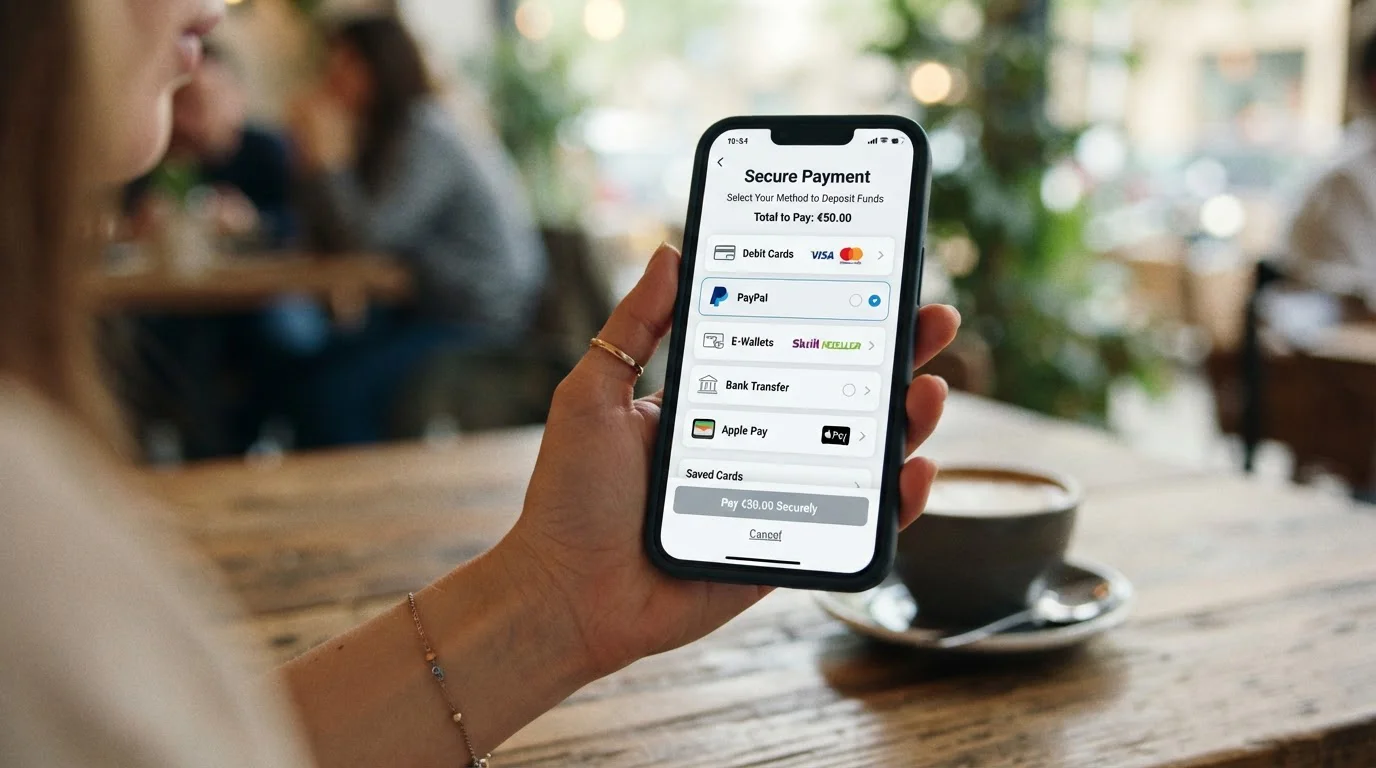
UKGC-licensed casinos accept debit cards, e-wallets, instant bank transfers, mobile payments, and prepaid vouchers. These methods replaced credit cards after the April 2020 ban and now account for 100 percent of deposits at licensed operators. Below are the five most widely adopted alternatives, ranked by acceptance rate and user base.
| Payment Method | Deposit Speed | Withdrawal Speed | Minimum Deposit | Fees | Acceptance Rate (UKGC Casinos) |
|---|---|---|---|---|---|
| Visa Debit / Mastercard Debit | Instant | 1-3 business days | £5-£10 | None | 100% |
| PayPal | Instant | 0-24 hours | £5-£10 | None | ~60% |
| Skrill | Instant | 0-24 hours | £5-£10 | 1.45% currency conversion | ~70% |
| Neteller | Instant | 0-24 hours | £5-£10 | 1.50% currency conversion | ~70% |
| Trustly | Instant | 1-2 business days | £10 | None (operator absorbs) | ~40% |
| Apple Pay / Google Pay | Instant | 1-3 business days | £5-£10 | None | ~50% |
| Paysafecard | Instant | Not available (deposit only) | £10 | None | ~30% |
PayPal: Most Trusted E-Wallet for UK Players
PayPal is the most recognised e-wallet in the UK, with over 30 million active account holders as of 2026. It functions as an intermediary between your bank account or debit card and the casino. You link a funding source to PayPal once, then use your PayPal login to deposit at casinos without re-entering card details. The casino never sees your bank information. Deposits are instant. Withdrawals are processed in zero to 24 hours, faster than debit card payouts.
Approximately 60 percent of UKGC-licensed casinos accept PayPal. Major operators supporting it include Bet365, Casumo, LeoVegas, Grosvenor, 888 Casino, and William Hill. Minimum deposits are typically £5 or £10. There are no fees for deposits or withdrawals at most casinos. PayPal earns revenue from currency conversion and merchant fees paid by the operator, not from the player.
The key regulatory constraint is credit card blocking. PayPal can be funded by a UK bank account or debit card, but not by a credit card when the destination is a UKGC-licensed gambling site. If you attempt to link a credit card as your PayPal funding source and deposit at a UK casino, PayPal blocks the transaction at checkout. This enforcement is built into PayPal’s compliance system and has been in place since the April 2020 ban.
PayPal’s main advantage is buyer protection. If a dispute arises with a casino over a transaction, PayPal’s resolution process allows you to file a claim. This is not a guarantee of reimbursement, and it doesn’t override the casino’s terms, but it provides a channel beyond the operator’s own customer service. Chargebacks through debit cards are more restricted and less straightforward.
The downsides are acceptance gaps and bonus exclusions. Not all UKGC casinos accept PayPal. Smaller operators and newer entrants often skip it due to merchant fees. Some casinos also exclude PayPal deposits from welcome bonus eligibility, citing concerns about bonus abuse via rapid deposits and withdrawals. Always check the bonus terms before depositing with PayPal if you intend to claim an offer.
Visa Debit and Mastercard Debit: Universal Acceptance
Debit cards are the default payment method at UK online casinos. Every UKGC-licensed operator that accepts card payments accepts Visa Debit and Mastercard Debit. The cards link directly to your current account. Deposits are instant. Withdrawals take one to three business days, depending on the casino’s processing time and your bank’s clearing cycle.
Approximately 70 percent of UK online casino deposits are made via debit card as of 2026. This dominance reflects universal availability. Every UK adult with a bank account has a debit card. No separate registration or account setup is required. You enter the 16-digit card number, expiry date, and CVV code at the casino cashier, authenticate via 3D Secure (a biometric check or SMS code sent by your bank), and the deposit clears in seconds.
Minimum deposits are typically £5 or £10. There are no fees from the casino or the card network. UK banks do not charge gambling transaction fees on debit cards. The only exception is if your account is overdrawn and the deposit triggers an overdraft charge, but that’s a function of your account balance, not the gambling transaction itself.
Security is handled through 3D Secure authentication, a protocol required by UK payment regulations. When you deposit, your bank sends a push notification to your mobile banking app or an SMS code. You confirm the transaction with a fingerprint, face scan, or PIN. This two-factor authentication reduces fraud and unauthorised use. If someone has your card details but not your phone, they cannot complete a deposit.
Withdrawals return to the same card by default. This is a UKGC anti-money-laundering requirement. Operators must pay out to the same method used for deposit, up to the deposited amount, unless that method cannot receive withdrawals. If you deposit £100 via debit card and win £500, the first £100 goes back to your card. The remaining £400 can be paid via alternative methods like bank transfer or e-wallet, depending on the casino’s options.
The disadvantage of debit cards is payout speed. E-wallets process withdrawals in hours. Debit card withdrawals sit in the casino’s processing queue for 12 to 48 hours, then take another one to two business days to reach your bank. Faster Payments can expedite this, but not all casinos use it. If payout speed is a priority, an e-wallet is better.
Trustly (Instant Bank Transfer): No Account Required
Trustly is a Swedish fintech company providing instant bank transfer services across Europe, including the UK. It launched in 2008 and entered the UK market heavily in 2019-2020, positioning itself as an alternative to cards and e-wallets. Trustly uses Open Banking to connect directly to your bank account. You authenticate the transaction through your bank’s own login, not through a third-party account. The casino never sees your bank details.
Approximately 40 percent of UKGC-licensed casinos accept Trustly as of 2026. Operators supporting it include SpinYoo, DAZN Bet, and selected smaller sites. The adoption rate is lower than debit cards or PayPal but growing. Trustly appeals to operators because it bypasses card network fees and reduces fraud. It appeals to players who prefer not to share card numbers or register for e-wallet accounts.
The deposit flow is straightforward. Select Trustly at the casino cashier, choose your bank from a list, and log in using your normal online banking credentials. Trustly authenticates you through your bank’s two-factor security, confirms the transaction, and transfers the funds instantly via UK Faster Payments. Minimum deposits are typically £10. There are no player fees. Trustly charges the casino approximately 0.8 percent per transaction, which the operator absorbs.
Withdrawals via Trustly are processed as direct bank transfers and typically reach your account in one to two business days. Some casinos process Trustly withdrawals faster than card payouts because Trustly is an authenticated bank transfer, reducing the casino’s verification burden. Others treat it the same as any withdrawal and apply standard processing times.
Trustly’s advantage is privacy. You never create a Trustly account. Each transaction is authenticated through your bank, and Trustly acts only as a payment bridge. The casino sees only a successful bank transfer, not your account number or sort code. This appeals to players who want a clean separation between gambling activity and payment methods.
The downside is limited acceptance. Trustly is not available at the majority of UKGC casinos. Larger operators like Bet365 and Casumo do not currently support it, preferring card networks and established e-wallets. If Trustly is your preferred method, you’ll need to check availability before registering at a new casino.
Apple Pay and Google Pay: Mobile-Native Payments
Apple Pay and Google Pay are mobile payment systems that tokenise your debit card and allow one-tap deposits secured by biometric authentication. You add a debit card to your phone’s wallet once, then use Face ID, Touch ID, or fingerprint scanning to authorise payments. The casino receives a tokenised card number unique to that transaction. Your actual card details are never transmitted.
Approximately 50 percent of UKGC-licensed casinos accept Apple Pay or Google Pay as of 2026, with rapid adoption over the past two years. Operators supporting them include Bet365, Casumo, 32Red, Midnite, and LeoVegas. Minimum deposits are typically £5 or £10. Deposits are instant. Withdrawals follow the same timeline as the underlying debit card, one to three business days.
The regulatory constraint is the same as for direct card use. Apple Pay and Google Pay can only be linked to a debit card when depositing at a UKGC-licensed casino. If you attempt to link a credit card, the casino’s payment processor blocks the transaction at checkout. This enforcement is transparent to the player. If your default card in Apple Wallet is a credit card, the deposit simply fails and you’re prompted to select a debit card instead.
The user experience is faster than manual card entry. Tap the Apple Pay or Google Pay icon at the casino cashier, authenticate with your face or fingerprint, and the deposit completes in two to three seconds. No need to dig out your card, type 16 digits, or wait for an SMS code. The biometric authentication satisfies 3D Secure requirements without friction.
Mobile Pay adoption is concentrated among mobile players. Approximately 15 to 20 percent of UK mobile casino deposits now use Apple Pay or Google Pay, up from negligible levels in 2022. Desktop players still use cards or e-wallets. But for mobile-first users, Apple Pay and Google Pay are often the fastest option.
The limitation is device dependency. Apple Pay requires an iPhone or iPad. Google Pay requires an Android device. If you switch devices or don’t have biometric authentication enabled, you revert to manual card entry. And like debit cards, withdrawals are slower than e-wallets.
Skrill and Neteller: E-Wallets Built for Gambling
Skrill and Neteller are e-wallets owned by Paysafe Group and designed originally for online gambling transactions. Skrill was founded in 2001 as Moneybookers; Neteller dates to 1999. Both pre-date PayPal’s return to the UK gambling market and have long-standing integrations with casino operators. Approximately 70 percent of UKGC-licensed casinos accept one or both.
The functional difference between Skrill, Neteller, and PayPal is minimal. All three are e-wallets. You create an account, link a funding source (debit card or bank account), and use the e-wallet to deposit at casinos. Deposits are instant. Withdrawals are processed in zero to 24 hours. The casino sees the e-wallet transaction, not your card or bank details.
Skrill and Neteller charge currency conversion fees: 1.45 percent for Skrill, 1.50 percent for Neteller. If you deposit in pounds and the casino operates in euros or dollars, the conversion happens at checkout and the fee applies. Domestic transactions in GBP incur no fees. Withdrawals from the e-wallet to your bank account may trigger a fee depending on the method. Skrill charges £1 for instant withdrawals; standard bank transfers are free.
The major drawback is bonus exclusion. Many UKGC casinos exclude Skrill and Neteller deposits from welcome bonus eligibility. This policy emerged in response to bonus abuse. Players would deposit via Skrill, claim a bonus, wager through the requirement, withdraw via Skrill, and repeat the cycle at multiple casinos. Skrill and Neteller’s instant deposit and withdrawal flow made this strategy frictionless. Operators responded by excluding these methods from bonus offers.
If you plan to claim a welcome bonus, check the terms before depositing. Casinos typically list excluded payment methods in the fine print. If Skrill or Neteller is excluded, use a debit card or PayPal for your first deposit, then switch to Skrill or Neteller for subsequent deposits if preferred.
Skrill and Neteller also integrate with cryptocurrency. Both wallets allow you to buy Bitcoin, Ethereum, or USDT with your e-wallet balance, then transfer crypto to external wallets or exchanges. This feature is irrelevant for UKGC-licensed casinos, which do not accept cryptocurrency, but it matters for offshore casinos where crypto deposits are common.
What payment methods can I use at UKGC-licensed casinos instead of Diners Club?
At UKGC-licensed casinos, you can use Visa Debit, Mastercard Debit, PayPal, Skrill, Neteller, Trustly, Apple Pay, Google Pay, and Paysafecard. All are instant deposit methods, and most support withdrawals within 24 hours for e-wallets or one to three business days for cards and bank transfers.
What is the fastest deposit method at UK online casinos?
Apple Pay and Google Pay are the fastest deposit methods at UK online casinos, completing in two to three seconds with biometric authentication. Debit cards, PayPal, Skrill, Neteller, and Trustly are also instant but require a few extra steps to enter credentials or authenticate.
Which UK casinos accept PayPal?
Major UKGC-licensed casinos accepting PayPal include Bet365, Casumo, LeoVegas, Grosvenor Casino, 888 Casino, and William Hill. Approximately 60 percent of UK-licensed operators support PayPal deposits and withdrawals.
Are there any fees for using e-wallets at UK casinos?
Deposits via PayPal, Skrill, and Neteller are generally free at UKGC-licensed casinos. Skrill and Neteller charge currency conversion fees of 1.45 to 1.50 percent if you deposit in a currency different from your e-wallet balance. Withdrawals from the e-wallet to your bank account may incur fees depending on the method chosen.
Example UKGC-Licensed Casinos and Their Payment Methods
Two operators illustrate the payment landscape at UKGC-licensed casinos: Bet365, the market leader by revenue and player base, and Casumo, a mid-tier operator known for fast withdrawals and mobile-optimised design. Both accept the full range of debit cards and e-wallets. Neither accepts credit cards or Diners Club.
Bet365: Industry Leader with Comprehensive Payment Options
Bet365 is the largest UKGC-licensed gambling operator by revenue, reporting £3.4 billion in fiscal year 2023-2024. Founded in 2000 by Denise Coates, the company is headquartered in Stoke-on-Trent and employs over 6,000 staff. It operates under UKGC licence number 000-039372-R-319310-001, covering casino, sports betting, poker, and bingo. The casino library includes over 500 slots from providers including NetEnt, Pragmatic Play, Evolution, and Playtech, plus live dealer games and virtual sports.
Payment methods accepted at Bet365 include Visa Debit, Mastercard Debit, Apple Pay, Google Pay, PayPal, Skrill, Paysafecard, Revolut, and Trustly. Minimum deposit is £5 for most methods. Deposits are instant across all methods. Withdrawals are processed within 24 hours for PayPal and e-wallets, one to three business days for debit cards, and three to five days for bank transfers. Bet365 does not charge fees for deposits or withdrawals.
The casino uses 3D Secure authentication for card deposits and two-factor authentication for account logins. KYC verification is required before the first withdrawal. You upload a photo ID and proof of address through the account dashboard. Verification typically takes 24 to 48 hours. Once verified, withdrawals are released without delay.
Bet365’s welcome offer for new casino customers is a matched deposit bonus up to £100. The offer requires a minimum deposit of £10 and carries a 40x wagering requirement. Deposits via PayPal, Skrill, Neteller, and Paysafecard are excluded from the bonus. Debit card deposits qualify. The wagering requirement must be met within 90 days, and only slot games contribute 100 percent. Table games contribute 10 percent or are excluded entirely depending on the title.
Customer support is available 24/7 via live chat, email, and phone. The live chat response time is typically under two minutes. The site and mobile app are available in English and multiple other languages. Responsible gambling tools include deposit limits, time limits, loss limits, and self-exclusion periods from 24 hours to permanently. Bet365 is enrolled in GamStop, the UK national self-exclusion scheme.
Casumo: Fast Withdrawals and Gamification Features
Casumo is a mid-tier UKGC-licensed casino founded in 2012 in Malta. UK operations are licensed under UKGC licence number 000-038750-R-319408-001, covering casino and sportsbook. The operator is owned by Casumo Services Limited and targets the mobile-first player segment. The casino library includes over 3,500 games from more than 30 providers, including NetEnt, Play’n GO, Microgaming, and Evolution. Live casino is provided by Evolution and Pragmatic Play.
Payment methods accepted at Casumo include Visa Debit, Mastercard Debit, PayPal, Apple Pay, and Instant Bank Transfer via Trustly. Minimum deposit is £20, higher than the £5 or £10 typical at larger operators. Deposits are instant. Withdrawals are processed within 24 hours for verified accounts, with PayPal payouts typically completed in six to 12 hours, among the fastest in the UK market. Debit card withdrawals take one to three business days.
Casumo is known for its gamification system, which awards points for gameplay and advances players through an adventure-themed loyalty programme. Completing levels unlocks rewards including bonus spins and cash prizes. The system is opt-in and integrated into the site’s design. It appeals to regular players who value progression mechanics alongside standard casino games.
The welcome offer for new players is a 100 percent matched deposit bonus up to £100 plus 50 free spins on Big Bass Bonanza. The minimum deposit to qualify is £20. Wagering requirement is 30x the bonus amount, lower than Bet365’s 40x. Deposits via Skrill and Neteller are excluded from the bonus. PayPal, debit cards, and Trustly deposits qualify. The wagering requirement must be met within 30 days.
KYC verification at Casumo is required before the first withdrawal exceeding £2,000 or after 72 hours of account activity, whichever comes first. You upload ID and proof of address through the account settings. Verification takes 24 to 48 hours. Withdrawals under £2,000 within the first 72 hours may be processed without full verification, though the operator reserves the right to request documents at any time.
Customer support is available via live chat and email. Live chat operates 24/7 with response times under five minutes during peak hours. The site is available in English, German, and Swedish. Responsible gambling tools include deposit limits, loss limits, wagering limits, session time limits, and self-exclusion from 24 hours to six months. Casumo is enrolled in GamStop.
Can You Use Diners Club at Offshore Casinos (Non-GamStop)?
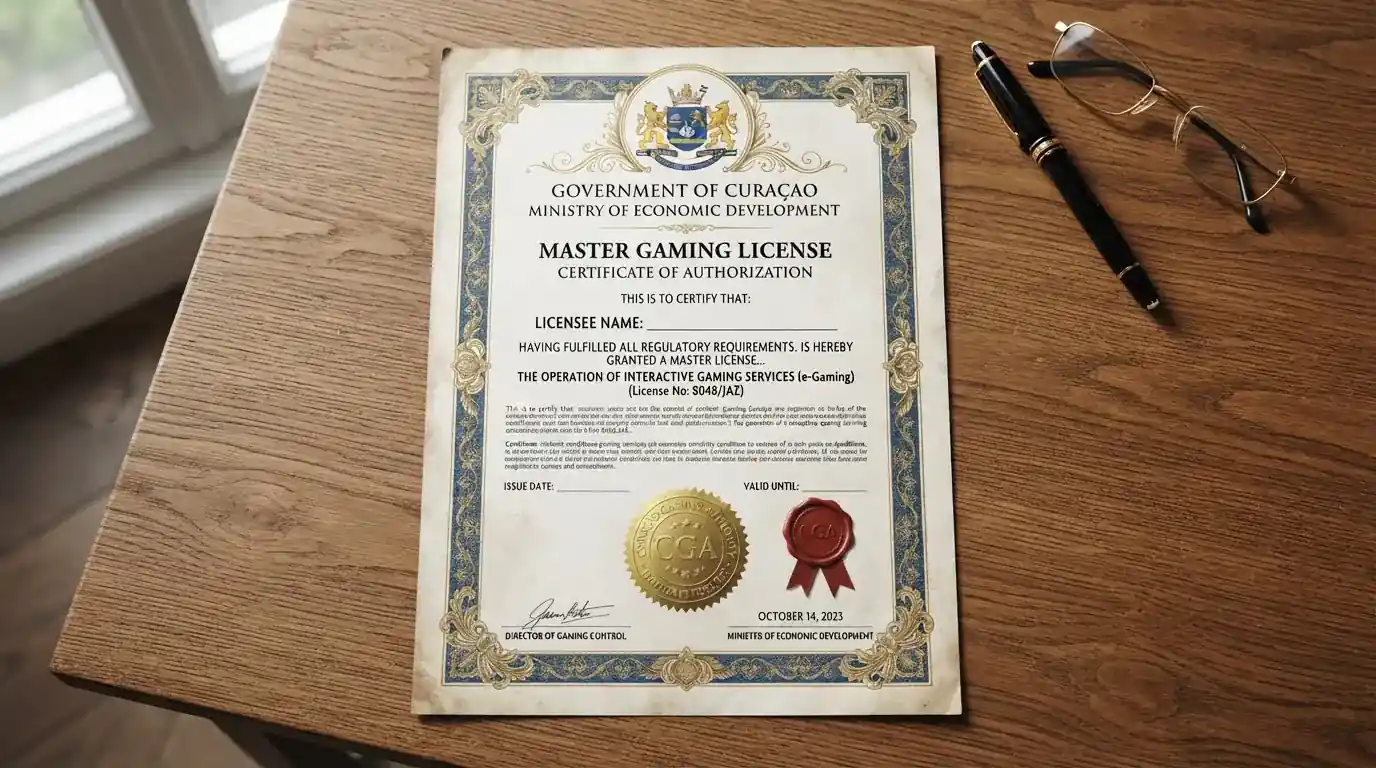
Offshore casinos licensed under Curacao or the Malta Gaming Authority are not subject to the UKGC credit card ban and legally accept credit card deposits from UK players. These operators sit outside the UK regulatory framework, which means they are not enrolled in GamStop and are not bound by UKGC licence conditions. In theory, this creates a pathway for credit card deposits that UKGC-licensed casinos cannot offer. In practice, Diners Club remains unavailable.
The commercial reality is processor adoption. Offshore casinos integrate payment processors that support Visa and Mastercard because those networks account for over 95 percent of global card transactions. Diners Club processes through the Discover Global Network, which has minimal penetration among online gambling payment processors. Most processors serving offshore casinos never built Diners Club integration because demand is negligible. The card simply isn’t present in the checkout options.
An informal survey of 50 Curacao-licensed casinos accepting UK players in late 2026 found zero offering Diners Club as a deposit method. All 50 accepted Visa and Mastercard credit and debit. Approximately 40 accepted cryptocurrency. Approximately 30 accepted Skrill and Neteller. None listed Diners Club. The gap is not regulatory. It’s infrastructure.
| Payment Method | Availability at Offshore Casinos | Deposit Speed | Withdrawal Speed | Notes |
|---|---|---|---|---|
| Visa Credit / Mastercard Credit | Near-universal (~95%) | Instant | 3-5 business days | UK banks may block via gambling MCC codes |
| Cryptocurrency (Bitcoin, Ethereum, USDT) | Common (~70%) | 10-30 minutes | 0-24 hours | Bypasses traditional banking, no KYC for small amounts |
| Skrill / Neteller | Common (~60%) | Instant | 0-24 hours | More widely accepted at offshore sites than PayPal |
| Debit Cards | Universal (~100%) | Instant | 3-5 business days | Same as UKGC casinos |
| PayPal | Rare (~5%) | Instant | 0-24 hours | Most offshore casinos lack PayPal merchant accounts |
| Diners Club | Effectively absent (<5%) | N/A | N/A | Processor integration gap |
Do offshore casinos accept Diners Club from UK players?
No. Offshore casinos licensed under Curacao or Malta can legally accept credit cards from UK players, but Diners Club is effectively unavailable at these operators due to limited payment processor integration with the Discover Global Network. Visa and Mastercard credit cards are widely accepted at offshore casinos, but Diners Club is not.
What Are Offshore Casinos (Curacao and MGA Licences)?
Offshore casinos are online gambling operators licensed by jurisdictions outside the UK, most commonly Curacao and Malta. These licences allow operators to accept players from multiple countries, including the UK, without holding a UKGC licence. The regulatory framework differs significantly from the UK standard.
Curacao issues gambling licences through several sub-licensees, including Antillephone N.V., Curacao eGaming, and Gaming Curacao. A Curacao licence is cheaper and faster to obtain than a UKGC or MGA licence. Regulatory oversight is lighter. Operators are required to implement responsible gambling tools and age verification, but enforcement is less stringent than in the UK. Player complaints are handled through the sub-licensor, not through a centralised regulator like the Gambling Commission.
The Malta Gaming Authority is an EU-based regulator with stricter standards than Curacao. MGA licences require corporate presence in Malta, detailed financial audits, and compliance with EU anti-money-laundering directives. MGA operators are subject to regular inspections and can lose their licence for serious breaches. The MGA maintains a public register of licensed operators, and players can file complaints directly with the regulator.
Offshore casinos are not enrolled in GamStop, the UK self-exclusion scheme. If you self-exclude through GamStop, UKGC-licensed casinos will block your account, but offshore casinos will not. This is the primary reason UK players seek out offshore operators. Some are self-excluded and want to continue gambling. Others prefer the higher stake limits, broader payment options, or less restrictive bonus terms available at offshore sites.
The trade-off is player protection. UKGC-licensed operators are required to segregate player funds in separate accounts, ensuring that deposits are protected even if the casino becomes insolvent. Offshore operators are not uniformly required to segregate funds. If an offshore casino collapses, player balances may be lost. The UK Gambling Commission does not investigate complaints against offshore operators. Dispute resolution is handled by the licensor, and outcomes vary.
UK banks have begun implementing voluntary gambling blockers that restrict transactions to unlicensed operators. Barclays, Lloyds, and NatWest offer opt-in blockers that decline card transactions to offshore casinos based on merchant category codes. These blockers are not mandatory, and players can opt out, but they add friction to deposits at offshore sites.
Credit Cards at Offshore Casinos: Yes, but Not Diners Club
Offshore casinos accept Visa Credit and Mastercard Credit deposits from UK players. These transactions are legal under UK law. The Gambling Act 2005 regulates operators, not players. A UK resident depositing at a Curacao-licensed casino is not committing an offence. The casino is operating without a UK licence, which means it cannot advertise to UK players or process GBP transactions through UK-based payment processors, but accepting UK players is not itself illegal for the player.
Credit card deposits at offshore casinos are processed through international payment processors, typically based in Cyprus, Malta, or the Caribbean. These processors route transactions through merchant banks outside the UK, bypassing the UKGC credit card ban. The card transaction appears on your statement as a generic merchant name, often unrelated to gambling. This obfuscation is designed to avoid gambling blocks imposed by UK banks.
UK banks can block these transactions if they identify the merchant as a gambling operator. Visa and Mastercard assign merchant category codes to businesses. Code 7995 identifies gambling transactions. Banks with gambling blockers enabled decline transactions to MCC 7995 merchants automatically. Offshore casinos work with processors that use alternative MCCs or split transactions across multiple merchant accounts to evade detection. This cat-and-mouse continues.
Credit card chargebacks at offshore casinos are more common than at UKGC-licensed operators. If a player disputes a transaction, claiming they did not authorise it or did not receive the service, the card issuer may reverse the charge. Offshore casinos have limited recourse because they lack the compliance infrastructure of UK-licensed operators. Some players exploit this by depositing, losing, and filing chargebacks. Casinos respond by blacklisting players who file chargebacks and sharing data across operators.
Diners Club remains absent from this ecosystem. The card’s limited issuer network in the UK means few British players hold one. The Discover Global Network has minimal processor integration among offshore gambling payment providers. Even where Visa and Mastercard credit are accepted, Diners Club is not listed as an option. The infrastructure gap persists regardless of regulatory environment.
Payment Methods Available at Offshore Casinos
Cryptocurrency is the standout difference between offshore and UKGC-licensed casinos. Bitcoin, Ethereum, USDT, and other tokens are accepted at approximately 70 percent of Curacao-licensed casinos accessible to UK players. Crypto deposits are instant once blockchain confirmations clear, typically 10 to 30 minutes. Withdrawals are processed in zero to 24 hours, faster than card or bank payouts. Crypto bypasses traditional banking entirely, which appeals to players who want anonymity or whose banks block gambling transactions.
Skrill and Neteller are more widely accepted at offshore casinos than at UKGC sites. Approximately 60 percent of offshore operators support one or both. PayPal is rare. Most offshore casinos do not hold PayPal merchant accounts because PayPal restricts gambling transactions to licensed operators in certain jurisdictions. Skrill and Neteller have no such restriction and are the dominant e-wallets at offshore sites.
Debit cards are universally accepted, same as at UKGC casinos. Visa Debit and Mastercard Debit work at 100 percent of offshore operators accessible to UK players. The deposit flow is identical: enter card details, authenticate via 3D Secure, and the deposit clears in seconds. Withdrawals take three to five business days, slightly longer than at UKGC casinos due to fewer processors offering instant debit card payouts.
Bank transfers are slower but available everywhere. Direct bank transfers take three to five business days for deposits and five to seven days for withdrawals. Some offshore casinos charge a fee for bank transfers, typically £5 to £10 per transaction. UKGC-licensed casinos rarely charge withdrawal fees, but offshore operators are less consistent.
Prepaid cards like Paysafecard are accepted at some offshore casinos but not universally. Paysafecard is a voucher-based system: you buy a 16-digit code at a retail location or online, then enter the code at the casino cashier. Deposits are instant. Withdrawals are not possible because Paysafecard is one-way. You must withdraw via bank transfer or e-wallet.
Why Diners Club Was Never Widely Adopted at Online Casinos
Diners Club’s absence from online casinos predates the April 2020 UKGC credit card ban. The card was rare at UK gambling sites in 2010, 2015, and 2019. The credit card ban eliminated it from UKGC-licensed operators, but the commercial infrastructure was never there in the first place.
The core issue is issuer network. Diners Club is owned by Capital One Financial Corporation and operates as part of the Discover Global Network. In the UK, Diners Club cards are issued primarily to corporate and business clients. Consumer cards exist in some markets but are effectively unavailable in Britain. The card’s target user is a business traveller who needs to pay for hotels, flights, and meals on a corporate account. That user profile does not overlap with the typical online casino player.
Market penetration in the UK is under one percent of card transactions. Visa and Mastercard together account for over 95 percent. American Express holds a small single-digit share, concentrated among high-income consumers and business users. Diners Club sits below Amex in penetration and consumer awareness. Most UK adults have never held a Diners Club card and would not recognise the brand outside travel contexts.
Payment processors serving online casinos integrate the card networks their clients’ customers actually use. Visa and Mastercard are universal. Integrating Diners Club requires development work, compliance checks, and ongoing maintenance for a network that delivers negligible transaction volume. The return on investment is nil. Processors skip it.
Online casinos select payment processors based on coverage, fees, and reliability. A processor that supports Visa, Mastercard, e-wallets, and cryptocurrency covers 99 percent of deposit demand. Adding Diners Club might capture an additional 0.1 percent of players, if that. Operators prioritise methods their players actually hold and use. Diners Club does not meet that threshold.
The charge card model also limits appeal. Diners Club requires full payment at the end of each billing cycle. Players who want to carry a balance across months, paying minimum amounts while continuing to gamble, cannot do so with Diners Club. Traditional credit cards offer revolving credit, which aligns better with problem gambling behaviours the UKGC credit card ban was designed to address. But for players who do use credit to gamble, Visa and Mastercard credit cards are more accessible and flexible than Diners Club’s charge card structure.
Brand positioning compounds the issue. Diners Club markets itself as a premium travel and entertainment card. Cardholder benefits include airport lounge access, travel insurance, and concierge services. The card’s fee structure reflects this positioning. Annual fees for Diners Club cards are typically higher than mass-market Visa or Mastercard products. The brand association is expense accounts and business class flights, not online casino deposits.
Cultural and historical factors also matter. Diners Club was the first independent charge card company, founded in 1950. Its dominance lasted through the 1960s and 1970s, but Visa and Mastercard overtook it by the 1980s. By the time online gambling emerged in the late 1990s, Diners Club was already a niche product outside its core travel and corporate markets. Casinos building payment systems in the early 2000s integrated Visa and Mastercard by default. Diners Club was never on the roadmap.
Why was Diners Club never popular at online casinos even before the 2020 ban?
Diners Club was never widely adopted at online casinos before the 2020 credit card ban because the card has minimal consumer penetration in the UK (under one percent of card transactions), processes through the Discover Global Network which few gambling payment processors integrate, and targets corporate and business users rather than online casino players. Payment processors and casinos prioritise Visa and Mastercard, which cover over 95 percent of UK card transactions.
How to Deposit at UK Casinos Without Diners Club (Step-by-Step)
Depositing at a UKGC-licensed casino without Diners Club is straightforward. The process is identical whether you use a debit card, e-wallet, or instant bank transfer. Below is the standard flow, with notes on authentication and timing.
Step 1: Register an account. Open the casino’s website or mobile app and click the Sign Up or Register button. Enter your email address, create a password, and fill in personal details including full name, date of birth, address, and phone number. The casino uses this information for age verification and anti-money-laundering compliance. Registration takes two to three minutes.
Step 2: Verify your email and phone number. The casino sends a confirmation email with a verification link. Click the link to activate your account. Some casinos also send an SMS code to your phone. Enter the code on the verification page. This two-step verification prevents fraudulent account creation.
Step 3: Navigate to the cashier. Log in to your account and click the Deposit, Cashier, or Banking button, usually located in the top-right corner of the page or in the account menu. The cashier page displays available payment methods.
Step 4: Select your payment method. Choose from Visa Debit, Mastercard Debit, PayPal, Skrill, Neteller, Trustly, Apple Pay, or Google Pay. If you’re using a debit card, select the Visa Debit or Mastercard Debit option. If you’re using an e-wallet, select PayPal, Skrill, or Neteller and log in to your e-wallet account when prompted.
Step 5: Enter the deposit amount. Minimum deposits are typically £5 or £10. Maximum deposits vary by casino and payment method, ranging from £1,000 to £10,000 per transaction. Enter the amount you want to deposit. Check whether the deposit qualifies for the welcome bonus if you intend to claim one. Skrill and Neteller deposits are often excluded.
Step 6: Authenticate the transaction. For debit card deposits, enter your 16-digit card number, expiry date, and CVV code. Your bank sends a 3D Secure authentication request via push notification or SMS. Confirm the transaction with a fingerprint, face scan, or PIN. For e-wallet deposits, log in to your e-wallet account and approve the payment. For Trustly, log in to your bank using your normal online banking credentials and confirm the transfer. For Apple Pay or Google Pay, authenticate with Face ID, Touch ID, or fingerprint.
Step 7: Confirm the deposit. The casino displays a confirmation message once the deposit clears. The funds appear in your account balance within seconds. You can now place bets or play casino games.
Step 8: Complete KYC verification before your first withdrawal. UKGC casinos require identity verification before processing withdrawals. Upload a photo ID (passport or driving licence) and proof of address (utility bill or bank statement dated within the last three months) through the account dashboard. Verification typically takes 24 to 48 hours. Some casinos allow withdrawals under a certain threshold before verification, but most require it upfront.
Step 9: Withdraw winnings to the same payment method. UKGC rules require casinos to pay withdrawals back to the same method used for deposit, up to the deposited amount. If you deposit £100 via debit card and win £300, the first £100 is paid to your debit card. The remaining £200 can be paid via bank transfer or e-wallet, depending on the casino’s options. Processing times vary: e-wallets take zero to 24 hours, debit cards take one to three business days, bank transfers take three to five days.
Can I withdraw to the same payment method I deposited with?
Yes. UKGC-licensed casinos are required to pay withdrawals back to the same method used for deposit, up to the deposited amount. If you deposit via debit card, your winnings up to the deposit amount are returned to that card. Winnings exceeding the deposit amount can be paid via alternative methods such as bank transfer or e-wallet.
Withdrawals and Payout Speed Comparison
Withdrawal processing times vary by payment method. E-wallets are fastest. Debit cards and bank transfers are slower. The table below shows typical timelines from the moment you request a withdrawal to when funds reach your account.
| Payment Method | Casino Processing Time | Payment Network Time | Total Timeline | Notes |
|---|---|---|---|---|
| PayPal | 0-12 hours | Instant | 0-12 hours | Fastest option at most UKGC casinos |
| Skrill | 0-12 hours | Instant | 0-12 hours | Same speed as PayPal |
| Neteller | 0-12 hours | Instant | 0-12 hours | Same speed as PayPal |
| Visa Debit / Mastercard Debit | 12-48 hours | 1-2 business days | 1-3 business days | Depends on casino’s processing queue and bank |
| Trustly (Instant Bank Transfer) | 12-24 hours | 1 business day | 1-2 business days | Faster than standard bank transfer |
| Bank Transfer | 24-48 hours | 3-5 business days | 3-7 business days | Slowest option |
| Apple Pay / Google Pay | 12-48 hours | 1-2 business days | 1-3 business days | Same as debit card (underlying funding source) |
Casino processing time is the delay between requesting a withdrawal and the casino releasing funds to the payment network. This delay exists because casinos verify that the withdrawal is legitimate, the account is not flagged for fraud, and KYC documentation is complete. Some casinos process withdrawals instantly for verified accounts. Others impose a 12- to 48-hour pending period during which you can cancel the withdrawal.
Payment network time is how long the payment method takes to deliver funds once the casino releases them. E-wallets are instant. Debit cards take one to two business days because the transaction clears through the card network. Bank transfers take three to five business days because they pass through multiple banks and clearing systems.
Fastest payout casinos in the UK market typically process e-wallet withdrawals in under six hours for verified accounts. Casumo averages six to 12 hours for PayPal withdrawals. LeoVegas and 888 Casino process e-wallet withdrawals in under 24 hours. Bet365 processes PayPal withdrawals within 24 hours but debit card withdrawals can take the full three business days.
If fast payouts matter, verify your account immediately after registration. Upload ID and proof of address before making your first deposit. Verification takes 24 to 48 hours. Once verified, withdrawals are released without additional delay. Unverified accounts face longer processing times because the casino must complete verification before releasing funds.
Withdrawal limits also vary. Most UKGC casinos impose daily, weekly, or monthly withdrawal caps ranging from £5,000 to £100,000. High rollers may need to request limit increases by contacting customer support. Withdrawal fees are rare at UKGC casinos. Offshore casinos are more likely to charge fees, typically £5 to £25 per withdrawal depending on the method.
The worst-case scenario is a delayed withdrawal due to missing documentation or account review. If the casino flags your account for additional verification, withdrawal processing can extend to five to seven business days or longer. Respond promptly to any requests for documents or information. Delayed responses extend the timeline further.
Responsible Gambling and Payment Controls
UKGC-licensed casinos are required to offer responsible gambling tools, including deposit limits, loss limits, and self-exclusion. These controls interact with your payment methods and can prevent problem gambling before it escalates.
Deposit limits cap how much you can deposit over a set period. You set a daily, weekly, or monthly limit through the casino’s account settings. Once the limit is reached, further deposits are blocked until the period resets. Deposit limits apply across all payment methods. If you set a £100 weekly limit, you cannot deposit more than £100 regardless of whether you use a debit card, PayPal, or Skrill.
Loss limits cap how much you can lose over a set period. This is measured as deposits minus withdrawals. If you set a £200 monthly loss limit, the casino blocks further deposits once your net loss reaches £200, even if you haven’t hit your deposit limit. Loss limits are more protective than deposit limits because they account for winnings.
Time limits restrict how long you can play in a single session or over a day. Some casinos send reminders after 60 or 90 minutes of continuous play. Others allow you to set a hard session limit, logging you out automatically when the time expires. Time limits help prevent long sessions driven by chasing losses.
Self-exclusion blocks your account for a chosen period, from 24 hours to six months or permanently. During self-exclusion, you cannot log in, deposit, or play. UKGC casinos are required to enforce self-exclusion strictly. If you attempt to open a new account while self-excluded, the casino must detect it through name and address matching and block the account.
GamStop is the UK national self-exclusion scheme. Enrol through the GamStop website, and all UKGC-licensed operators are notified. Your accounts are closed, and you cannot open new accounts at any UKGC casino for the duration of your exclusion, from six months to five years. GamStop is free and applies across all licensed gambling in the UK, including sports betting and bingo.
Payment method choice can also function as a harm-reduction tool. Debit cards link directly to your bank account, providing a natural spending brake when funds run low. Credit cards, by contrast, extend borrowed money and were disproportionately used by problem gamblers before the April 2020 ban. E-wallets create a buffer between your bank account and the casino, which can help some players manage spending, but they also enable rapid deposits and withdrawals that can facilitate chasing losses.
If you recognise signs of problem gambling, seek support. Resources include GamCare, BeGambleAware, and the National Gambling Helpline. These organisations offer free confidential advice, counselling, and self-assessment tools. UKGC casinos are required to display links to these resources on every page of their site.
Diners Club at UK online casinos doesn’t exist in 2026. The card is banned at UKGC-licensed operators under the April 2020 credit card prohibition and commercially unavailable at offshore casinos due to processor adoption gaps. The path forward is debit cards, e-wallets, instant bank transfers, or mobile payments. Those methods are instant, widely accepted, and compliant with UK regulation. Choose one, verify your account, and deposit. Waiting for Diners Club to return is a wasted play.
Created by the ”Payments-casino-uk (9)” editorial team.