
UK Casinos That Accept Click2Pay — The Reality Check
 Available in GB

No UK casino accepts Click2Pay in 2026. The service closed in October 2014 and never returned. Anyone searching for Click2Pay casinos today is chasing a ghost—the payment processor shut down over a decade ago, taking user accounts offline with minimal warning. What remains are outdated affiliate pages still listing it as if operational, and a search market full of confused punters wondering where their wallet went.
Click2Pay operated from roughly 2000 to 2014 as an e-wallet intermediary between user bank accounts and online merchants. Players funded Click2Pay accounts via bank transfer, then used that balance for casino deposits—casinos never saw bank details directly, which gave users a privacy layer and faster transactions than direct bank transfers at the time. The wallet worked across 20-plus countries and briefly looked like a credible PayPal alternative for gambling.
The end came fast. In late 2014, Click2Pay announced it would stop accepting new US customers, citing payment processing difficulties tied to tightening US financial regulations around online gambling. Within weeks, the entire operation folded globally—existing accounts were closed, balances returned where possible, and the platform went dark. The shutdown mirrored the fate of dozens of payment processors caught in the post-UIGEA crackdown on US gambling finance; Click2Pay was collateral damage in a regulatory fight it could not win.
What happened to Click2Pay and why did it shut down?
Click2Pay shut down in October 2014 after US payment processing restrictions made its business model unviable. The company stopped accepting US customers first, then closed all international operations within weeks. Existing user balances were returned where bank details were on file; accounts without verified bank information were harder to recover. The service never migrated, rebranded, or relaunched—it simply ceased to exist, leaving a gap that PayPal, Skrill, Neteller, and newer entrants like MuchBetter have since filled.
The confusion persists because three separate payment services share similar names but are not Click2Pay: Click to Pay (no "2") is an active EMVCo card-not-present standard launched in 2019 by Visa, Mastercard, and Amex. Clik2pay (no "c" in Click) is a modern bank payment service at clik2pay.com. Neither has anything to do with the defunct e-wallet. Add outdated casino affiliate sites still listing Click2Pay as if it works, and the search landscape remains a mess twelve years after closure.
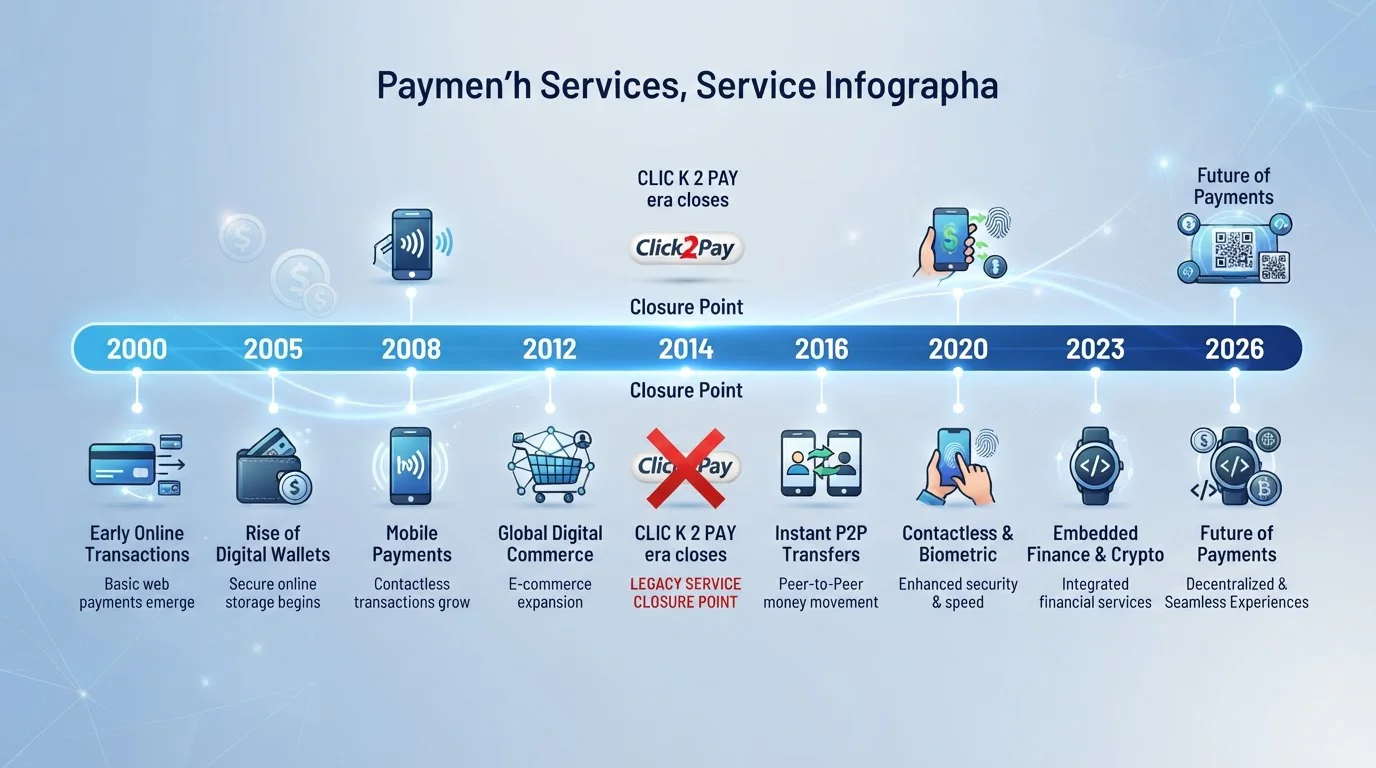
Table of Contents
- Best E-Wallet Alternatives to Click2Pay for UK Players
- Top UKGC-Licensed Casinos Accepting E-Wallet Alternatives (PayPal & MuchBetter)
- Best Offshore Non-GamStop Casinos with Skrill, Neteller & Crypto
- How to Deposit and Withdraw with E-Wallet Alternatives
- Bonuses and Promotions with Alternative E-Wallets
- Mobile Casino Payments: Apps and Mobile E-Wallets
- Understanding UK Payment Regulations: Why Click2Pay Doesn’t Work and What Changed
- Slots, Live Casino, and Game Types with Alternative Payments
Best E-Wallet Alternatives to Click2Pay for UK Players
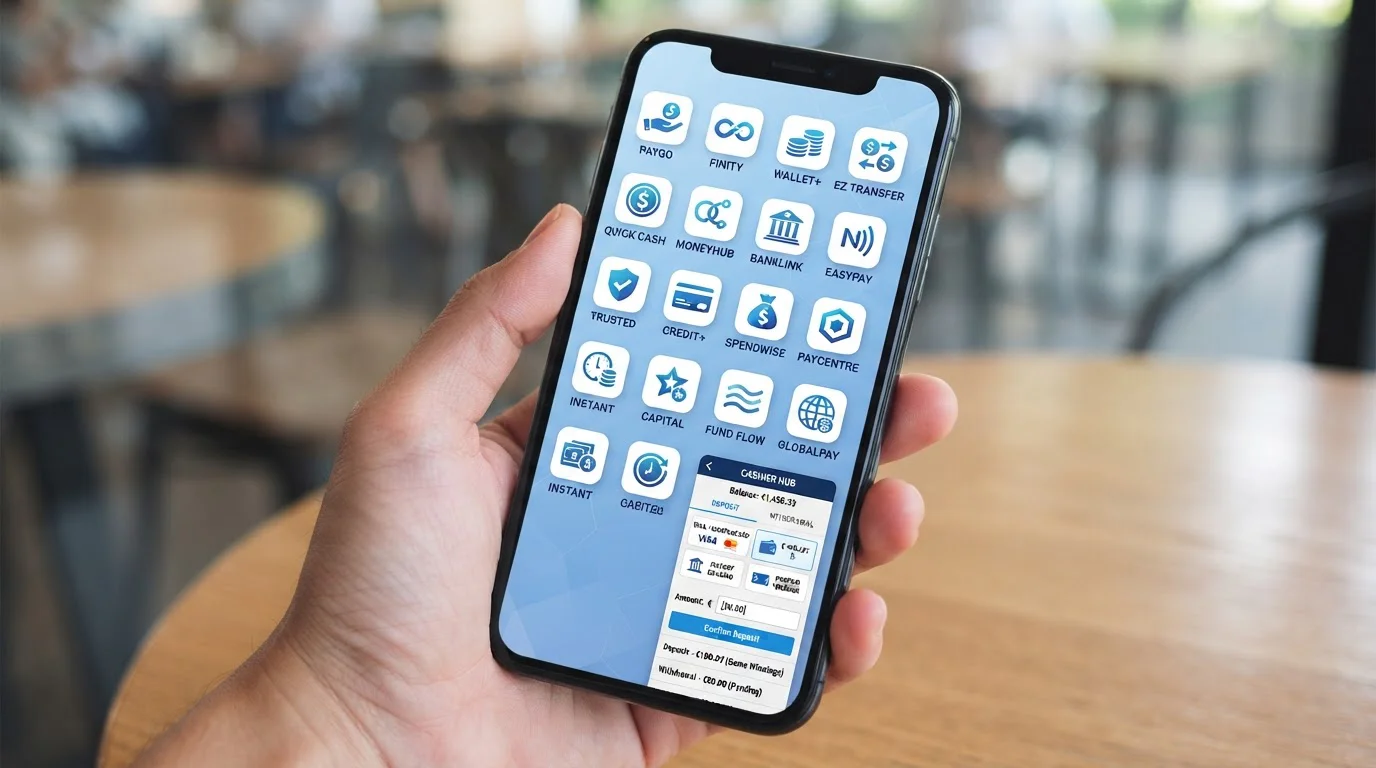
Six e-wallet and payment methods have absorbed Click2Pay’s former UK market share, split between UKGC-licensed operators and offshore casinos not enrolled in GamStop. PayPal and MuchBetter dominate the licensed side—FCA-regulated, accepted at roughly 40 UKGC casinos each, with instant deposits and withdrawals clearing in 24 hours or less. Skrill and Neteller sit on the opposite end: rare at UKGC sites but standard at every offshore operator under Curaçao or Anjouan licenses, where they process withdrawals in under two hours. Payz (the rebranded ecoPayz) and cryptocurrency occupy the middle—available at both UKGC and offshore casinos, though more common offshore.
The split exists for a reason. When the UKGC banned credit cards for gambling on 14 April 2020 under LCCP 5.1, licensed operators scrutinised which e-wallets allowed easy credit-card funding. Skrill and Neteller let users top up wallets with credit cards freely, creating a loophole the UKGC would not tolerate—most operators dropped both between 2019 and 2022. PayPal and MuchBetter either block credit-funded deposits outright or enforce stricter FCA-regulated controls, so they stayed. Offshore casinos face no such ban, which is why Skrill and Neteller remain their payment backbone.
PayPal — The Most Trusted E-Wallet for UKGC Casinos
PayPal Holdings Inc. (NASDAQ: PYPL), founded 1998, operates as an FCA-authorized payment institution in the UK and is accepted at roughly 40 UKGC-licensed casinos as of October 2026. Deposits land instantly, withdrawals typically clear within 24 hours, and top operators like 888 Casino publish same-day payout times for PayPal. Minimum deposits sit at £5–£10 depending on the casino, with no fees charged to the player—casinos absorb processing costs. The mobile app and web interface work identically, and PayPal’s buyer protection covers disputes if something goes sideways.
What sets PayPal apart is institutional trust. This is the wallet the high street uses for everyday purchases, which translates to a comfort level no niche gambling e-wallet can match. Casinos never see your bank or card details—PayPal acts as the privacy layer Click2Pay once provided. The catch: UKGC rules require casinos to block PayPal deposits funded by credit cards, so only debit cards or PayPal balance work. For players who want an e-wallet at a licensed casino, PayPal has the widest acceptance and the smoothest payout track record. Bet365, Betway, 888 Casino, William Hill, Paddy Power, and BetVictor all support it.
MuchBetter — Mobile-First E-Wallet with Biometric Security
MuchBetter (MIR Limited UK Ltd, FCA FRN 900704) is an FCA-authorized e-money issuer built specifically for smartphone gambling. The app uses fingerprint or facial recognition for transaction approval, deposits land instantly, and withdrawals clear in a few hours to instant at top casinos. Accepted at roughly 40 percent of UK-facing casinos as of 2026—up from 25 percent in 2023—MuchBetter works at both UKGC-licensed operators like Bet365, William Hill, Ladbrokes, and 32Red, and offshore non-GamStop casinos such as Lucki Casino, Kaasino, and Kingdom Casino. Minimum deposits typically run £10–£20.
MuchBetter integrates as a prepaid Mastercard, which lets it bypass some of the friction that killed Skrill and Neteller at UKGC sites. The mobile-first design means no desktop login—everything happens through the app, with multi-currency support and touchscreen security that feels native to the smartphone gambling experience. It is newer than PayPal (post-2015) but has gained traction faster than competitors by staying FCA-compliant and optimizing for the way people actually gamble: on phones, in short sessions, with biometric unlock already enabled. The downside is limited brand recognition outside gambling circles—your non-gambling bank will not recognize MuchBetter the way it does PayPal.
Skrill — Top Choice for Non-GamStop Casinos
Skrill, operated by the Paysafe Group and FCA-authorized, launched in 2001 as Moneybookers before rebranding in 2011. Deposits land instantly, withdrawals clear in under two hours at top-tier offshore sites, and the multi-currency wallet supports 40-plus currencies with a 1.45 percent conversion fee. A prepaid Mastercard is available in some regions, and the VIP program reduces fees for high-volume users. Minimum deposits vary by casino but typically sit at £10.
Skrill is rare at UKGC-licensed casinos—most operators dropped it between 2019 and 2022 because it allowed credit-card top-ups that conflicted with the April 2020 credit card ban. Offshore operators faced no such restriction, so Skrill became the default e-wallet at non-GamStop casinos under Curaçao, Anjouan, and Malta licenses. If you are gambling outside the UKGC system, Skrill is listed alongside Neteller at virtually every offshore cashier. The same Paysafe ownership means both wallets often appear together, sometimes interchangeably. Fees are low, speed is excellent, and the brand has two decades of uptime—but UKGC players will struggle to find a licensed casino that still accepts it.
Neteller — Offshore E-Wallet with VIP Rewards
Neteller, also owned by Paysafe Group, founded 1999, is the oldest e-wallet in this comparison and mirrors Skrill’s offshore dominance. Deposits are instant, withdrawals clear in under two hours at leading non-GamStop casinos, and the multi-currency wallet supports dozens of currencies with a 1.50 percent conversion fee—slightly higher than Skrill’s 1.45 percent. The VIP program is more developed than Skrill’s, offering a Net+ Prepaid Mastercard, reduced fees, and dedicated support for high rollers.
Neteller disappeared from UKGC casinos for the same reason Skrill did: loose credit-card funding controls made it incompatible with the 2020 ban. Offshore, it is standard issue. Digital Austen’s October 2026 non-GamStop guide lists Neteller at 15 offshore casinos, all processing deposits instantly and withdrawals in under two hours. The VIP tier structure rewards volume players with perks that UKGC-compliant wallets rarely offer—tiered cashback, faster withdrawals at VIP level, and a physical prepaid card for ATM access. Neteller suits offshore regulars who prioritize speed and VIP treatment over the consumer protections baked into UKGC-licensed play.
Payz (Formerly ecoPayz) — Multi-Currency E-Wallet Option
PSI-Pay Ltd (FCA FRN 900011) rebranded ecoPayz to Payz on 11 May 2023, but most casino cashiers still display the old ecoPayz label as of 2026. Same wallet, same FCA-authorized operator, same login—only the name changed. Payz supports 45-plus currencies, processes instant deposits, and operates a tiered account system (Classic, Silver, Gold, Platinum, VIP) where higher tiers unlock reduced fees. A prepaid Mastercard (ecoCard) is available, and the mobile app works alongside the web interface.
Payz sits in limbo between UKGC and offshore acceptance—some licensed casinos list it, but it is far more common at non-GamStop operators where Skrill and Neteller also appear. The tier system appeals to players who stick with one wallet long-term; high-volume users pay noticeably lower fees at Gold or Platinum level than at entry-tier Classic. The name confusion is the main operational headache—searching "Payz casinos" returns sparse results because affiliate sites and casino cashiers have not updated their listings, while "ecoPayz casinos" yields outdated guides. Functionally, it works, but the branding mess undermines discoverability.
Cryptocurrency (Bitcoin, Ethereum, USDT) — Anonymous Offshore Alternative
Bitcoin launched in 2009 as the first decentralized cryptocurrency, Ethereum followed in 2015 with smart-contract functionality, and USDT (Tether) emerged in 2014 as a stablecoin pegged 1:1 to the US dollar. All three are standard at offshore non-GamStop casinos, where deposits confirm in 10 minutes to an hour depending on blockchain congestion, and withdrawals process instantly once the casino approves. Some offshore operators allow no-KYC play with crypto—deposit Bitcoin, gamble, withdraw, no identity verification required. Transactions are pseudonymous on the blockchain, meaning no bank details are shared and no intermediary sits between you and the casino.
UKGC-licensed casinos rarely accept cryptocurrency, and when they do, they convert it to fiat at deposit, subjecting the transaction to the same identity checks and GamStop enrollment as any other payment method. Crypto offers no regulatory exemption at licensed sites—it is just another funding route inside the same UKGC-controlled system. Offshore is where crypto shines: faster payouts, higher privacy, and no credit card ban to navigate. The trade-off is volatility—Bitcoin and Ethereum swing in value, so a £100 deposit might be worth £95 or £105 by the time you withdraw unless you use USDT, which holds a stable dollar peg. Crypto appeals to privacy-focused players and those seeking no-KYC offshore play, but it is not a UKGC-friendly alternative to Click2Pay.
Which e-wallet is the best alternative to Click2Pay for UK players?
PayPal is the closest functional replacement for Click2Pay at UKGC-licensed casinos—FCA-regulated, instant deposits, 24-hour withdrawals, accepted at 40-plus operators, and the privacy layer Click2Pay once offered. For offshore non-GamStop play, Skrill or Neteller match Click2Pay’s speed and acceptance, with under-two-hour withdrawals and near-universal offshore cashier support. MuchBetter splits the difference: works at both UKGC and offshore casinos, mobile-optimized, and faster withdrawals than PayPal at some operators.
Do alternative e-wallets like Skrill and Neteller work at UK casinos?
Skrill and Neteller work at offshore non-GamStop casinos but are rare at UKGC-licensed operators. Most UKGC casinos dropped them between 2019 and 2022 because they allowed credit-card top-ups that conflicted with the April 2020 credit card ban. PayPal and MuchBetter are the e-wallets accepted at UKGC-licensed UK casinos; Skrill and Neteller dominate offshore sites outside UKGC jurisdiction.
| Payment Method | UKGC-Licensed Availability | Offshore Availability | Deposit Speed | Withdrawal Speed | Fees | Key Feature |
|---|---|---|---|---|---|---|
| PayPal | ~40 casinos | Rare | Instant | 24 hours (same-day at 888) | None (casino absorbs) | Widest UKGC acceptance, household brand trust |
| MuchBetter | ~40% of UK casinos | Common | Instant | Few hours to instant | None typical | Mobile-first, biometric auth, works both UKGC & offshore |
| Skrill | Rare (dropped 2019–2022) | Standard | Instant | Under 2 hours | 1.45% conversion | Offshore backbone, VIP fee reductions |
| Neteller | Rare (dropped 2019–2022) | Standard | Instant | Under 2 hours | 1.50% conversion | Oldest e-wallet (1999), robust VIP program |
| Payz (ecoPayz) | Some (less common) | Common | Instant | Varies | Tiered (lower at VIP) | 45+ currencies, tier system, name confusion |
| Cryptocurrency (BTC/ETH/USDT) | Rare (fiat conversion) | Standard | 10 min–1 hour | Instant (post-approval) | Network fees only | Pseudonymous, no-KYC offshore options, volatile (except USDT) |
Top UKGC-Licensed Casinos Accepting E-Wallet Alternatives (PayPal & MuchBetter)
Four UKGC-licensed operators anchor the PayPal and MuchBetter casino market in the UK: Bet365, Betway, 888 Casino, and William Hill. All four hold active UKGC licenses, process PayPal withdrawals within 24 hours, enforce the April 2020 credit card ban, and enroll players in GamStop self-exclusion. These are not offshore wildcards—they operate under the strictest consumer-protection regime in global gambling, which means slower withdrawals than non-GamStop sites but recourse if disputes arise. Minimum deposits typically sit at £5–£10, welcome offers vary by promotion, and game libraries range from 500 to over 1,000 titles.

Bet365 — Market Leader with PayPal Integration
Hillside (New Media) Limited, trading as Bet365, holds UKGC license number 000-038848-R-319408-001 and operates the largest online gambling platform globally by revenue. Founded in 2000 by Denise Coates in Stoke-on-Trent, Bet365 accepts PayPal for deposits and withdrawals alongside 20-plus other payment methods. Deposits land instantly, withdrawals clear in 24 hours for PayPal, and the minimum deposit varies by method but typically runs £5–£10. The game library exceeds 1,000 slots, live dealer tables, and traditional casino games, all integrated with one of the world’s largest sportsbooks.
Bet365 distinguishes itself through scale and stability. The Coates family owns it privately, which insulates the platform from quarterly earnings pressures that push publicly traded competitors toward aggressive retention tactics. The sportsbook-casino integration is seamless—one account, one wallet, one withdrawal queue whether you are betting on football or spinning slots. Proprietary platform development means the experience feels cohesive rather than stitched together from third-party vendors. For players prioritizing brand trust and a massive game selection, Bet365 is the default. The downside: welcome offers are often less generous than smaller competitors chasing market share.
Betway — Fast Withdrawals and Sportsbook Excellence
Betway Limited, part of Super Group (SGHC) Ltd and dual-listed on NYSE and JSE, founded 2006, holds an active UKGC license and accepts PayPal for deposits and withdrawals. Deposits process instantly, withdrawals typically clear within 24 hours, and the minimum deposit is £10. The game library includes 500-plus slots, live casino, and table games, with a sportsbook that sponsors multiple Premier League clubs. Welcome bonuses often match deposits up to £100, and the mobile platform is optimized for smartphone play.
Betway built its reputation on sportsbook integration—official betting partnerships with West Ham, Brighton, and other top-flight clubs position it as a sports-first operator that happens to run a strong casino. Fast withdrawals are a recurring theme in reviews; players report PayPal payouts clearing faster than advertised timelines, which matters when competitors stretch "24 hours" into 48 or 72. The game library is smaller than Bet365’s or 888’s, but the selection skews toward high-RTP slots and live dealer tables that appeal to regular players rather than casual browsers. If sportsbook credibility and withdrawal speed matter more than game variety, Betway delivers.
888 Casino — Same-Day PayPal Payouts Since 1997
888 UK Limited, trading as 888 Casino, launched in 1997 as one of the first online casinos and holds an active UKGC license. Owned by Evoke plc (formerly 888 Holdings, which acquired William Hill’s online operations in 2022), 888 accepts PayPal for deposits and withdrawals, publishes same-day PayPal payout times, and offers a typical £100 deposit match welcome bonus. The game library exceeds 1,000 titles, including proprietary exclusive games developed in-house that are unavailable elsewhere. Minimum deposits sit at £10.
888’s nearly three decades of operation give it heritage no newer competitor can match. Same-day PayPal withdrawals are published and verified—onlinecasinorealmoney.uk.com confirms 888 stands behind that timing, which is rare among UKGC operators where "up to 24 hours" is standard. Proprietary exclusives matter if you have exhausted NetEnt and Pragmatic Play’s catalogs at other casinos; 888’s in-house titles offer mechanical variety you will not find at Betway or William Hill. The brand trust built over 27 years translates to player confidence that the platform will not vanish overnight, a concern that still haunts newer UKGC entrants. The catch: the welcome offer structure changes frequently, sometimes locked behind restrictive wagering terms.
William Hill — Historic UK Brand with PayPal & MuchBetter
William Hill Organization Limited, owned by Evoke plc, founded 1934 as a retail bookmaker and launched online operations in 1998. The UKGC-licensed platform accepts both PayPal and MuchBetter for deposits and withdrawals, processes PayPal payouts in 24 hours typical, and offers a game library of 500-plus slots, live casino, and table games. Minimum deposits run £10, and welcome bonuses vary by promotion. The omnichannel presence includes over 1,400 retail betting shops across the UK at its pre-2020 peak, creating a household-name trust factor.
William Hill’s retail heritage is both strength and baggage. Older UK punters recognize the brand from decades of high-street betting shops, which builds trust that purely online operators cannot replicate. The dual PayPal and MuchBetter acceptance is unusual—most UKGC casinos pick one or the other, but William Hill lists both, giving mobile-first MuchBetter users and PayPal loyalists equal access. The sportsbook remains the core product; the casino feels like an expansion rather than the centerpiece, which shows in a smaller game library than Bet365 or 888. If brand recognition and omnichannel credibility outweigh cutting-edge casino features, William Hill remains relevant in 2026.
Can I use PayPal at all UK-licensed online casinos?
No. PayPal is accepted at roughly 40 UKGC-licensed casinos as of October 2026, not universally. Bet365, Betway, 888 Casino, William Hill, Paddy Power, and BetVictor support it, but many UKGC operators do not—some prefer debit cards and Open Banking, others list MuchBetter or Payz instead. Check the casino’s cashier page before registering if PayPal is non-negotiable.
| Casino | UKGC License | Payment Methods | Withdrawal Speed | Min Deposit | Welcome Offer | Distinguishing Feature |
|---|---|---|---|---|---|---|
| Bet365 | 000-038848-R-319408-001 | PayPal + 20 others | 24 hours (PayPal) | £5–£10 | Varies | Largest operator globally, seamless sportsbook integration |
| Betway | Active (verified) | PayPal + standard | 24 hours (often faster) | £10 | Up to £100 match | Premier League sponsorships, fast withdrawal reputation |
| 888 Casino | Active (verified) | PayPal + standard | Same-day (PayPal published) | £10 | £100 match typical | Founded 1997, proprietary exclusive games, 27-year heritage |
| William Hill | Active (verified) | PayPal + MuchBetter | 24 hours (PayPal) | £10 | Varies | Founded 1934, 1,400+ retail shops, household brand trust |
Best Offshore Non-GamStop Casinos with Skrill, Neteller & Crypto
Offshore casinos operating under Curaçao, Anjouan, or Kahnawake licenses accept UK players but sit outside UKGC jurisdiction, which means no GamStop enrollment, no credit card ban, no affordability checks, and no UKGC consumer protections. Over 300 offshore operators now target UK players as of 2026, driven by demand from those locked out by GamStop self-exclusion or frustrated by UKGC affordability friction. Payment flexibility is the draw: Skrill and Neteller are standard at every offshore cashier, credit cards work freely (Visa and Mastercard), and cryptocurrency options (Bitcoin, Ethereum, USDT) are near-universal. Withdrawals clear in under two hours at top-tier sites—faster than the 24-to-72-hour UKGC standard—and bonuses run 100 to 450 percent deposit match compared to 50 to 100 percent at licensed casinos.
The trade-off is regulatory protection. UKGC-licensed operators must segregate player funds, submit to regular audits, and offer dispute resolution through the UKGC or independent ADR services. Offshore casinos answer only to their issuing jurisdiction—Curaçao eGaming, for example, does not publish complaint figures or enforce the same capital reserve requirements as the UKGC. If a dispute arises, recourse is limited to the casino’s internal process and the license holder’s arbitration, which lacks the teeth of UKGC enforcement. Game libraries at offshore sites often exceed 3,000 to 5,000 titles because they access providers who avoid UKGC compliance costs, but game fairness depends on the operator’s integrity rather than mandatory third-party testing.
What Are Non-GamStop Casinos and Why They Accept More E-Wallets
Non-GamStop casinos are online gambling operators licensed outside the UK—typically under Curaçao eGaming, Anjouan Gaming License, Malta MGA (offshore divisions), Kahnawake, or Costa Rica—that accept UK players but do not participate in the GamStop self-exclusion scheme. UKGC-licensed operators must enroll in GamStop by law, which bars any player who has self-excluded from registering or depositing. Non-GamStop casinos sit beyond UKGC reach, so GamStop exclusions do not apply, and players who locked themselves out of UK-licensed sites can still gamble offshore.

The payment-method flexibility stems from the same jurisdictional gap. The April 2020 UKGC credit card ban does not bind offshore casinos, so Visa and Mastercard credit cards work freely. Skrill and Neteller, dropped by UKGC operators because they allow credit-card wallet top-ups, remain standard offshore where no such ban exists. Cryptocurrency is treated as just another deposit method rather than a regulatory edge case. Open Banking does not feature prominently offshore because the infrastructure is UK-centric and offers no advantage over instant e-wallet deposits. The result: offshore cashiers look like UKGC cashiers did pre-2020, before the credit card ban and e-wallet consolidation reshaped UK payment rails.
Offshore casinos appeal to three overlapping groups: players self-excluded via GamStop who want back in, high rollers frustrated by UKGC affordability checks capping their deposits, and privacy-focused punters who prefer crypto or no-KYC play. The legal risk for UK players is murky—gambling at an unlicensed (in the UK) operator is not criminal for the player, but winnings are not legally enforceable either, and banks occasionally block transactions to known offshore domains. The practical risk is operational: if an offshore casino folds or refuses a withdrawal, UKGC protections do not apply, and the player has no UK-based regulator to escalate to.
Offshore Casinos Accepting Skrill & Neteller (Representative Profile)
Typical offshore casinos accepting UK players operate under Curaçao eGaming licenses—the most common offshore jurisdiction—though Anjouan (Comoros) and Kahnawake also appear. Skrill and Neteller are listed at nearly every offshore cashier as standard deposit and withdrawal methods, processing deposits instantly and withdrawals in under two hours at top-tier operators. Minimum deposits vary but commonly sit at £10 to £20, and welcome bonuses range from 100 percent match up to 450 percent across multiple deposits, compared to the 50-to-100-percent range typical at UKGC casinos. Game libraries run 3,000 to 5,000-plus titles from providers like Pragmatic Play, NetEnt, Evolution, and smaller studios that skip UKGC compliance.
Examples verified in research include Lucki Casino (4.9 out of 5 rating per Digital Austen, 450 percent bonus up to €5,000, payout in a few hours, 4,500-plus games), Kaasino (4.8 out of 5, fastest payouts under one hour, 3,000-plus games), and Kingdom Casino (4.8 out of 5, reload bonuses, MuchBetter accepted). All three accept Skrill and Neteller alongside credit cards, Bitcoin, Ethereum, and USDT. KYC turnaround is under 72 hours typical—faster than some UKGC operators—but requirements vary; some offshore sites process no-KYC crypto withdrawals up to certain limits before requesting ID.
Offshore operators distinguish themselves through speed and bonus generosity rather than regulatory trust. Withdrawals clearing in under two hours beat the UKGC 24-to-72-hour standard, which matters to players treating gambling as short-session entertainment rather than long-term accounts. The 450-percent deposit match sounds absurd compared to UKGC norms, and wagering requirements are correspondingly higher—60x to 80x is common offshore versus 35x to 50x at UKGC sites—but the headline offer attracts volume. The downside: no segregated funds protection, no UKGC-enforced fairness audits, and if the casino disputes a withdrawal, your only recourse is the Curaçao license holder’s complaint process, which lacks transparency and enforcement teeth.
Crypto Casinos for Bitcoin & Ethereum Deposits
Cryptocurrency casinos at offshore non-GamStop sites process Bitcoin, Ethereum, and USDT deposits with blockchain confirmation times of 10 minutes to one hour depending on network congestion. Withdrawals, once the casino approves them, hit the blockchain instantly—no 24-hour pending period, no bank transfer lag. Some offshore operators allow no-KYC play up to certain withdrawal thresholds: deposit Bitcoin, gamble, withdraw up to 1 BTC or equivalent without identity verification. Transactions are pseudonymous—wallet addresses are public on the blockchain, but they are not inherently tied to real-world identities unless you linked the wallet to an exchange that conducted KYC.
UKGC-licensed casinos rarely accept cryptocurrency, and when they do (a handful list Bitcoin), they convert deposits to GBP at the point of entry, subject the transaction to full KYC, and enroll the player in GamStop like any other payment method. Crypto at a UKGC casino offers no privacy advantage and no regulatory exemption—it is just another funding rail inside the licensed system. Offshore is where crypto fulfills its use case: faster payouts than e-wallets (no intermediary approval queue), higher privacy than bank transfers or cards, and in some cases, genuinely anonymous play if you source Bitcoin without KYC and the casino does not force verification.
The volatility trade-off applies to Bitcoin and Ethereum—a £100 deposit might be worth £95 or £105 by the time you withdraw, depending on market swings during your session. USDT (Tether) solves this by holding a 1:1 peg to the US dollar, functioning as a stable-value crypto that moves at blockchain speed without fiat price risk. Offshore casinos list all three; which you pick depends on whether you prioritize stability (USDT), liquidity (Bitcoin), or smart-contract functionality for provably fair games (Ethereum). The legal grey area persists: gambling with crypto at an offshore casino is not criminal for UK players, but winnings are not legally enforceable, and some UK banks flag crypto-to-casino transactions as high-risk.
What’s the difference between using an e-wallet at a UKGC casino vs. a non-GamStop casino?
At a UKGC casino, e-wallet options are limited to PayPal and MuchBetter (occasionally Payz), withdrawals take 24 to 72 hours, credit cards are banned, and you are enrolled in GamStop self-exclusion. At a non-GamStop offshore casino, Skrill and Neteller are standard, withdrawals clear in under two hours, credit cards work freely, and GamStop does not apply. The trade-off: UKGC casinos offer segregated funds protection, mandatory fairness audits, and regulator-backed dispute resolution; offshore casinos offer none of that but process transactions faster and accept a wider range of payment methods.
Can I still use a credit card at offshore non-GamStop casinos?
Yes. The April 2020 UKGC credit card ban applies only to UKGC-licensed operators. Offshore casinos under Curaçao, Anjouan, or other non-UK licenses are not bound by UKGC rules, so Visa and Mastercard credit cards work freely for deposits. However, some UK banks block transactions to known offshore gambling domains as a risk management measure, and credit-card gambling carries higher debt risk than debit or e-wallet deposits. Offshore casinos also accept Skrill and Neteller, both of which allow credit-card wallet top-ups—creating an indirect credit-card-to-casino route that UKGC operators cannot offer.
How to Deposit and Withdraw with E-Wallet Alternatives
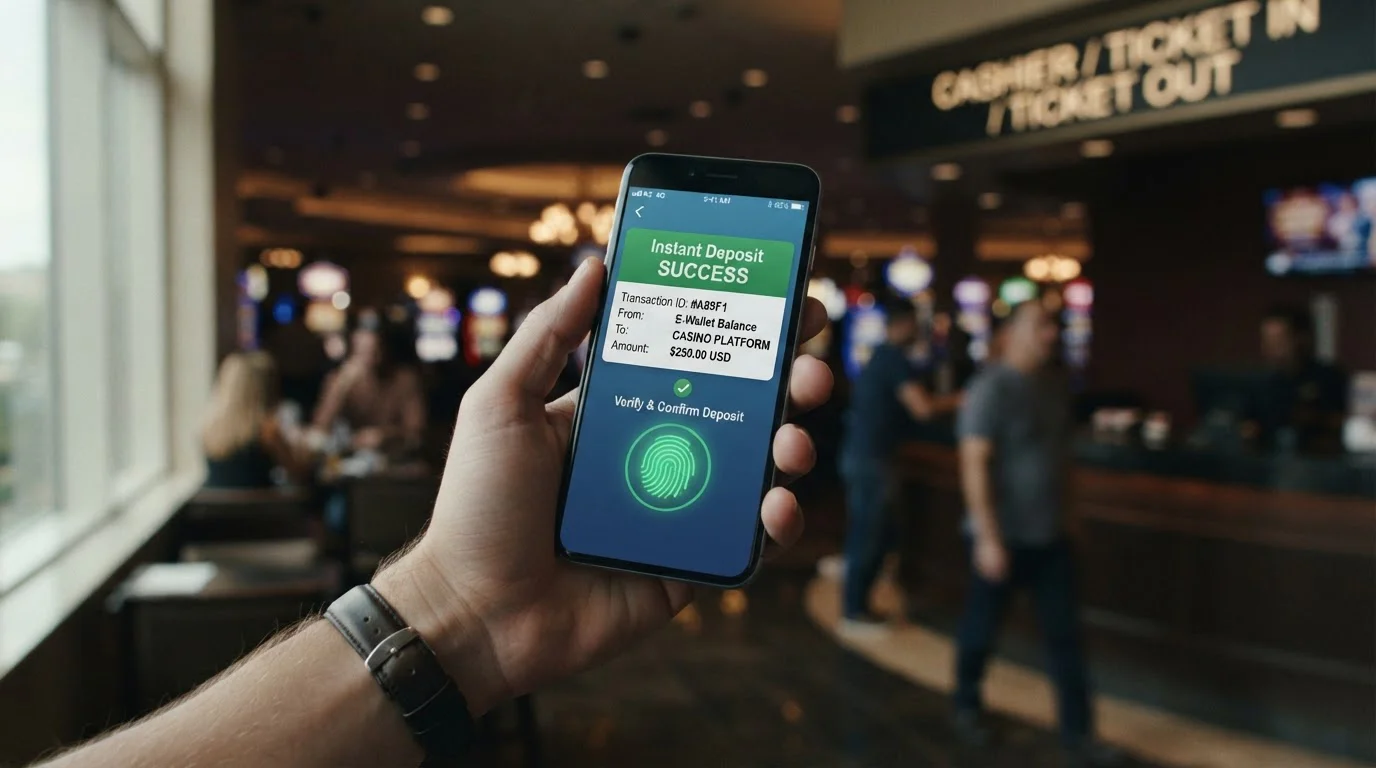
Depositing with e-wallets at UK casinos—whether UKGC-licensed or offshore—follows a consistent pattern: log into the casino, navigate to the cashier, select the e-wallet, confirm the amount, authenticate via the wallet’s app or web interface, and watch funds land instantly. Withdrawals reverse the flow but add a processing delay—UKGC casinos take 24 to 72 hours to approve withdrawals before releasing funds to your e-wallet, while offshore sites clear requests in under two hours at top-tier operators. The steps below assume you already hold an account with the relevant e-wallet; if not, sign up through the wallet provider’s site, verify your identity, and link a funding source (bank account or debit card) before attempting a casino deposit.
Step-by-Step: Depositing with PayPal at a UKGC Casino
Log into your chosen UKGC casino (Bet365, Betway, 888 Casino, or William Hill). Navigate to the cashier or deposit section—usually a button in the top-right corner labeled Deposit or a wallet icon. Select PayPal from the list of payment methods. Enter the deposit amount (minimum £5 to £10 depending on the casino). Click Deposit or Confirm.
The casino redirects you to PayPal’s login page. Enter your PayPal email and password, then authenticate (two-factor code if enabled). PayPal displays the transaction details: the casino name, the amount, and which funding source will be charged (PayPal balance, linked bank account, or debit card—credit cards are blocked for gambling under UKGC rules). Confirm the payment. PayPal redirects you back to the casino, and funds appear in your casino balance instantly. No fees are charged to you; the casino absorbs PayPal’s processing cost.
If the deposit fails, common causes are: insufficient PayPal balance and no linked bank account or debit card, a credit card set as the primary funding source (UKGC casinos block this), or the casino’s payment processor flagging your account for verification. Check your PayPal funding sources and retry with a debit card or bank account selected.
Step-by-Step: Depositing with MuchBetter (Mobile App)
Open the MuchBetter app on your smartphone (iOS or Android). Ensure your MuchBetter account is funded—top it up via bank transfer, debit card, or another linked source if the balance is insufficient. Log into your casino (UKGC-licensed or offshore) via mobile browser or the casino’s app. Navigate to the cashier and select MuchBetter as the payment method. Enter the deposit amount (minimum £10 to £20 typical).
The casino generates a QR code or redirects to the MuchBetter app. If a QR code appears, open the MuchBetter app, tap Scan QR, and point your phone’s camera at the code. The app reads the transaction details. Authenticate using your fingerprint, face unlock, or PIN. Confirm the payment. Funds land in your casino balance instantly, and the MuchBetter app displays a transaction receipt.
If using a redirect instead of a QR code, the casino opens the MuchBetter app directly, pre-fills the transaction details, and you authenticate and confirm within the app. No fees are charged at most casinos. MuchBetter’s mobile-first design means the entire flow happens on one device—no switching between desktop and phone, no entering card numbers.
Step-by-Step: Depositing with Skrill/Neteller at Offshore Casinos
Log into your offshore casino. Navigate to the cashier and select Skrill or Neteller from the payment methods list (both are typically listed). Enter the deposit amount (minimum £10 to £20 common). Click Deposit.
The casino redirects you to Skrill or Neteller’s login page. Enter your email and password, authenticate (two-factor if enabled), and confirm the transaction details: casino name, amount, and which funding source Skrill or Neteller will debit (wallet balance, linked bank account, or credit card—credit cards work freely at offshore sites). Confirm the payment. You are redirected back to the casino, and funds appear instantly in your casino balance.
Currency conversion applies if your Skrill or Neteller wallet holds a different currency than the casino’s base currency—Skrill charges 1.45 percent, Neteller 1.50 percent. If your wallet holds GBP and the casino operates in GBP, no conversion fee applies. Most offshore casinos accept multi-currency deposits, so you can hold EUR or USD in your e-wallet and deposit without converting to GBP first—the casino handles the conversion at its own exchange rate.
Step-by-Step: Withdrawing to Your E-Wallet
Log into the casino and navigate to the cashier or withdrawal section. Select your e-wallet (PayPal, MuchBetter, Skrill, or Neteller) as the withdrawal method. Enter the amount you want to withdraw—some casinos enforce minimum withdrawals (£10 to £20 typical) and maximum limits per transaction (£5,000 to £10,000 at UKGC casinos, higher offshore). Enter your e-wallet account email or ID exactly as registered with the wallet provider. Submit the withdrawal request.
At a UKGC casino, the request enters a pending queue. The casino conducts security checks—verifying your identity (KYC documents if not already submitted), confirming the e-wallet belongs to you, and reviewing gameplay for bonus-abuse patterns. This takes 24 to 72 hours, though top operators like 888 Casino process PayPal withdrawals same-day. Once approved, funds leave the casino and hit your e-wallet in minutes. You receive an email confirmation from both the casino and the e-wallet provider.
At an offshore casino, the pending period is shorter—under two hours at top-tier operators like Lucki Casino and Kaasino, often under one hour. Some offshore sites process Skrill and Neteller withdrawals instantly if you have completed KYC previously. Once the funds reach your e-wallet, transfer them to your bank account via the wallet’s interface (PayPal and MuchBetter to UK bank accounts typically take one business day; Skrill and Neteller charge £1.00 for instant bank withdrawal or offer free standard transfer in 1 to 3 business days).
If the withdrawal is delayed beyond the stated timeframe, common causes are: incomplete KYC (the casino emails requesting ID, proof of address, or payment-method verification—respond promptly to avoid further delays), bonus wagering requirements not met (check the bonus terms; uncleared wagering blocks withdrawals), or the casino flagging your account for manual review due to large wins or irregular gameplay patterns.
Withdrawal Times Compared: PayPal vs. MuchBetter vs. Skrill/Neteller
PayPal at UKGC casinos: 24 hours typical, same-day at 888 Casino, up to 72 hours at slower operators. Once in your PayPal account, transfer to your UK bank account takes one business day.
MuchBetter at UKGC casinos: few hours to instant at some operators. William Hill and Bet365 process MuchBetter withdrawals faster than PayPal in many user reports. Transfer from MuchBetter to your bank account: one business day typical.
MuchBetter at offshore casinos: instant to under two hours depending on the operator.
Skrill at offshore casinos: under two hours at top-tier operators, often under one hour. Transfer from Skrill to your UK bank account: instant withdrawal costs £1.00, free standard transfer takes 1 to 3 business days.
Neteller at offshore casinos: under two hours typical, often under one hour at leading non-GamStop sites. Transfer from Neteller to your UK bank account: instant withdrawal via Net+ card or standard bank transfer in 1 to 3 business days.
The offshore speed advantage is clear—Skrill and Neteller withdrawals clearing in under two hours beat UKGC’s 24-to-72-hour standard by a wide margin. The catch: that speed depends on the offshore casino’s internal approval process, which lacks UKGC regulatory oversight. If an offshore operator delays a withdrawal arbitrarily, you have no UKGC complaint mechanism.
How long do withdrawals take with PayPal, MuchBetter, and other e-wallets?
At UKGC-licensed casinos, PayPal withdrawals take 24 hours typical (same-day at 888 Casino), MuchBetter a few hours to instant, and Skrill/Neteller are rarely available. At offshore non-GamStop casinos, Skrill and Neteller withdrawals clear in under two hours at top-tier operators, often under one hour, and MuchBetter processes instantly to a few hours. Once funds reach your e-wallet, bank transfers take one business day (PayPal, MuchBetter) or 1 to 3 days for free standard transfer (Skrill, Neteller), with instant bank withdrawal available from Skrill and Neteller for a £1.00 fee.
Are there any fees for depositing or withdrawing with e-wallet alternatives?
Most UK casinos do not charge fees for e-wallet deposits or withdrawals—the casino absorbs processing costs. PayPal and MuchBetter typically have no player-facing fees at UKGC casinos. Skrill charges 1.45 percent for currency conversion if your wallet holds a different currency than the casino’s; Neteller charges 1.50 percent. Withdrawing from your e-wallet to your bank account: PayPal and MuchBetter are free (one business day), Skrill and Neteller offer free standard transfer (1 to 3 days) or instant withdrawal for £1.00. Some offshore casinos impose withdrawal fees (1 to 3 percent) regardless of payment method; check the casino’s terms before depositing.
Bonuses and Promotions with Alternative E-Wallets
Welcome bonuses at UKGC-licensed casinos typically exclude Skrill and Neteller deposits even when those wallets are listed—a legacy restriction from the mid-2010s when bonus abuse via e-wallet recycling was rampant. PayPal and MuchBetter deposits qualify for welcome offers at most UKGC operators, though terms vary: Bet365 and 888 Casino allow PayPal-funded bonuses, while smaller operators sometimes exclude all e-wallets and restrict bonuses to debit card deposits only. Read the bonus terms before depositing; "Payment methods excluded from this offer" clauses are buried in fine print but enforced strictly.
Offshore non-GamStop casinos treat e-wallet deposits identically to card or crypto deposits for bonus eligibility—Skrill, Neteller, and MuchBetter all qualify. Bonus structures offshore run higher: 100 to 450 percent deposit match across multiple deposits, compared to 50 to 100 percent at UKGC sites. Wagering requirements are correspondingly steeper—60x to 80x offshore versus 35x to 50x at UKGC casinos—but the headline offer attracts volume. The trade-off: offshore bonuses often carry maximum bet restrictions (£5 per spin while wagering), game weighting that counts slots at 100 percent but table games at 10 percent or excludes them entirely, and time limits (30 days to clear wagering or the bonus and winnings void).
Reload bonuses, cashback, and VIP rewards at both UKGC and offshore casinos apply regardless of deposit method once you are past the welcome stage. E-wallet users receive the same treatment as card depositors for ongoing promotions. The Skrill and Neteller exclusion persists mainly at the welcome-bonus level and mainly at UKGC sites; offshore operators dropped that restriction years ago.
Mobile Casino Payments: Apps and Mobile E-Wallets
MuchBetter is purpose-built for mobile casino payments—biometric authentication, QR code deposits, and a smartphone-first interface that eliminates the desktop friction PayPal inherited from its eBay-era design. PayPal works equally well on mobile via its app, though the flow involves more screen taps and redirects. Skrill and Neteller mobile apps function identically to their desktop counterparts; offshore casinos optimize cashier pages for mobile browsers, so the deposit experience is seamless whether you use the casino’s native app or a mobile web browser.
Casino apps from Bet365, Betway, 888, and William Hill integrate PayPal and MuchBetter directly—tap Deposit, select the wallet, authenticate via fingerprint or Face ID, confirm, and funds land instantly. Offshore casinos rarely offer standalone apps (Apple and Google restrict unlicensed gambling apps in their stores), so mobile play happens through optimized browser sites that detect your device and render touch-friendly cashier interfaces. The functional difference is minimal: whether you deposit through a native app or a mobile browser, the e-wallet authentication happens in the wallet’s own app, which is where security and speed are determined.
Touch ID and Face ID support vary by wallet: MuchBetter and PayPal both support biometric login on iOS and Android, while Skrill and Neteller added fingerprint unlock in recent updates. The elimination of password entry on a smartphone screen reduces deposit friction noticeably—authentication happens in under two seconds versus typing a password and two-factor code, which matters when you are gambling in short sessions on a commute or between tasks.
Understanding UK Payment Regulations: Why Click2Pay Doesn’t Work and What Changed
Click2Pay’s demise in 2014 predated the major UK regulatory shifts that reshaped casino payment rails between 2019 and 2026, but its shutdown foreshadowed the consolidation that followed. Payment processors serving online gambling faced mounting pressure from US regulators post-2006 UIGEA, European anti-money-laundering directives tightening KYC requirements, and card networks (Visa, Mastercard) blocking or surcharging gambling transactions. Click2Pay could not navigate that regulatory thicket profitably, so it folded. The UK market evolved further in Click2Pay’s absence, with the April 2020 credit card ban acting as an extinction event for e-wallets that allowed loose credit-card funding.

The 2020 Credit Card Ban and Its Impact on E-Wallets
On 14 April 2020, the UKGC implemented Licence Condition and Code of Provision (LCCP) 5.1, banning the use of credit cards for gambling at all UKGC-licensed operators. The stated aim was harm reduction—credit cards enable debt-funded gambling, which correlates with problem gambling and financial distress. Debit cards, bank transfers, and e-wallets funded from bank accounts or debit cards remained legal; credit cards were out entirely.
The ban’s second-order effect hit Skrill and Neteller hard. Both e-wallets allowed users to top up their wallets with credit cards freely, creating a loophole: deposit £100 to Skrill via credit card, then deposit that £100 from Skrill to a UKGC casino, circumventing the credit card ban. The UKGC made clear that such loopholes would not fly—licensed operators were responsible for ensuring deposits did not originate from credit, regardless of intermediary layers. Most UKGC casinos responded by dropping Skrill and Neteller entirely between 2019 and 2022 rather than building technical controls to block credit-funded Skrill deposits while allowing debit-funded ones.
PayPal survived because it already enforced stricter funding controls. PayPal blocks gambling transactions funded by credit cards in the UK—only debit cards, bank accounts, or PayPal balance work. MuchBetter, as an FCA-regulated e-money issuer, operates under stricter oversight and does not allow credit-card funding for gambling deposits. Both wallets aligned with the spirit of the credit card ban, so UKGC operators kept them. Offshore casinos, not subject to UKGC rules, never dropped Skrill and Neteller, which is why the offshore-UKGC payment split persists in 2026.
FCA Regulation of E-Money Institutions (PayPal, MuchBetter, Payz)
The Financial Conduct Authority (FCA) regulates e-money institutions and payment service providers in the UK under the Electronic Money Regulations 2011 (EMRs) and Payment Services Regulations 2017 (PSRs). PayPal operates as an FCA-authorized payment institution, MuchBetter holds FCA FRN 900704 as an authorized e-money issuer, and Payz (formerly ecoPayz) holds FCA FRN 900011. FCA authorization requires safeguarding client funds, maintaining capital reserves, submitting to regular audits, and adhering to anti-money-laundering (AML) and know-your-customer (KYC) standards.
FCA regulation is why PayPal, MuchBetter, and Payz remained viable at UKGC casinos post-2020 while Skrill and Neteller did not. The FCA’s March 2026 update to "Payment Services and Electronic Money – Our Approach" guidance (version 7) reinforced expectations that e-money issuers prevent financial crime, including ensuring gambling-related transactions comply with downstream regulations like the UKGC credit card ban. E-wallets that could not or would not enforce such controls lost access to the UKGC market; those that could, retained it.
The FCA does not regulate gambling directly—that is the UKGC’s remit—but it regulates the payment infrastructure gambling relies on. This creates a two-layer compliance burden: e-wallets must satisfy FCA requirements (fund safeguarding, AML, KYC) and, if they want UKGC casino business, must also align with UKGC rules (credit card ban, affordability checks, transaction monitoring). Skrill and Neteller satisfied the FCA layer but not the UKGC layer, so they lost the UK-licensed market while retaining FCA authorization and offshore gambling business.
Why Skrill and Neteller Disappeared from UKGC Casinos
Skrill and Neteller both hold FCA authorization as payment institutions, meaning they are legitimate, regulated financial services in the UK. Their disappearance from UKGC casinos was not a regulatory ban—the UKGC never prohibited them—but a voluntary retreat by casino operators who concluded the compliance risk outweighed the benefit. The credit card ban created a binary choice: build technical infrastructure to distinguish credit-funded Skrill deposits from debit-funded ones, or drop Skrill entirely. Most operators chose the latter.
From the casino’s perspective, the liability was unacceptable. If a player deposited £100 to Skrill via credit card, then deposited that £100 from Skrill to the casino, the UKGC could hold the casino responsible for accepting a credit-funded deposit, even though the casino never touched the credit card directly. Proving the deposit’s ultimate funding source required integration with Skrill’s transaction logs, which Skrill did not offer as a standard API feature. PayPal and MuchBetter either blocked credit-funded gambling deposits at the wallet level or provided sufficient transaction transparency for casinos to verify funding sources. Skrill and Neteller did neither, so casinos walked.
Skrill and Neteller did not disappear from offshore casinos because offshore operators sit outside UKGC jurisdiction and face no credit card ban. The same wallets, the same credit-card funding routes, the same transaction flows—but offshore licenses impose no restriction, so nothing changed. The result: a clean regulatory split where PayPal and MuchBetter dominate UKGC casinos, Skrill and Neteller dominate offshore casinos, and players choosing between licensed and unlicensed gambling also choose between incompatible payment ecosystems.
Open Banking: The Emerging UKGC Payment Standard
Open Banking, built on the EU’s Second Payment Services Directive (PSD2) framework retained in UK law post-Brexit, allows third-party payment providers to initiate bank-to-bank transfers directly from a user’s account via secure API access. The user authorizes the payment through their own banking app (biometric or PIN authentication), and the funds move instantly from their bank to the casino without intermediary e-wallets or card networks. Open Banking deposits are appearing at UKGC casinos as an alternative to debit cards and e-wallets, and a few operators are piloting Open Banking withdrawals (reverse payments) that return funds to the player’s bank faster than traditional bank transfers.
Open Banking solves two problems the credit card ban exposed. First, it eliminates credit risk—funds come directly from a bank account, with no possibility of credit-card involvement, so compliance with LCCP 5.1 is automatic. Second, it bypasses card network fees—Visa and Mastercard charge interchange fees on debit card transactions, while Open Banking charges flat per-transaction fees that are often cheaper for high-value deposits. Casinos save on processing costs, and players get a payment method that is faster than traditional bank transfers (instant vs. 1 to 3 business days) and carries no credit risk.
The downside is user experience friction. Open Banking requires redirecting to your banking app mid-deposit, authenticating there, then returning to the casino—an extra step compared to saving a card on file or staying logged into PayPal. Withdrawals via Open Banking are faster than bank transfers (under 24 hours vs. 1 to 3 days) but still slower than e-wallet withdrawals to PayPal or MuchBetter. Adoption is climbing—bankingcasinouk.com reports accelerated uptake across UKGC operators between 2024 and 2026—but Open Banking has not displaced e-wallets or debit cards yet. It occupies a middle tier: faster than bank transfers, cheaper for casinos than cards, but less convenient than e-wallets for players who value one-tap deposits.
Is cryptocurrency a good alternative to Click2Pay for UK casino players?
Cryptocurrency is a strong alternative to Click2Pay at offshore non-GamStop casinos—instant deposits, under-two-hour withdrawals, pseudonymous transactions, and no-KYC play at some operators. At UKGC-licensed casinos, crypto offers no advantage: the few UKGC operators that accept Bitcoin convert it to fiat at deposit, subject you to full KYC and GamStop enrollment, and process withdrawals on the same 24-to-72-hour schedule as other methods. If you are gambling offshore and prioritize privacy and speed, cryptocurrency works. If you are sticking to UKGC-licensed casinos, PayPal or MuchBetter are better Click2Pay replacements—regulated, widely accepted, and faster than crypto-to-fiat conversions.
Slots, Live Casino, and Game Types with Alternative Payments
Payment method does not determine game selection—slots, live casino, table games, and jackpots are identical whether you deposit with PayPal, MuchBetter, Skrill, Neteller, debit card, or cryptocurrency. The games you access depend on the casino’s licensing and provider partnerships, not the payment rail. UKGC-licensed casinos offer 500 to 1,000-plus games from providers like NetEnt, Pragmatic Play, Evolution, and Playtech. Offshore non-GamStop casinos list 3,000 to 5,000-plus games because they access providers who skip UKGC compliance, not because Skrill unlocks a secret game library.
Bonus eligibility by game type can vary by payment method. Welcome bonuses funded via PayPal or MuchBetter typically allow slots at 100 percent wagering contribution, table games at 10 to 20 percent, and live casino at 10 percent or excluded. Skrill and Neteller deposits at offshore casinos follow the same game-weighting rules—the payment method does not bypass bonus restrictions. RTP (return to player) percentages, volatility, and game mechanics are identical across payment methods; a slot with 96.5 percent RTP pays out the same whether you funded it with PayPal or Bitcoin.
Live dealer games at UKGC casinos work identically with PayPal, MuchBetter, or debit card deposits. Offshore casinos offering live casino via Evolution, Pragmatic Play Live, or Ezugi process Skrill and Neteller deposits into the same game lobbies as crypto or card deposits. The payment method matters for how fast you get funds in and out, not what you play once the money is there.
Written by the editors at Payments-casino-uk (9).