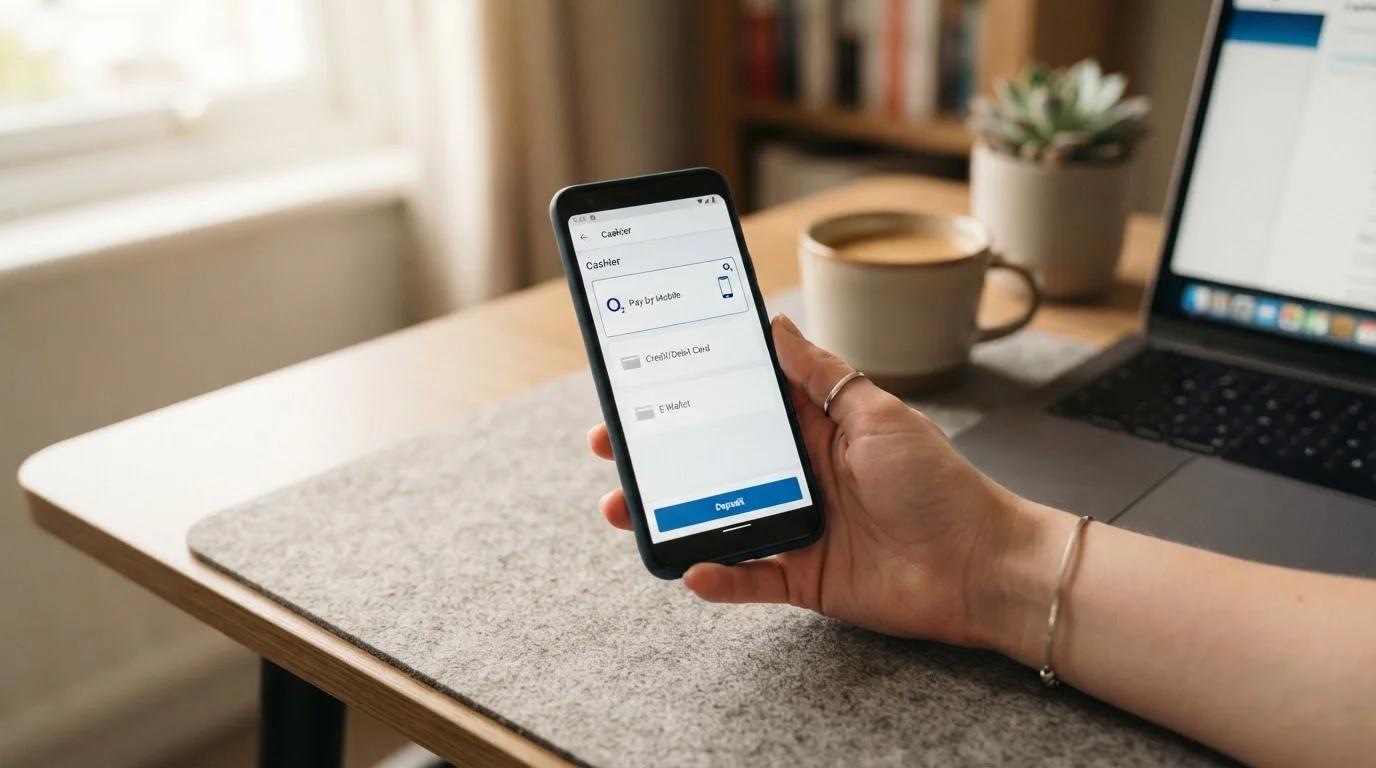
Casino Sites That Accept Jeton in the UK: The 2026 Guide
 Available in GB

Jeton has become one of the quieter success stories in UK casino payments. Not as universally recognised as PayPal or as entrenched as Skrill and Neteller, but steadily gaining ground with players who want an e-wallet that keeps bank details away from casino cashiers and processes deposits in under thirty seconds. The catch? Not every UK casino lists Jeton in its payment options, and the casinos that do accept it split into two distinct regulatory camps with very different rules.
This guide maps out which casino sites accept Jeton deposits and withdrawals in the UK as of 2026, covering both UKGC-licensed operators bound by British gambling law and offshore alternatives licensed by Curaçao or other jurisdictions outside the UK Gambling Commission’s reach. You’ll find practical deposit limits, withdrawal processing times, fee breakdowns, and verification steps for each segment, alongside the regulatory trade-offs that come with choosing a casino based on where it holds its license rather than just whether it accepts your preferred payment method.
Table of Contents
- What Is Jeton and How Does It Work at UK Casinos?
- UKGC-Licensed Casinos That Accept Jeton
- Offshore Casinos That Accept Jeton (Non-GamStop Options)
- UKGC-Licensed vs Offshore: The Regulatory Split Explained
- How to Deposit and Withdraw with Jeton at UK Casinos
- Jeton Fees and Costs at UK Casinos
- Jeton vs Other E-Wallets: Skrill, Neteller, PayPal, and Payz
- Jeton Casino Bonuses and Promotions
- Finding the Right Jeton Casino: Selection Criteria
- Games Available at Jeton Casinos
- Mobile Casinos and Jeton: Apps and Browser Play
- What alternatives exist if a preferred casino does not accept Jeton?
What Is Jeton and How Does It Work at UK Casinos?
Jeton operates as a multi-currency e-wallet backed by dual regulatory authorization: LA Orange CY Limited in Cyprus holds Electronic Money Institution status under Central Bank of Cyprus license 115.1.3.66, while LA Orange Limited in the UK provides payment services under Financial Conduct Authority registration FRN 902088. Established in 2017, the service now handles transactions across 100+ countries and claims over one million users. The company ranked 75th on the Financial Times’ 2024 list of Europe’s fastest-growing firms, a credential that matters more for context than credibility but suggests the wallet has moved beyond niche adoption.
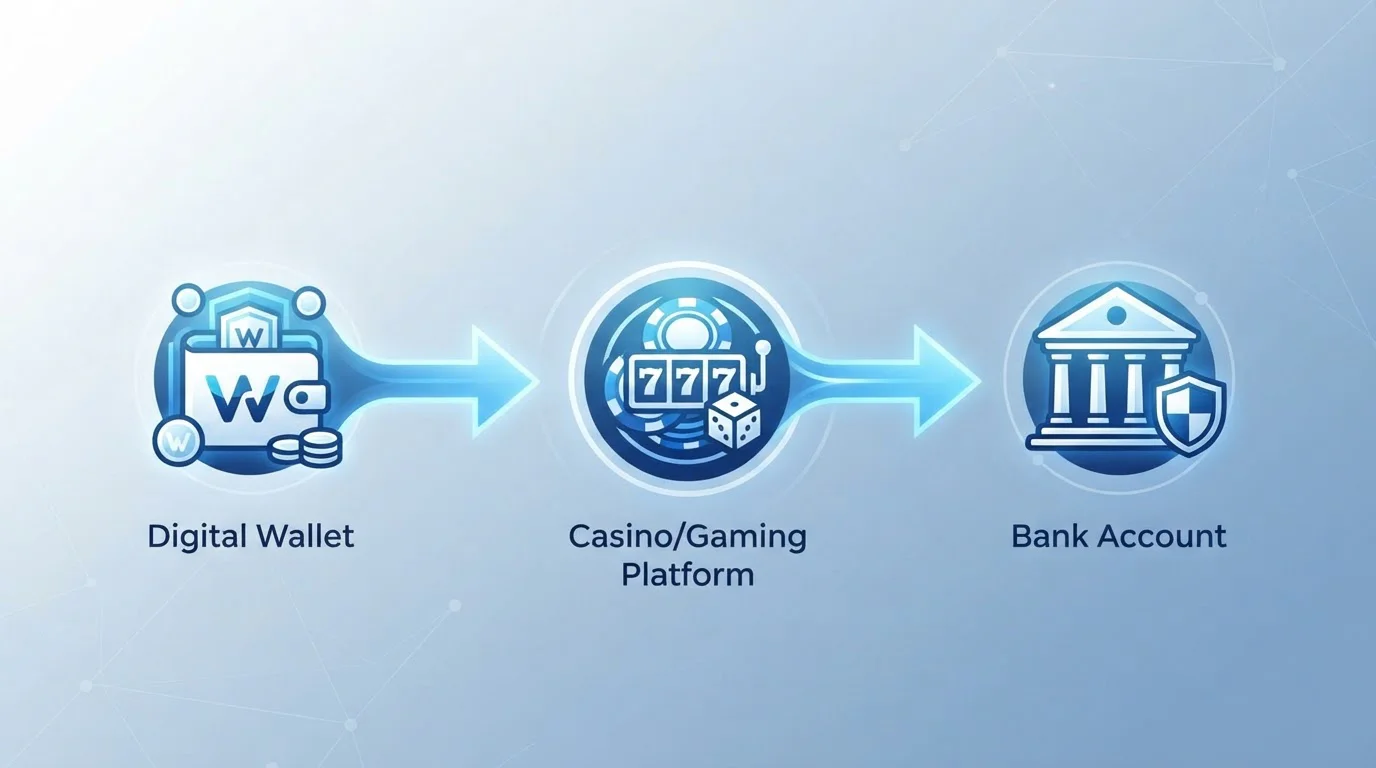
The basic flow at casinos works like any e-wallet. You fund your Jeton account via bank transfer, debit card, or one of the prepaid voucher options covered below, then pay casinos directly from that balance. Deposits post instantly because the casino receives confirmed funds from Jeton’s settlement layer rather than waiting on your bank. Withdrawals move in reverse: the casino sends winnings to your Jeton wallet, you withdraw from there to your UK bank account. The separation means your bank statement shows a Jeton top-up rather than a list of casino transactions, and the casino’s cashier never sees your card number or sort code.
Jeton supports GBP natively alongside EUR, USD, and several other currencies, so UK players can hold a pound-denominated balance and avoid double conversion when depositing at GBP casinos. Conversion fees apply when your wallet balance sits in a different currency from the casino you’re funding, running 1–2 percent over the interbank rate. Security follows standard e-wallet protocol: 256-bit SSL encryption for data transmission, two-factor authentication available for logins, and the FCA authorization puts the UK entity under the same regulatory framework that governs other payment institutions serving British consumers.
Jeton Wallet: The Main Casino Payment Product
Jeton Wallet is the reloadable e-wallet account that handles both deposits and withdrawals. You set it up once via jeton.com with an email address and password, complete KYC verification by uploading photo ID and proof of address, then top up the wallet balance using UK Faster Payments bank transfer, a debit or credit card, or by redeeming a JetonCash voucher. The wallet supports multi-currency balances, so you can hold GBP for UK casinos, EUR for European sites, and convert between them inside the wallet when needed.
At the casino end, you select Jeton or Jeton Wallet from the cashier’s deposit methods, enter the amount you want to transfer, log in to your Jeton account to authorize the payment, and the deposit credits to your casino balance in under thirty seconds. Withdrawal works the same way in reverse: request a payout to Jeton from the casino cashier, wait for the casino to process it (timeframes covered below), and the funds land in your Jeton wallet. From there you can withdraw to your UK bank account, spend via the Jeton Card, or leave the balance in the wallet for your next casino session.
Verified Jeton accounts carry transaction limits around £10 minimum and £5,000 maximum per transfer, though individual casinos often impose their own lower caps. Unverified accounts face tighter restrictions and cannot withdraw funds from the wallet to a bank account, so completing KYC upfront avoids the common scenario where a casino payout reaches your Jeton wallet but you cannot move it onward without uploading documents.
JetonCash Vouchers: One-Way Deposits Without a Bank Account
JetonCash is a prepaid voucher product sold in fixed denominations from EUR 5 to EUR 250, available through retail outlets and online voucher resellers in select markets. You purchase a voucher, receive a code, redeem that code inside your Jeton Wallet to add the voucher’s value to your balance, then use the wallet to deposit at casinos as usual. The voucher itself is a one-way instrument: it adds funds to your wallet but cannot receive payouts directly. If you deposit at a casino using balance that originated from a JetonCash voucher, any withdrawals from that casino must go to your Jeton Wallet and from there to a bank account or Jeton Card, not back to a voucher code.
The use case for JetonCash sits somewhere between privacy and budget control. Because the voucher purchase happens offline or through a voucher site rather than directly linking your bank account to Jeton, you create a firewall between your primary banking and the wallet. The fixed denominations also impose a natural spending cap: once you redeem a £50 voucher equivalent, that’s the ceiling until you buy another one, which introduces friction that can help players who prefer not to have instant top-up access mid-session.
JetonCash availability in the UK is more limited than in some European markets where voucher networks run deeper, so verify with Jeton’s site or customer support whether retail purchase points operate near you before relying on it as your primary funding route. For casino purposes, JetonCash is a funding method for Jeton Wallet, not a separate casino payment channel. The casino only ever sees Jeton Wallet in its cashier; the voucher sits upstream in your wallet’s funding flow.
Jeton Card: Mastercard Debit for Casino Withdrawals
Jeton Card is a physical Mastercard debit card linked to your Jeton Wallet balance. Any funds sitting in the wallet can be spent via the card at standard Mastercard acceptance points, withdrawn from ATMs, or used for contactless payments. For casino players, the card serves as an alternative withdrawal route from the wallet to spending power: instead of transferring Jeton balance to your bank account and waiting 12–48 hours, you can spend directly from the card once casino winnings land in your wallet.
The card requires a separate application inside your Jeton account and typically carries a small issuance fee. It supports both chip-and-PIN and contactless payments, and integrates with Apple Pay and Google Pay for mobile wallet functionality. Daily withdrawal limits apply, usually adjustable in your account settings, and standard Mastercard foreign exchange fees hit any transaction in a currency different from your wallet balance.
From a casino-payout perspective, the Jeton Card workflow looks like this: request withdrawal from casino to Jeton Wallet, wait for casino processing (0–24 hours for most e-wallet payouts), funds arrive in wallet, spend immediately via card or transfer to bank. The card does not bypass casino processing time but eliminates the additional 1–2 days a wallet-to-bank transfer would add. Whether that speed advantage matters depends on how urgently you need access to withdrawn funds and whether you’re comfortable carrying spending power on a prepaid card rather than in your main bank account.
Is Jeton safe to use at UK online casinos?
Yes. Jeton’s UK entity (LA Orange Limited) operates under Financial Conduct Authority authorization FRN 902088, placing it within the regulatory framework that governs electronic money and payment services in Britain. The Cyprus entity holds EMI status from the Central Bank of Cyprus under license 115.1.3.66. Both authorizations require capital reserves, anti-money-laundering compliance, and customer fund segregation, meaning the money you deposit into a Jeton account sits in a safeguarded client funds account separate from the company’s operational cash. If Jeton were to fail as a business, your wallet balance would be protected under the safeguarding rules rather than treated as an unsecured creditor claim. Standard encryption (256-bit SSL) protects data in transit, and two-factor authentication adds a second verification layer for logins and transactions.
How do I set up a Jeton account for casino deposits?
Visit jeton.com, click the sign-up link, and provide an email address and password to create your account. Once registered, navigate to the account verification section and upload a government-issued photo ID (passport, driving license) and proof of address (utility bill, bank statement dated within the last three months). Verification typically processes within 24–48 hours and unlocks full deposit and withdrawal limits. After verification, fund your Jeton Wallet by selecting the deposit option, choosing Faster Payments bank transfer if you’re in the UK, and following the on-screen instructions to complete a bank transfer to Jeton’s UK account. Once the transfer clears (usually same day for Faster Payments), your wallet balance updates and you can deposit at any casino that lists Jeton in its cashier.
UKGC-Licensed Casinos That Accept Jeton
Finding a UKGC-licensed casino that accepts Jeton requires more verification than you might expect. Affiliate guides and payment-method roundups regularly cite specific casino names as "top Jeton casinos," but when you check those casinos’ actual payment pages or log into their cashiers, Jeton often does not appear. Research for this guide found that major UK-licensed brands like Grosvenor Casino list PayPal, Trustly, Visa, and Mastercard but not Jeton, while others mentioned in affiliate sources could not be confirmed through publicly accessible cashier information or operator documentation as of early 2026.
The disconnect likely stems from how casino payment menus evolve. An operator might accept Jeton in 2023, remove it in 2024 due to a PSP contract change or internal cost-benefit analysis, but affiliate pages written in 2023 linger in search results without updates. Alternatively, some casinos accept Jeton in certain jurisdictions but not the UK, and generic "Jeton casino" lists fail to distinguish market-by-market availability. Whatever the cause, the practical takeaway is that you cannot rely on a casino name appearing in a Jeton payment guide as confirmation that Jeton actually works there today.
The safer approach: go directly to the casino you’re considering, log in or navigate to the deposit page, and confirm Jeton Wallet appears in the live cashier menu before funding your account. If you’re evaluating casinos specifically for Jeton compatibility, the checklist below filters for the signals that correlate with actual acceptance rather than outdated references.
Finding UKGC-Licensed Jeton Casinos: What to Look For
Start with the casino’s license. Every operator serving UK consumers must display its UKGC license number in the footer of its website, typically as a clickable link to the Gambling Commission’s register. Open that link, verify the license is active, and note the operator’s legal entity name. A valid UKGC license means the casino operates under British gambling law, connects to GamStop, and follows UK consumer protection rules. Whether it accepts Jeton is a separate question, but confirming UKGC licensing first narrows the field to operators where UK players have regulatory recourse if something goes wrong.
Next, check the payments or banking page. Most casinos list accepted methods somewhere in their help section, FAQ, or directly on the cashier page. Look for "Jeton," "Jeton Wallet," or the Jeton logo (a blue and white design). If the casino lists Skrill, Neteller, MuchBetter, or Payz but not Jeton, chances are Jeton is not available there, as casinos that integrate one e-wallet often support several. If Jeton appears on the payments page, note any stated minimums, maximums, or processing times.
The final verification happens at deposit. Create an account if you haven’t already (UKGC casinos require registration before showing full payment options), navigate to the deposit page, and check whether Jeton Wallet appears in the live dropdown menu. Some casinos list payment methods on help pages that are no longer active in the cashier due to technical issues, contract lapses, or regional restrictions. If Jeton does not appear in the live cashier, contact customer support before depositing via another method and assuming Jeton will work for withdrawals. E-wallet availability often mirrors across deposits and withdrawals, but confirming both directions upfront avoids the scenario where you fund your account via debit card and later discover Jeton payouts are not supported.
GBP support is another practical filter. If the casino operates primarily in EUR and forces currency conversion on every deposit and withdrawal, the benefit of Jeton’s multi-currency wallet diminishes because you pay conversion fees at both ends. UKGC-licensed casinos serving UK players typically offer GBP as a native currency, but international operators with a UK license sometimes default to EUR in their cashier. Check the currency dropdown during registration or deposit to confirm GBP is available, which keeps your deposits and withdrawals in pounds from end to end.
Fun Casino: Fast Jeton Withdrawals and Slot Tournaments
Fun Casino appears most frequently in Jeton casino guides, cited specifically for fast withdrawal processing when using Jeton as the payout method. The claim originates from affiliate reviews rather than official operator statements, so take it as indicative rather than guaranteed, but the pattern holds that Fun Casino positions itself toward quicker e-wallet turnarounds compared to casinos that batch payout requests daily. The platform reportedly offers hundreds of games including slot tournaments, a feature that gives regular players structured competition rather than just open-play sessions.
License verification and specific Jeton limits at Fun Casino could not be confirmed through publicly accessible sources during research for this guide. If you’re considering Fun Casino for Jeton deposits, the verification steps above apply in full: check the footer for UKGC license details, confirm Jeton Wallet appears in the live cashier, and test a small deposit before committing larger amounts. The fast-withdrawal claim makes sense in theory because e-wallets like Jeton settle near-instantly on the payment-provider side, so any delay is entirely on the casino’s internal approval process. A casino optimizing for speed would prioritize e-wallet payouts over card refunds, which need to route through card scheme settlement networks and often take 1–3 working days. Whether Fun Casino delivers on that in practice, only a live test will confirm.
Casumo: Gamification Loyalty and 3,500+ Games
Casumo entered the UK market as an MGA-licensed operator and later added UKGC licensing to serve British players under local regulation. The platform is known for its gamification-based loyalty system called "Adventure," where players progress through levels and unlock daily rewards (free spins, cash bonuses, deposit matches) based on wagering activity rather than earning points that convert to rewards later. The mechanic creates a videogame-style progression layer on top of standard casino play, and the rewards land automatically rather than requiring manual redemption.
Game selection sits around 3,500 titles as of 2026, sourced from 40+ providers including NetEnt, Pragmatic Play, Microgaming, Play’n GO, and Evolution Gaming for live casino tables. The split runs heavily toward slots (3,000+), with 50+ live dealer tables covering Blackjack, Roulette, Baccarat, and game-show formats. Minimum deposit is £10 across most payment methods, and the welcome offer follows UKGC’s 10x wagering cap rules: 100 percent match up to £50 plus 50 free spins on Big Bass Bonanza, with 30x wagering on the combined deposit and bonus amount.
Confirmed payment methods at Casumo include Trustly (branded as Instant Bank Transfer in the UK), PayPal, Visa, Mastercard, and Apple Pay. Research for this guide did not find Jeton explicitly listed on Casumo’s UK payments page or help documentation, though the casino does integrate multiple e-wallets, which often signals openness to additional wallet options behind the scenes. If you see Casumo referenced as a Jeton casino elsewhere, verify in the live cashier before assuming compatibility. PayPal withdrawals at Casumo process within 24 hours after account verification, so if Jeton were supported, expect similar timing given both methods settle on the e-wallet provider’s side rather than requiring card network delays.
Casumo suits players who value a large game library and structured loyalty rewards over maximum bonus size or unconventional features. The UKGC license means GamStop exclusion applies, autoplay is disabled, and stake caps follow British rules (£5 maximum per spin on slots as of September 2024). Dispute resolution for UK players runs through UKGC channels first, then escalates to the Independent Betting Adjudication Service if needed. Whether Jeton works at Casumo depends on cashier verification, but the operator’s overall profile aligns with the kind of established, multi-wallet platform where Jeton acceptance would fit naturally.
Betway: No-Wagering Free Spins and Established Reputation
Betway has operated in the UK market since 2006, building its reputation initially around sports betting before expanding into casino and live dealer offerings. The UKGC-licensed platform combines casino games with a 30-sport sportsbook under a single account, so players can switch between slots, live Blackjack, and football betting without maintaining separate balances. The casino section covers hundreds of titles including jackpot slots, table games, and a dedicated live casino powered by multiple providers.
The 2026 welcome offer stands out under UKGC’s 10x wagering cap regime: 150 free spins with no wagering requirements, distributed as 50 spins per day over three days on eligible slots. Each spin is valued at £0.10, so the total offer equals £15 in risk-free play with winnings paid as withdrawable cash rather than bonus funds subject to rollover. The no-wagering structure is uncommon among UKGC-licensed casinos, where even the 10x cap still requires £500 of wagering on a £50 bonus. Betway’s decision to drop wagering entirely on the free spins portion makes the offer more transparent and player-friendly, though it also caps the total value lower than competitors offering larger match bonuses with standard playthrough.
Betway’s payment page lists standard UK options including Visa, Mastercard, PayPal, and Trustly, but public documentation reviewed for this guide did not confirm Jeton Wallet as an accepted method. Affiliate sources sometimes cite Betway in Jeton casino lists, but without cashier-level verification, treat those references as unconfirmed. If Jeton were supported, withdrawal speed would likely mirror PayPal (0–24 hours post-verification), as both methods settle via e-wallet infrastructure rather than card networks.
Betway fits players who want an established brand with a long UK operating history, a combined sports and casino account, and bonus terms that favor clarity over size. The platform skews toward mainstream appeal rather than cutting-edge features, and the UKGC license brings the full suite of British player protections including GamStop, responsible gambling tools, and UKGC dispute channels. Jeton compatibility remains unverified in public sources, so confirm in the live cashier if that payment method drives your casino choice.
SlotsMagic: 8,000+ Games on the SkillOnNet Network
SlotsMagic operates under UKGC license 39326 held by SkillOnNet Ltd, the same network that powers PlayOJO and several other UK-facing casino brands. The SkillOnNet aggregation model sources games from dozens of providers, resulting in a library that research sources cite at 8,000+ titles. That figure is unusually high for a single casino and reflects the network’s breadth rather than hand-curated selection. Game quality and relevance vary, but the sheer volume means most player preferences (specific slot mechanics, provider studios, table game variants) find something in the catalog.
The platform’s minimum deposit sits at £20, higher than the £10 standard at most UKGC-licensed competitors. The elevated minimum positions SlotsMagic slightly upmarket and filters out very casual players who prefer £5 or £10 trial deposits. Welcome offer structure follows UKGC norms: 100 percent match up to £25 plus 50 free spins, with wagering requirements capped at 10x the combined bonus and deposit. The £25 cap is modest compared to competitors offering £100–£500 bonuses, but the lower playthrough threshold (£500 total wagering on a £25 deposit + £25 bonus) makes the offer more achievable for players who won’t hit high-volume turnover.
Payment methods at SlotsMagic align with standard UKGC casino options, but Jeton Wallet was not explicitly confirmed in publicly available payment documentation during research for this guide. The SkillOnNet network has integrated multiple e-wallets historically (Neteller and Skrill appear in bonus exclusion clauses, indicating those wallets work on the platform), so Jeton compatibility is plausible but unverified. If you’re evaluating SlotsMagic specifically for Jeton deposits, check the live cashier after registration to confirm availability before funding your account via an alternative method.
21 Casino: Large Welcome Bonus and Live Dealer Focus
21 Casino operates at the 21.co.uk domain for UK players, holding both UKGC and Malta Gaming Authority licenses. The dual-license structure lets the operator serve multiple markets under different regulators, with the UKGC license governing UK customer relationships and dispute resolution. The platform offers 5,000+ games spanning slots, live dealer tables, and a smaller selection of table games and video poker variants. Live casino coverage includes the standard Evolution Gaming lineup (Blackjack, Roulette, Baccarat, game shows) alongside tables from other providers.
The welcome bonus is one of the larger offers among UKGC-licensed casinos that still operate post-2026 reforms: 100 percent match up to £500 plus 70 free spins on Book of Dead. The £500 cap sits well above the £100–£300 range most competitors adopted after tighter bonus scrutiny from the UKGC, though the 10x wagering cap still applies (£1,000 combined deposit and bonus × 10 = £10,000 total wagering required). The free spins distribute immediately on deposit rather than spreading across multiple days, which front-loads the welcome package but also means the 48-hour expiry on free spins winnings hits quickly if you don’t play through them.
Minimum deposit at 21 Casino is £10, matching the market standard for UKGC-licensed operators. Withdrawal limits for UK players were not explicitly stated in public sources, though non-UK players face a €5,000 per week cap referenced in some reviews. Payment methods confirmed for UK accounts include standard options (Visa, Mastercard), but Jeton Wallet’s availability could not be verified through public documentation. Affiliate sources occasionally list 21 Casino alongside other UKGC-licensed sites in Jeton payment guides, but without cashier-level confirmation, those references remain unverified as of early 2026.
21 Casino suits players who want a large welcome bonus under UKGC rules, a live dealer focus alongside slots, and the consumer protections that come with dual UKGC and MGA licensing. The platform leans toward mainstream game selection rather than niche or exclusive titles, and the operator’s track record stretches back far enough to indicate stability rather than a new launch chasing quick growth. Jeton acceptance hinges on live cashier verification, so confirm availability if that payment method drives your decision.
Which UK casinos accept Jeton deposits in 2026?
Specific UKGC-licensed casino names accepting Jeton are not widely confirmed in publicly accessible sources as of early 2026. Affiliate guides reference Fun Casino, Casumo, Betway, SlotsMagic, and 21 Casino among others, but cashier-level verification shows that major UK brands like Grosvenor Casino list PayPal, Trustly, Visa, and Mastercard without Jeton. The most reliable approach: navigate to the casino’s deposit page after registering an account, confirm Jeton Wallet appears in the live payment menu, and verify minimum/maximum limits before committing funds. Offshore casinos (covered below) more commonly list Jeton as an accepted payment method.
Do Jeton deposits qualify for casino bonuses?
Yes, in most cases. Jeton deposits are typically eligible for welcome bonuses and ongoing promotions at both UKGC-licensed and offshore casinos. This differs from Skrill and Neteller, which many UKGC-licensed operators explicitly exclude from bonus eligibility due to historical concerns about bonus abuse via e-wallet cycling. Jeton has not attracted the same level of exclusion, likely because its market penetration remains lower than Skrill or Neteller and abuse patterns have not yet triggered widespread operator restrictions. Always check the specific bonus terms on the casino’s promotions page before depositing, as individual operators may exclude any e-wallet including Jeton from particular offers.
| Casino | License | Min Deposit | Withdrawal Speed | Distinguishing Feature |
|---|---|---|---|---|
| Fun Casino | UKGC (unverified) | Not confirmed | Fast (claimed) | Slot tournaments, fast Jeton payouts cited in affiliate sources |
| Casumo | UKGC + MGA | £10 | 0–24 hours | Gamification loyalty system, 3,500+ games, PayPal confirmed |
| Betway | UKGC | Not confirmed | 0–24 hours (typical) | 150 no-wagering free spins, established brand since 2006 |
| SlotsMagic | UKGC (SkillOnNet) | £20 | 0–24 hours (typical) | 8,000+ games via SkillOnNet network, higher minimum deposit |
| 21 Casino | UKGC + MGA | £10 | 0–24 hours (typical) | £500 welcome bonus, 5,000+ games, live dealer focus |
Offshore Casinos That Accept Jeton (Non-GamStop Options)
The term "non-GamStop" is affiliate shorthand for casinos licensed outside the UK that accept British players but do not connect to the UK Gambling Commission’s self-exclusion scheme. These operators typically hold licenses from Curaçao, Anjouan, Malta, or Gibraltar and operate under those jurisdictions’ gambling laws rather than British rules. The Gambling Act 2005 regulates operators, not players, so UK residents can legally access offshore casinos without violating any law on the player side. What changes is the regulatory framework governing the casino itself.
Offshore casinos more commonly list Jeton as an accepted payment method compared to UKGC-licensed operators. The reason likely connects to PSP relationships and cost structures: offshore operators often work with payment aggregators that bundle multiple e-wallets into a single integration, while UKGC-licensed casinos tend to negotiate individual contracts with fewer payment providers and prioritize methods with the broadest UK consumer reach (PayPal, debit cards, Trustly). Jeton’s European market strength translates better to Curaçao-licensed platforms serving international audiences than to UK-only operators where PayPal dominance makes alternative e-wallets harder to justify commercially.
The trade-off for accessing Jeton-friendly offshore casinos involves losing UKGC consumer protections. GamStop exclusion does not reach these operators, so self-excluded UK players can open accounts there. Stake caps, autoplay bans, and bonus wagering caps do not apply. Dispute resolution runs through the offshore license authority (Curaçao Gaming Control Board, for example) rather than the UKGC and Independent Betting Adjudication Service, and those offshore processes are generally slower, less player-friendly, and harder to escalate compared to UK regulatory channels. Affordability checks, source-of-funds requests, and other UKGC-mandated interventions are absent, which offshore casinos market as freedom but which also remove safeguards designed to catch problem gambling early.
What "Non-GamStop" Means and Why It Matters
GamStop is the UK’s national self-exclusion scheme, launched in April 2018 and made mandatory for all UKGC-licensed operators by 2020. When a UK player registers for GamStop, they block themselves from opening accounts or depositing at any casino, sportsbook, bingo site, or poker room that holds a UK Gambling Commission license. The block runs for a minimum of six months and cannot be reversed early. The system exists to give problem gamblers a tool to lock themselves out of licensed gambling completely, and it works well within the UKGC’s regulatory perimeter.
Casinos not on GamStop are simply casinos without UKGC licenses. They do not connect to the GamStop database because they operate under different regulators, and those offshore regulators do not require GamStop integration. A Curaçao-licensed casino accepting UK players has no legal obligation to check whether a depositing British customer holds an active GamStop exclusion, and in practice almost none of them do. This creates the scenario where a UK player self-excluded under GamStop can register at an offshore casino and deposit freely, which defeats the purpose of self-exclusion for players who sought GamStop precisely because they needed an external barrier to prevent continued gambling.
From a pure payment perspective, offshore casinos’ lack of GamStop connection does not change how Jeton works: deposits are instant, withdrawals process in 0–24 hours, fees follow the same structure. What changes is the regulatory safety net. If an offshore casino delays a withdrawal unjustifiably, manipulates game outcomes, or breaches its own terms, your recourse is limited to the casino’s complaints process, then the offshore regulator’s dispute system, and potentially a chargeback through your bank or card provider if the deposit method supports it. You cannot escalate to the UKGC, and offshore regulators typically lack the enforcement teeth or player-protection mandates that UK regulation imposes.
NightWin Casino: New 2026 Curaçao Platform with GBP Accounts
NightWin launched in 2026 under operator Flybergom B.V., holding Curaçao Gaming Authority license OGL/2024/2241/1178. The license format (OGL prefix) reflects the post-LOK reform that restructured Curaçao’s gambling regulation in December 2024, replacing the old master-license sublicense model with direct single-tier licenses issued by a unified Curaçao Gaming Authority. The reform tightened oversight compared to legacy JAZ sublicenses, though Curaçao licensing still falls well short of UKGC standards for consumer protection, transparency, and enforcement.
NightWin combines a casino and sportsbook in a single account, covering 1,000+ casino games (slots, live dealer tables, table games) and a 25-sport betting menu. The platform accepts UK players and offers GBP-denominated accounts, which avoids double currency conversion if you fund from a UK bank account and withdraw back to GBP. Welcome bonuses at NightWin run up to £1,288 with a 100 percent match structure, a figure that immediately signals offshore status because UKGC’s 10x wagering cap would limit playthrough on such a bonus to £12,880, whereas offshore casinos commonly impose 30x–50x wagering with no regulatory ceiling.
Payment methods at NightWin were not exhaustively detailed in public sources reviewed for this guide, but the platform’s offshore positioning and GBP account support suggest e-wallet compatibility including Jeton, which fits the typical Curaçao casino payment stack (crypto, cards, Skrill, Neteller, Jeton, bank transfers). An Android APK is available for players who prefer a dedicated mobile app over browser play, though iOS users rely on the mobile-optimized website since App Store restrictions limit real-money gambling apps in most markets.
NightWin suits UK players seeking an offshore alternative with a 2026 launch date (so modern platform infrastructure), a post-reform Curaçao license (tighter than legacy sublicenses), and GBP account pricing to avoid conversion costs. The absence of UKGC oversight means no GamStop connection, no stake caps, no autoplay ban, and no affordability checks, which offshore marketing frames as "fewer restrictions" but which also removes the consumer safeguards those rules were designed to provide. Jeton acceptance should be verified in the live cashier, but the operator profile aligns with typical offshore platforms where Jeton commonly appears.
Jack.com: Crypto-First Model with 13-Minute Payouts
Jack.com operates under a Curaçao Gaming Authority license in the post-LOK reform format, holding what sources describe as a fully granted indefinite permit, the strongest tier within Curaçao’s restructured licensing system. The platform positions itself as crypto-first, supporting Bitcoin, Ethereum, USDT, and Litecoin alongside conventional card and e-wallet payments. The crypto focus delivers its clearest advantage in withdrawal speed: research sources cite crypto payouts processing in approximately 13 minutes from request to blockchain confirmation, a timeline that beats e-wallet withdrawals (0–24 hours) and demolishes card payouts (1–3 working days).
Jack.com bundles casino, sportsbook, esports betting, racing, and instant/crash games into a single account, making it a multi-vertical platform rather than a pure casino site. The instant rakeback system returns a percentage of each bet to players as withdrawable cash immediately, rather than accumulating points for later conversion or requiring specific loss thresholds to unlock. Rakeback applies across all game types, so sports bets, slot spins, and live dealer hands all contribute to the return flow. The platform offers an installable progressive web app, which creates an app-like experience on Android and iOS devices without requiring App Store approval or sideloading.
Jeton acceptance at Jack.com was not explicitly confirmed in public sources reviewed for this guide, but the platform’s e-wallet orientation (it accepts crypto wallets and likely integrates standard e-wallets through its PSP) suggests Jeton compatibility is plausible. Verify in the live cashier if Jeton is your preferred funding method. The 13-minute crypto payout claim comes from independent testing cited in offshore casino reviews, not operator marketing, which lends it more credibility than generic "instant payout" promises.
Jack.com suits UK players who prioritize withdrawal speed, prefer crypto payments for privacy or speed reasons, want rakeback on all activity, and are comfortable with a Curaçao license that carries no UKGC oversight. The platform’s indefinite permit status under the post-LOK reform suggests stronger regulatory standing than casinos still operating on legacy sublicenses, but it remains an offshore license with all the limitations that entails for UK consumer protection. If crypto speed matters less than fiat convenience, e-wallets like Jeton (if supported) offer a middle ground between crypto’s anonymity and card payments’ familiarity.
How to Verify an Offshore Casino’s Curaçao License
Every Curaçao-licensed casino displays a license seal in its website footer, typically a small clickable badge that opens a certificate or links to the Curaçao Gaming Authority’s validation page. The post-LOK reform introduced a new license format starting December 2024: OGL/2024/[operator number]/[license number], replacing the fragmented legacy system where master license holders issued sublicenses under their own reference numbers (the most common being 1668/JAZ, which is now being phased out).
To verify a license, click the seal in the footer and check that the opened certificate or validation page displays the operator’s name, the license number in the OGL format, and a valid issue date after December 2024 for post-reform licenses. If the seal links nowhere, displays a generic image with no validation details, or references a legacy JAZ sublicense from a master license holder rather than a direct CGA license, the operator is either unlicensed or operating on outdated authorization. The Curaçao Gaming Authority’s official site does not offer a public searchable register like the UKGC does, so validation relies on the certificate display and the license seal’s authenticity.
A valid Curaçao license confirms the operator paid the licensing fee and submitted to basic oversight under Curaçao law, but it does not guarantee player protection, fair game outcomes, or dispute resolution comparable to UKGC standards. Curaçao licensing requirements focus on anti-money-laundering compliance and technical game fairness rather than responsible gambling tools, affordability checks, or player fund segregation at the level UK law mandates. If you’re playing at a Curaçao-licensed casino, treat the license as a minimum baseline rather than a quality certification.
Can I use Jeton at casinos not on GamStop?
Yes. Offshore casinos (typically Curaçao or Anjouan licensed) that are not on GamStop commonly accept Jeton for deposits and withdrawals. These casinos operate outside UKGC regulation, so GamStop self-exclusion does not reach them. UKGC consumer protections (dispute resolution, stake caps, bonus wagering caps) also do not apply at offshore casinos. If you hold an active GamStop exclusion, accessing offshore casinos defeats the purpose of self-exclusion and removes the external barrier designed to help problem gamblers stop. Use offshore options only if you do not hold a GamStop block and understand the reduced regulatory protections compared to UKGC-licensed casinos.
| Casino | License | Min Deposit | Withdrawal Speed | Key Difference from UKGC Casinos |
|---|---|---|---|---|
| NightWin | Curaçao OGL/2024/2241/1178 | Not confirmed | 0–24 hours (typical) | GBP accounts, no GamStop, higher bonus caps, launched 2026 |
| Jack.com | Curaçao (indefinite permit) | Not confirmed | 13 minutes (crypto) | Crypto-first model, instant rakeback, multi-vertical platform |
UKGC-Licensed vs Offshore: The Regulatory Split Explained
The decision to play at a UKGC-licensed casino versus an offshore alternative shapes more than just which payment methods appear in the cashier. It determines which legal framework governs your relationship with the operator, what protections you hold if something goes wrong, and which regulatory restrictions apply to bonuses, stakes, and self-exclusion. Jeton works similarly at both types of casinos from a technical standpoint—deposits are instant, withdrawals process in 0–24 hours, fees follow the same structure—but the regulatory environment surrounding those transactions differs fundamentally.
UK Gambling Commission (UKGC) Licensing: What It Means
A UKGC remote operating license subjects the casino to British gambling law under the Gambling Act 2005 and all subsequent amendments and regulatory guidance. The casino must verify every UK customer’s identity and address before allowing withdrawals, conduct source-of-funds checks on players whose deposits or gambling patterns trigger affordability thresholds, and connect to the GamStop self-exclusion scheme so that any UK player registered with GamStop cannot open an account or deposit. The casino pays UK taxes on revenue derived from British customers, follows UKGC-mandated game design rules (no autoplay, maximum £5 stake per spin on online slots as of September 2024), and caps bonus wagering requirements at 10 times the bonus amount.
Dispute resolution starts with the casino’s internal complaints process, escalates to the UKGC if the casino’s response is unsatisfactory, and can proceed to the Independent Betting Adjudication Service for binding arbitration at no cost to the player. The UKGC can fine operators, suspend licenses, or revoke them entirely for breaches of license conditions, and UK court judgments against UKGC-licensed operators are enforceable through British legal mechanisms. If a UKGC-licensed casino fails financially, player funds should be segregated in a separate client account and protected under safeguarding rules, though insolvency outcomes depend on the specifics of each case.
UKGC licensing also means the casino operates under responsible gambling mandates: prominent display of safer gambling tools (deposit limits, loss limits, session timers), mandatory reality checks at intervals during play, restrictions on marketing that targets vulnerable people, and participation in GambleAware funding for problem gambling services. Credit card deposits have been banned since April 2020 to prevent players gambling with borrowed money. These restrictions aim to reduce gambling harm but also constrain player freedom and make UKGC casinos less attractive to high-stakes players or those who prefer features like autoplay or bonus-buy slots.
Curaçao and Offshore Licenses: How They Differ
Curaçao is the most common offshore jurisdiction for casinos serving UK players, followed by Anjouan, Malta (for operators without UKGC licenses), and Gibraltar. Curaçao underwent major licensing reform in December 2024, replacing the old master-license sublicense model with direct single-tier licenses issued by the Curaçao Gaming Authority. The new system tightened oversight compared to legacy JAZ sublicenses, introducing clearer licensing standards, annual audits, and a central regulatory body. Despite the reforms, Curaçao licensing remains far less stringent than UKGC regulation.
A Curaçao-licensed casino does not verify UK players against GamStop, conduct affordability checks, or follow UKGC stake caps and bonus wagering limits. The casino can offer credit card deposits, autoplay, bonus-buy slots, and wagering requirements above 10x without regulatory constraint. Responsible gambling tools like deposit limits and self-exclusion exist on many offshore platforms, but they are voluntary operator features rather than mandatory license conditions, and enforcement is inconsistent. Offshore casinos market these differences as "fewer restrictions" and "player freedom," which resonates with some customers but obscures the loss of consumer protections those restrictions provide.
Dispute resolution at Curaçao-licensed casinos runs through the operator’s complaints process first, then escalates to the Curaçao Gaming Authority if unresolved. The CGA’s dispute process is slower, less transparent, and less player-friendly than UKGC channels, and outcomes often favor operators over players in ambiguous cases. UK courts cannot enforce judgments against Curaçao-licensed operators operating outside British jurisdiction, and chargebacks through banks or card providers face challenges when the casino can demonstrate the transaction was authorized and gambling service was delivered. If a Curaçao casino fails financially, player funds are not always segregated or protected, and recovery prospects are low.
Consumer Protections: What You Gain and Lose
| Feature | UKGC-Licensed | Offshore (Curaçao/Anjouan) |
|---|---|---|
| License authority | UK Gambling Commission | Curaçao Gaming Authority, Anjouan, Malta, Gibraltar |
| GamStop connection | Mandatory; self-excluded UK players cannot open accounts | Not connected; GamStop exclusion does not apply |
| Stake caps | £5 maximum per spin on online slots (Sept 2024) | No regulatory caps; operators set own limits |
| Wagering caps | 10x maximum on bonus wagering requirements | No regulatory caps; 30x–50x common |
| Credit card deposits | Banned since April 2020 | Allowed |
| Autoplay | Disabled on all games | Available |
| Dispute resolution | UKGC → Independent Betting Adjudication Service | Operator → offshore license authority (slower, less player-friendly) |
| Jeton acceptance | Less common; verify in live cashier | More common; still verify in live cashier |
| Player fund protection | Segregated accounts, safeguarding rules | Varies by operator; no regulatory mandate |
| Responsible gambling tools | Mandatory (deposit limits, loss limits, reality checks, self-exclusion) | Voluntary; inconsistent implementation |
| Affordability checks | Required at regulatory thresholds | Not required |
| UK tax compliance | Pays UK gambling taxes | No UK tax obligation |
The table shows what changes when you move from a UKGC-licensed casino to an offshore alternative. The regulatory split matters most in two scenarios: when something goes wrong (dispute resolution and player fund protection), and when regulatory restrictions conflict with your preferences (stake caps, autoplay, GamStop exclusion). If you value consumer protection and regulatory recourse over unrestricted play, UKGC licensing wins. If you prioritize higher stakes, bonus flexibility, or bypassing GamStop exclusion, offshore casinos deliver those features at the cost of reduced oversight.
GamStop Self-Exclusion: Why Offshore Casinos Are Not Connected
GamStop is a UK-specific scheme administered by a private company under contract to the UKGC. Only operators holding UKGC remote operating licenses are required to connect to the GamStop database and check new registrations against it. Offshore casinos licensed by Curaçao, Anjouan, or other non-UK jurisdictions have no legal obligation to integrate with GamStop because they do not operate under UKGC regulation. Their license authorities do not mandate GamStop connectivity, and voluntarily adopting it would block a revenue segment (self-excluded UK players) that offshore casinos are legally allowed to serve.
From a player perspective, this creates a loophole where GamStop exclusion becomes ineffective if you access offshore casinos. If you registered for GamStop because you recognized problem gambling patterns and wanted an external barrier to prevent continued play, offshore casinos’ lack of GamStop connection defeats that barrier. You can register, deposit, and play at offshore sites while your GamStop block remains active at UKGC-licensed casinos, and nothing technically or legally prevents it. Whether that access is wise depends on why you sought GamStop in the first place.
If you do not hold a GamStop exclusion and are evaluating offshore casinos for reasons unrelated to bypassing self-exclusion (higher stakes, bonus flexibility, specific game features), the lack of GamStop connection is neutral. It simply reflects that offshore operators exist outside UKGC’s regulatory perimeter. The consumer protection loss matters more than the GamStop connection itself: offshore casinos lack the dispute resolution, player fund safeguarding, and regulatory oversight that UKGC licensing provides, which affects all players regardless of GamStop status.
How to Deposit and Withdraw with Jeton at UK Casinos
Jeton deposits and withdrawals follow the same basic flow at UKGC-licensed and offshore casinos, though processing times and internal approval procedures vary by operator. The steps below assume you already have a Jeton Wallet account set up and verified (KYC completed with photo ID and proof of address uploaded). If you have not yet created a Jeton account, register at jeton.com, complete verification, and fund your wallet via Faster Payments bank transfer, debit card, or JetonCash voucher redemption before attempting your first casino deposit.
Step-by-Step: Making Your First Jeton Deposit
Log into your casino account and navigate to the cashier or deposit page. If you have not yet registered at the casino, complete registration first, as most operators hide full payment options until you create an account. In the cashier, locate the deposit method dropdown or icon grid and select "Jeton" or "Jeton Wallet." Some casinos list e-wallets under a separate category; if you do not see Jeton immediately, check for an "E-Wallets" or "Alternative Payments" tab.
Enter the amount you want to deposit, keeping in mind the casino’s minimum (typically £10, sometimes £20) and maximum (often £5,000, though individual casinos may set lower caps). Check that the deposit amount does not exceed your Jeton Wallet balance; if it does, top up your wallet via bank transfer or card before proceeding. Click confirm or proceed, and the casino redirects you to Jeton’s login page.
Log into your Jeton Wallet using your email and password. If you have two-factor authentication enabled, complete the second verification step (SMS code or authenticator app). Once logged in, you’ll see a payment authorization screen showing the casino name, deposit amount, and currency. Verify the details match what you entered in the casino cashier, then click authorize or confirm payment. Jeton debits your wallet balance and sends confirmation to the casino, which credits your casino account balance usually within 30 seconds.
Return to the casino (most operators redirect you automatically after payment confirmation). Your deposit should appear in your casino balance immediately. If the deposit does not credit within two minutes, check your Jeton Wallet transaction history to confirm the payment processed, then contact the casino’s customer support with the transaction reference number. Jeton’s side of the transaction completes near-instantly; any delay sits with the casino’s internal crediting system.
Step-by-Step: Withdrawing Casino Winnings to Jeton Wallet
Navigate to the casino’s cashier or withdrawal page and select Jeton or Jeton Wallet from the withdrawal method menu. Some casinos require you to withdraw using the same method you deposited with, while others let you choose any method supported for payouts. Enter the withdrawal amount, staying within the casino’s minimum (typically £20) and maximum (varies widely, often £2,000–£5,000 per transaction). Click submit or confirm to send the withdrawal request to the casino’s finance team.
The casino processes your withdrawal request according to its internal approval procedures. UKGC-licensed casinos typically complete verification and approval within 24 hours after you submit the request, though first-time withdrawals may take longer if the casino requests additional KYC documents (passport, recent bank statement, proof of deposit method). Offshore casinos often process e-wallet withdrawals faster, sometimes within a few hours, because they face fewer regulatory verification requirements. Once the casino approves the withdrawal, it sends funds to your Jeton Wallet.
Check your Jeton Wallet balance to confirm the withdrawal arrived. Most casinos email a confirmation when they release the funds, and you should receive a notification from Jeton when the deposit hits your wallet. The transfer from casino to wallet usually completes within minutes once the casino releases payment, though bank holidays or technical issues can occasionally delay it.
From your Jeton Wallet, you can withdraw funds to your UK bank account, spend via Jeton Card, or leave the balance in the wallet for your next casino session. To withdraw to a bank account, log into Jeton, select "Withdraw" or "Send," choose manual bank transfer as the method, enter your UK bank details, and specify the amount. Jeton charges a 1.5 percent fee on withdrawals from wallet to bank, and the transfer typically processes within 12–48 hours (Monday through Friday). Faster Payments may speed this up to same-day arrival, but the exact timing depends on your bank’s processing schedule.
Deposit and Withdrawal Limits at Jeton Casinos
Deposit and withdrawal limits at Jeton casinos reflect a combination of Jeton’s own wallet limits and the individual casino’s payment policy. Jeton Wallet itself supports transactions from £10 to £5,000 per transfer for verified accounts, with a total wallet balance cap around £10,000 equivalent across all currencies. Unverified accounts face much lower limits and cannot withdraw funds to a bank account, so complete KYC verification before attempting your first casino withdrawal.
Individual casinos impose their own minimums and maximums on top of Jeton’s limits. UKGC-licensed casinos typically set £10 as the minimum deposit, though some accept £5 or require £20. Withdrawal minimums usually sit at £20, high enough to discourage tiny cashouts but low enough to remain accessible for most players. Maximum deposits per transaction often mirror Jeton’s £5,000 cap, but some casinos set lower figures like £2,000 or £3,000 to manage risk or comply with internal anti-money-laundering controls.
Offshore casinos sometimes offer higher limits, particularly for VIP players or on crypto-heavy platforms where large transactions are more common. If you plan to deposit or withdraw amounts above £5,000, check the casino’s payment page or contact support to confirm what limits apply to Jeton specifically, as different payment methods often carry different caps even at the same casino.
Processing Times: How Fast Is Jeton?
Deposits via Jeton Wallet are instant. Once you authorize the payment in your Jeton account, funds credit to your casino balance within 30 seconds in most cases, occasionally up to two minutes if the casino’s system experiences brief delays. This speed advantage over bank transfers (which can take hours or days) and card deposits (which occasionally decline and require retries) makes e-wallets the preferred deposit method for players who want to start playing immediately after deciding to fund their account.
Withdrawals depend entirely on the casino’s internal processing time, not Jeton’s technical capabilities. E-wallet withdrawals at UKGC-licensed casinos typically process within 24 hours after you submit the request, assuming your account is fully verified and you have met any bonus wagering requirements. First-time withdrawals take longer because the casino reviews your KYC documents, verifies your deposit method, and conducts anti-money-laundering checks. Subsequent withdrawals from the same account usually process faster, often within a few hours.
Offshore casinos often complete e-wallet withdrawals faster than UKGC-licensed operators, sometimes within 2–6 hours, because they face fewer regulatory verification requirements and prioritize fast payouts as a competitive advantage. Jack.com’s 13-minute crypto withdrawals represent the extreme end of speed optimization, but even offshore casinos paying to Jeton Wallet commonly process requests within half a business day. Once the casino releases funds, the transfer from casino to your Jeton Wallet completes within minutes.
The full timeline from withdrawal request to money in your UK bank account: 0–24 hours for casino processing (UKGC-licensed) or 0–6 hours (offshore fast-payout casinos), plus near-instant transfer to Jeton Wallet, plus 12–48 hours for Jeton Wallet to UK bank account withdrawal. Total: 1–3 days for UKGC casinos, potentially under 24 hours for fast offshore operators if you withdraw from Jeton to your bank on the same day.

How long does a Jeton casino withdrawal take?
Casino-to-Jeton-wallet withdrawals typically process within 0–24 hours after your account is verified at UKGC-licensed casinos, or 0–6 hours at offshore casinos that prioritize fast payouts. Once funds reach your Jeton wallet, you can withdraw to your UK bank account in 12–48 hours via manual bank transfer. Total time from casino withdrawal request to money in your bank account: 1–3 days at most casinos, potentially under 24 hours at fast-payout offshore operators. First-time withdrawals take longer due to KYC verification.
Is Jeton safe to use at UK online casinos?
Yes. Jeton is authorized by the UK Financial Conduct Authority (FCA) under registration number 902088 and licensed as an Electronic Money Institution by the Central Bank of Cyprus (license 115.1.3.66). Both authorizations require customer fund segregation, meaning your wallet balance is protected in a separate client account rather than mixed with the company’s operating funds. Jeton uses 256-bit SSL encryption for data transmission and offers two-factor authentication for account security. The FCA authorization means Jeton operates under the same regulatory framework governing other UK payment institutions.
Jeton Fees and Costs at UK Casinos
Jeton’s fee structure sits among the more transparent in the e-wallet space, with clearly stated charges for each transaction type rather than hidden costs embedded in exchange rates or processing delays. The total cost of using Jeton at UK casinos depends on the full transaction flow: funding your Jeton Wallet, depositing at the casino, withdrawing from the casino to your wallet, and withdrawing from your wallet to your bank account. Each step carries its own fee or no fee, and understanding the breakdown helps you calculate the real cost of using Jeton compared to direct bank transfers or alternative e-wallets.
Deposits from your Jeton Wallet to a casino are free on Jeton’s side. Jeton charges zero percent on the transaction, and most casinos also charge zero percent for receiving Jeton deposits, making the casino-facing deposit genuinely cost-free in the majority of cases. The exception arises with currency conversion: if your Jeton Wallet balance sits in EUR and you deposit at a GBP casino, Jeton applies a 1–2 percent markup over the interbank exchange rate to convert your EUR balance to GBP for the deposit. This markup is lower than what banks typically charge for foreign currency transactions but still adds cost if you hold the wrong currency in your wallet.
Withdrawals from the casino back to your Jeton Wallet typically carry no fee on either side. The casino releases funds to your wallet at no charge, and Jeton receives the deposit without deducting a percentage. The cost appears when you withdraw from your Jeton Wallet to your UK bank account: Jeton charges 1.5 percent of the withdrawal amount as a processing fee. On a £100 withdrawal, that’s £1.50; on £1,000, it’s £15. The fee is deducted from the withdrawal amount, so if you request a £100 withdrawal to your bank, £98.50 arrives in your account after Jeton’s 1.5 percent cut.
Currency conversion adds a second layer of cost if your wallet balance does not match your bank account currency. Jeton’s 1–2 percent markup over the interbank rate applies whenever you convert between currencies inside the wallet or when withdrawing to a bank account in a different currency. For UK players holding GBP in their Jeton Wallet and withdrawing to a UK bank account, no conversion occurs and only the 1.5 percent withdrawal fee applies. If you deposit at EUR casinos and hold mixed-currency balances, conversion costs stack on top of withdrawal fees, raising total cost to 2.5–3.5 percent.
Funding your Jeton Wallet carries varying fees depending on the method. Bank transfers via UK Faster Payments are usually free, making them the cheapest way to add funds to your wallet. Debit or credit card top-ups carry a small fee (typically 1–3 percent depending on card type and issuer), and JetonCash voucher redemption is free on the wallet side but the voucher itself may include a purchase fee depending on where you buy it. If you optimize the full flow—fund via free bank transfer, deposit at GBP casinos to avoid conversion, withdraw from wallet to UK bank account with only the 1.5 percent fee—your total Jeton cost for a deposit-withdrawal cycle lands at 1.5 percent of the withdrawal amount.
Are there fees for using Jeton at casinos?
Jeton charges zero percent on deposits from your wallet to a casino, and most casinos also charge nothing for Jeton deposits. Withdrawals from the casino to your Jeton Wallet are typically fee-free on both sides. The 1.5 percent fee hits when you withdraw from your Jeton Wallet to your UK bank account. Currency conversion fees (1–2 percent over interbank rates) apply if your wallet balance currency differs from the casino or bank account currency. Total cost for a GBP deposit-withdrawal cycle funded via free bank transfer: 1.5 percent on the withdrawal to your bank.
| Transaction Type | Jeton Fee | Casino Fee | Total Cost |
|---|---|---|---|
| Deposit (Jeton Wallet to casino) | 0% | 0% (typically) | 0% |
| Withdrawal (casino to Jeton Wallet) | 0% | 0% (typically) | 0% |
| Jeton Wallet to UK bank account | 1.5% | N/A | 1.5% |
| Currency conversion (if applicable) | 1–2% over interbank rate | N/A | 1–2% |
| Bank transfer to Jeton Wallet (Faster Payments) | 0% | N/A | 0% |
| Card top-up to Jeton Wallet | 1–3% (varies by card) | N/A | 1–3% |
Jeton vs Other E-Wallets: Skrill, Neteller, PayPal, and Payz
UK casino players choosing between e-wallets face a crowded field where functional differences are small but commercial positioning varies widely. Jeton competes with Skrill, Neteller, PayPal, and Payz (formerly ecoPayz) for the same use case: keeping bank details away from casino cashiers while enabling instant deposits and fast withdrawals. All five wallets support GBP natively, process deposits in under a minute, and settle withdrawals faster than card refunds. The distinctions come down to casino acceptance, bonus eligibility, fee structures, and the additional products each wallet offers beyond basic casino payments.
PayPal remains the most widely recognized e-wallet in the UK, accepted at UKGC-licensed casinos more consistently than any alternative. Its high-street brand recognition and broad merchant acceptance make it the default choice for UK players who value familiarity and trust. PayPal’s fee structure for casino use is simple: zero percent on deposits to casinos, zero percent on withdrawals from casinos to your PayPal balance, and the usual PayPal withdrawal fees apply when moving money from PayPal to your UK bank account (typically free for standard withdrawals, though currency conversion fees hit if you hold non-GBP balances). The main limitation is casino coverage: PayPal actively restricts gambling merchant access, so offshore casinos rarely support it, and even some UKGC-licensed operators cannot negotiate PayPal integration due to cost or approval barriers.
Skrill and Neteller, both owned by Paysafe, occupy the middle ground between PayPal’s mainstream appeal and Jeton’s emerging presence. Skrill and Neteller are accepted at a wider range of casinos than Jeton, including many offshore operators, but both wallets face widespread bonus exclusion at UKGC-licensed casinos. Operators exclude Skrill and Neteller deposits from welcome bonuses and ongoing promotions due to historical abuse patterns where players cycled deposits through e-wallets to clear bonuses without genuine play. That exclusion persists across most UKGC-licensed casinos as of 2026, making Skrill and Neteller poor choices if bonus eligibility matters to you. Fee structures are comparable to Jeton: free deposits to casinos, free withdrawals to the wallet, and a small percentage fee (around 1–2 percent) when withdrawing from the wallet to a bank account.
Payz (formerly ecoPayz) targets a similar market segment as Jeton: players seeking an alternative to Skrill and Neteller that avoids bonus exclusion. Payz rebranded in 2022 to distance itself from its ecoPayz legacy and signal a broader fintech positioning beyond gambling. The wallet supports multi-currency accounts, offers a Mastercard debit card linked to the wallet balance, and integrates with casinos across UKGC-licensed and offshore segments. Payz acceptance is less universal than Skrill or Neteller but broader than Jeton, and bonus eligibility at UKGC casinos varies by operator. Fee structures align with industry norms: free deposits, free casino-to-wallet withdrawals, small percentage fee (1–2 percent) on wallet-to-bank withdrawals.
Jeton’s differentiator in this competitive field is JetonCash, the prepaid voucher product. Skrill, Neteller, PayPal, and Payz do not offer a comparable consumer voucher, so players who want a one-way deposit method funded offline or through voucher retailers have no equivalent option from the major e-wallets. JetonCash’s use case is niche—most UK players prefer direct bank or card funding—but for players prioritizing privacy or budget control via fixed-denomination vouchers, Jeton delivers something the alternatives do not.
The table below compares the five main e-wallets on dimensions that matter most for UK casino use: availability at UKGC-licensed and offshore casinos, bonus eligibility, deposit and withdrawal fees, and unique features.
| E-Wallet | UK Availability | Casino Bonus Eligibility | Deposit Fee | Withdrawal Fee (wallet to bank) | Unique Feature |
|---|---|---|---|---|---|
| Jeton | Growing; less common than Skrill/Neteller, more common offshore | Usually eligible (not widely excluded) | 0% | 1.5% | JetonCash prepaid vouchers; Jeton Card debit card |
| Skrill | Very high; UKGC and offshore | Often excluded at UKGC casinos | 0% | 1–2% | VIP fee discounts; broad merchant acceptance |
| Neteller | Very high; UKGC and offshore | Often excluded at UKGC casinos | 0% | 1–2% | Net+ prepaid Mastercard; VIP program |
| PayPal | High at UKGC; rare offshore | Usually eligible at UKGC casinos | 0% | Free (standard withdrawal) | Mainstream brand trust; consumer protection |
| Payz | Moderate; UKGC and offshore | Varies by operator | 0% | 1–2% | Multi-currency IBAN accounts; Payz Card |
The practical takeaway: if you prioritize bonus eligibility at UKGC-licensed casinos, Jeton and PayPal avoid the widespread Skrill/Neteller exclusion. If you need the broadest casino acceptance including offshore operators, Skrill or Neteller still lead despite their bonus limitations. If you want a voucher-based deposit option, Jeton is the only major e-wallet offering it. If brand recognition and consumer trust matter most, PayPal wins but works mainly at UKGC casinos and rarely offshore.

Jeton Casino Bonuses and Promotions
Jeton deposits are generally eligible for welcome bonuses and ongoing promotions at both UKGC-licensed and offshore casinos, a significant advantage over Skrill and Neteller, which face widespread exclusion at UKGC operators. The bonus eligibility comes down to historical patterns: Skrill and Neteller gained notoriety in the mid-2010s for bonus abuse schemes where players deposited via e-wallet, claimed bonuses, cleared minimal wagering, withdrew to the same wallet, and repeated the cycle across multiple casinos. The abuse was profitable due to instant e-wallet fund movement and minimal KYC friction, prompting casinos to exclude those wallets from bonus offers.
Jeton has not attracted the same level of exclusion, likely because its UK market penetration remains lower than Skrill or Neteller and abuse patterns have not yet triggered widespread operator restrictions. This creates a window where Jeton deposits qualify for bonuses that Skrill and Neteller deposits do not, though individual casinos retain the right to exclude any payment method from any offer. Always check the specific bonus terms on the casino’s promotions page before depositing, as exclusions may list "e-wallets" generically or name specific wallets including Jeton.
Offshore casinos rarely exclude payment methods from bonuses, so Jeton, Skrill, Neteller, and card deposits typically all qualify. The reason sits with the different regulatory environment: offshore operators face no UKGC-style mandates on responsible bonus structuring and often use bonuses as primary customer acquisition tools, making them less likely to exclude any funding method that might reduce sign-up conversion rates. Wagering requirements at offshore casinos commonly run 30x–50x the bonus amount with no regulatory cap, compared to UKGC’s 10x maximum, so even eligible bonuses at offshore casinos carry heavier playthrough demands.
The practical advice: if bonus eligibility drives your payment-method choice at UKGC-licensed casinos, Jeton currently avoids the Skrill/Neteller exclusion trap. If you’re playing at offshore casinos, payment method exclusions are rare and Jeton works alongside all alternatives. In both cases, read the fine print on each specific offer rather than assuming general eligibility applies universally.
Do Jeton deposits qualify for casino bonuses?
Yes, in most cases. Jeton deposits are typically eligible for welcome bonuses and promotions at both UKGC-licensed and offshore casinos. This differs from Skrill and Neteller, which many UKGC-licensed operators explicitly exclude from bonus eligibility due to historical bonus abuse concerns. Always check the specific bonus terms on the casino’s promotions page before depositing to confirm Jeton is not excluded from the offer you want to claim.
Finding the Right Jeton Casino: Selection Criteria
Choosing a casino based on Jeton acceptance requires verifying more than just whether the wallet appears in a payment guide. The verification steps below filter for casinos where Jeton actually works in the live cashier, where the casino’s license matches your risk tolerance for regulatory oversight, and where practical details like deposit limits and bonus eligibility align with how you plan to use the platform.
Verify Jeton Is Actually in the Cashier
The most common mistake: relying on an affiliate guide or payment-method list that says a casino "accepts Jeton" without checking the live cashier. Payment integrations change frequently due to PSP contract shifts, cost-benefit decisions, or technical issues, and outdated references linger in search results long after a casino removes a payment method. The only reliable verification is navigating to the casino’s deposit page after registering an account and confirming Jeton Wallet appears in the live dropdown menu or icon grid.
If the casino lists Jeton on its payments help page but the wallet does not appear in your live cashier, contact customer support before depositing via another method. Sometimes payment options are region-locked or require account verification before becoming visible, and support can confirm whether Jeton will appear for UK accounts after you complete KYC. If Jeton is unavailable for your account type or region, support saves you from depositing via debit card under the assumption that Jeton withdrawals will work later.
Check the Casino’s License (UKGC or Offshore)
The casino’s license determines which regulatory framework governs your relationship with the operator, what consumer protections apply if something goes wrong, and whether GamStop self-exclusion reaches the platform. Every casino serving UK players must display its license information in the website footer. Look for a UKGC license number with a clickable link to the Gambling Commission’s register, or an offshore license seal (Curaçao, Anjouan, Malta, Gibraltar).
If you value consumer protection, dispute resolution through UK regulatory channels, and mandated responsible gambling tools, UKGC licensing is non-negotiable. If you prioritize higher stakes, bonus flexibility, or access outside GamStop exclusion, offshore licensing delivers those features at the cost of reduced regulatory oversight. Neither choice is universally correct; it depends on what trade-offs align with your priorities. What matters is making the choice consciously rather than discovering post-deposit that the casino operates under a different regulatory regime than you expected.
Compare Jeton Limits and Fees
Once you confirm Jeton works in the casino’s live cashier and you understand its license type, check the specific limits and fees that apply to Jeton transactions at that operator. Minimum deposits typically run £10–£20, maximum deposits often cap at £2,000–£5,000, and withdrawal minimums sit around £20. If these limits do not match how you plan to play (for example, you want to deposit £50 at a time but the casino requires £100 minimum, or you want to withdraw £5,000 but the casino caps Jeton withdrawals at £2,000), the casino is not a good fit regardless of how attractive its game library or bonuses appear.
Fee transparency matters more than the fee level itself. A casino that states "zero percent fees on Jeton deposits and withdrawals" in its terms gives you clarity, while one that says "fees may apply" without specifying amounts creates uncertainty. Jeton’s own 1.5 percent wallet-to-bank withdrawal fee applies universally, but some casinos add their own processing fees on top, particularly for withdrawals. Confirm the total fee structure before funding your account so you know what percentage of your winnings survives the cashout process.
Evaluate Game Selection and Software Providers
Jeton acceptance is a payment feature, not a quality signal about the casino’s games, software, or user experience. A casino that accepts Jeton but offers only 200 outdated slots from unknown providers delivers worse value than a casino with 3,000 games from NetEnt, Pragmatic Play, and Evolution Gaming even if the latter requires a different payment method. Verify the casino’s game library matches your preferences (slots vs. live dealer vs. table games), check that providers you recognize and trust supply the games, and confirm the platform supports mobile play if you plan to use your phone.
Game RTPs, jackpot sizes, and live dealer table limits vary widely even among casinos using the same software providers, so look beyond provider names to the specific titles and betting ranges available. A casino listing "Evolution Gaming live casino" might offer only five Blackjack tables with £5–£100 limits, while another Evolution-powered casino runs 50 tables with limits from £1 to £10,000. The first suits casual players; the second accommodates high rollers. Jeton works the same at both, but the experience differs completely based on game selection.
Read Bonus Terms for Jeton Eligibility
Even if Jeton deposits generally qualify for bonuses, individual offers may exclude them. Check the fine print on each specific promotion you want to claim, looking for phrases like "e-wallet deposits excluded," "Jeton deposits do not qualify," or a list of eligible payment methods that does not include Jeton. Bonus terms also dictate wagering requirements (how many times you must bet the bonus before withdrawing), game weighting (slots usually count 100 percent toward wagering, table games often 10 percent or excluded entirely), maximum bet limits while wagering bonuses (commonly £5 per spin), and time limits for clearing playthrough.
UKGC casinos face a 10x maximum wagering requirement by regulatory mandate, so any UKGC-licensed casino offering higher multiples is breaking license conditions. Offshore casinos commonly impose 30x–50x wagering with no regulatory cap, making their larger nominal bonus amounts harder to clear in practice. A £500 bonus with 40x wagering requires £20,000 of bets to unlock, compared to a £50 bonus with 10x wagering requiring only £500. The smaller UKGC bonus may deliver more value if you are unlikely to hit high turnover, even though the headline figure looks less attractive.
Games Available at Jeton Casinos
Game selection at casinos accepting Jeton depends entirely on the operator’s software contracts and curation choices, not the payment method itself. Jeton works identically whether you are depositing at a 500-game offshore casino or a 5,000-game UKGC-licensed platform, so game availability comes down to which casino you choose rather than whether Jeton appears in its cashier. That said, a few patterns emerge across UKGC-licensed and offshore operators regarding typical game libraries and what drives those differences.
UKGC-licensed casinos offering Jeton (where confirmed or likely based on e-wallet integration patterns) tend to source games from established providers with UK Gambling Commission certification: NetEnt, Pragmatic Play, Microgaming, Play’n GO, Evolution Gaming for live dealer, and several dozen smaller studios. Game counts at major UKGC operators run from 1,000 to 8,000 titles depending on whether the casino operates on a network aggregator (like SkillOnNet) or negotiates direct provider contracts. Slots dominate the library (70–80 percent of total games), with live casino tables (Blackjack, Roulette, Baccarat, game shows), virtual table games, and video poker filling out the catalog. UKGC rules ban certain game features like autoplay and impose a £5 maximum stake per spin on online slots, so all games at UKGC casinos comply with those restrictions regardless of the provider.
Offshore casinos accepting Jeton often feature broader game libraries with less curation, pulling from both mainstream providers and smaller studios whose games may not carry UKGC certification. Game counts at larger offshore platforms can exceed 3,000 titles, though quality varies more widely than at UKGC operators where regulatory vetting filters out the weakest offerings. Offshore casinos commonly offer bonus-buy slots (where you pay a multiplier of your stake to trigger the bonus round immediately), high-stake limits above UKGC’s £5 cap, and autoplay functionality, making them attractive to players who prefer features banned under British regulation.
Live dealer coverage tends to be similar across UKGC and offshore casinos, as most operators source live tables from Evolution Gaming, Pragmatic Play Live, or Playtech regardless of license type. Table limits vary more by casino tier (mainstream vs. VIP-focused) than by regulatory jurisdiction, so finding £1 minimum or £10,000 maximum Blackjack tables depends on the specific operator rather than whether it is UKGC-licensed or offshore.
The practical takeaway: Jeton acceptance gives you access to a payment method, not a specific game library. Verify the casino’s game selection separately by checking its lobby or game-provider page before deciding whether the platform meets your preferences. A casino accepting Jeton but offering only slots when you prefer live dealer tables delivers no value, just as a live-dealer-focused casino is useless if you play only slots.
Mobile Casinos and Jeton: Apps and Browser Play
Jeton works identically on mobile and desktop, so any casino accepting Jeton on its desktop site also supports Jeton deposits and withdrawals through its mobile platform. The distinction comes down to how the casino delivers mobile access: dedicated native apps (iOS, Android), progressive web apps (installable browser pages that behave like native apps), or mobile-optimized websites accessed through any browser.
UKGC-licensed casinos rarely offer native iOS or Android apps in UK app stores due to Apple and Google’s restrictions on real-money gambling apps. Apple’s App Store bans real-money gambling apps outright in most markets, and Google Play only permits them in jurisdictions where the operator holds a local license and the app meets specific content and functionality requirements. Most UKGC casinos instead build mobile-optimized websites that adapt to phone and tablet screens, offering the full game library and cashier functionality through Safari, Chrome, or any mobile browser without requiring an app download.
Offshore casinos sometimes offer Android APK files (installable app packages) available for direct download from their websites, bypassing Google Play’s restrictions. These APKs provide a native app experience on Android devices, with the casino’s icon on your home screen and push notification support for bonuses and promotions. iOS users at offshore casinos still rely on mobile-optimized websites due to Apple’s stricter app distribution controls. Installing an APK from an offshore casino carries the same trust considerations as using the casino itself: you are downloading software from an operator outside UKGC oversight, and the app’s security and behavior depend entirely on that operator’s integrity.
Progressive web apps split the difference: they are mobile websites that can be "installed" to your home screen, creating an app-like icon and full-screen browsing experience without going through an app store or requiring APK downloads. PWAs work on both iOS and Android, and several offshore casinos (Jack.com among them) use this approach to deliver app functionality without app store approval. The Jeton payment flow in a PWA mirrors the standard mobile web experience: tap Jeton in the cashier, log into your wallet, authorize payment, return to the casino.
What alternatives exist if a preferred casino does not accept Jeton?
If your preferred casino does not list Jeton in its cashier, the closest alternatives are Skrill, Neteller, PayPal, and Payz. All four are e-wallets that keep bank details away from casino cashiers and process deposits instantly with faster withdrawals than card refunds. Skrill and Neteller offer the broadest casino acceptance including offshore operators but face frequent bonus exclusion at UKGC-licensed casinos. PayPal works mainly at UKGC casinos and is rarely available offshore but typically qualifies for bonuses where accepted. Payz sits between Jeton and Skrill/Neteller in market penetration and bonus treatment. Fee structures across all five wallets are similar: free deposits to casinos, small percentage fees (1–2 percent) on withdrawals from wallet to bank.
Jeton deposits work seamlessly at casinos across mobile web, native apps, and progressive web apps, and the payment flow (redirect to Jeton, authorize, return to casino) adapts automatically to mobile screen sizes and touch interfaces. Whether you play through a UKGC-licensed mobile website or an offshore casino’s Android APK, Jeton transactions process in under a minute once you authorize payment in your wallet.
Written by the editors at Payments-casino-uk (9).