UK Crypto Casinos With No KYC — The Offshore Reality Check 2026
 Available in GB

A passport scan, a selfie holding your driving licence, a utility bill dated within ninety days. Standard procedure at every UK Gambling Commission licensee before you stake a penny. Walk away from that process and you walk into a parallel market: offshore crypto casinos that take a wallet address as your entire identity.
No-KYC casinos accept UK players without documents. Registration takes sixty seconds. Deposits clear in minutes. Withdrawals hit your wallet in hours, sometimes faster. But "no documents" is marketing shorthand, not a binding contract. Every platform reserves the right to request ID at cashout, and when they do, your balance stays frozen until you comply or walk away empty-handed.
The trade-off is stark. Offshore operators sit outside UKGC jurisdiction. No GamStop link, no affordability checks, no statutory dispute resolution. When things go sideways, you have no UK regulator to call. What you gain is speed, privacy up to a threshold, and access to bonuses the Commission would never approve. What you lose is every safety net British gambling law spent two decades building.
This guide ranks ten offshore crypto casinos accepting UK traffic in 2026, explains where KYC actually gets triggered, and lays out the regulatory reality: why UKGC-licensed sites cannot offer no-verification play, why demand surged after the 2025 White Paper reforms, and what testing data from July 2026 reveals about which platforms genuinely skip ID checks versus which ones spring verification at cashout.
Table of Contents
- What Is a No-KYC Crypto Casino?
- Top 10 No-KYC Crypto Casinos for UK Players in 2026
- The Legal Reality: UKGC vs Offshore Licensing
- When Do No-KYC Casinos Actually Ask for ID?
- Bonuses and Promotions at No-KYC Casinos
- Cryptocurrencies and Withdrawal Speeds
- Game Types and Provably Fair Technology
- What You Give Up: Consumer Protections and Risks
- How to Choose the Right No-KYC Casino
- Why UK Players Moved Offshore in 2026
What Is a No-KYC Crypto Casino?
KYC stands for Know Your Customer. Every UKGC licensee performs it before you place your first bet. Passport, proof of address, sometimes a selfie with your ID visible. The process exists to verify age, prevent money laundering, enforce self-exclusion, and satisfy the Gambling Act 2005.
A no-KYC crypto casino skips that step at registration. You sign up with an email address or connect a crypto wallet. Deposit Bitcoin, Ethereum, or a stablecoin. Play immediately. No document upload. Your wallet address is your identifier; the casino knows your transaction history but not your name, age, or location.

That describes the entry phase. The exit is where "no-KYC" becomes "soft KYC." Every offshore casino reserves the right to request documents when risk flags appear. Large withdrawals, unusual betting patterns, suspected fraud, regulatory spot-checks. Threshold policies vary by operator. Some publish a figure. Most say "at our sole discretion," which means you learn the threshold when you hit it.
Testing conducted in July 2026 by independent reviewers pushed 25 platforms with real deposits and increasing withdrawal amounts. Only five processed every cashout without requesting ID. The rest triggered verification somewhere between two thousand and ten thousand euros cumulative. The threshold exists. Where it sits depends on the operator, your withdrawal history, and how their compliance team interprets your activity that day.
What is KYC in crypto casinos?
KYC in crypto casinos is identity verification required by anti-money-laundering regulations. UKGC-licensed sites verify upfront before stakes. Offshore casinos marketed as "no-KYC" skip verification at registration but can request documents later, typically at withdrawal, triggered by risk thresholds or compliance reviews.
Blockchain verification is not KYC. When you deposit Bitcoin, the network confirms the transaction. The casino sees your wallet address, the amount, the time. That proves payment cleared, not who you are. A genuine no-KYC model relies on that anonymity. Custodial casinos hold your crypto in their wallet, not yours. You trust them to pay out. Non-custodial platforms let you control keys, but licensed offshore casinos in this space are almost all custodial.
The 2025 UKGC White Paper tightened rules for licensed operators. Affordability checks at lower thresholds. Bonus wagering capped at ten times. Mandatory deposit limits at sign-up. Those reforms made UKGC-licensed play slower and more intrusive for recreational players. Offshore migration accelerated. Crypto casinos saw UK traffic climb through late 2025 and into 2026 as players tired of passport uploads and deposit caps sought alternatives. The platforms below absorbed that demand.
Top 10 No-KYC Crypto Casinos for UK Players in 2026
Every casino below operates under an offshore license, accepts UK players as of 2026, and markets itself as minimal-verification or no-KYC. The ranking reflects documented withdrawal speeds, KYC threshold transparency, game library depth, and whether real-world testing confirms the no-KYC claim or reveals verification walls.
| Casino | License | KYC Threshold | Withdrawal Speed | Best For |
|---|---|---|---|---|
| Cloudbet | Curaçao OGL/2024/328/0599 | ~$2,200 cumulative | 10 minutes | Transparent threshold, oldest operator |
| Roobet | Curaçao OGL/2024/687/0427 | Not published | Under 1 hour | No-wagering rakeback, RTP transparency |
| TrustDice | Curaçao (Chamber 151832) | Not published | 0–2 hours | Hybrid crypto/fiat, VPN tolerance |
| Shuffle.com | Curaçao OGL/2024/1337/0628 | Discretionary | 0–24 hours | Fast growth, SHFL token |
| Metaspins | Costa Rica / Curaçao | 30 days review if requested | Instant claimed | Web3 integration |
| BC.Game | Anjouan ALSI-202410011-FI1 | Discretionary | 10–30 minutes | Large library, but insolvency history |
| Gamdom | Curaçao | Mandatory before cashout | 24–48 hours | Rakeback-first, but KYC required |
| Stake.com | Curaçao | N/A | N/A | Exited UK March 2025, blocked |
| Rollbit | Curaçao OGL/2024/1260/0494 / UKGC 57869 | N/A offshore | N/A | Offshore site blocks UK; UKGC portal has full KYC |
| Duelbits | Curaçao | €3,000 cumulative | Fast if verified | Blocks UK IP addresses |
Three casinos in the table are ranked but flagged with limitations. Stake.com exited the UK market in March 2025 and now prohibits UK players. Rollbit operates a dual structure: the offshore site blocks UK traffic, while a separate UKGC-licensed portal at rollbit.uk requires full KYC. Duelbits actively blocks UK IP addresses. They appear here because affiliate sites still list them, but none accept UK players on their no-KYC platforms as of 2026.
Cloudbet — The Original Bitcoin Casino Since 2013
Cloudbet has taken Bitcoin bets since 2013, making it one of the longest-running crypto casinos still operating. Halcyon Super Holdings B.V. holds the Curaçao Gaming Authority license OGL/2024/328/0599. The platform supports thirty-plus cryptocurrencies and runs a full sportsbook alongside the casino. Provably fair Originals sit next to slots from established studios like Pragmatic Play and Evolution Gaming. Whale Mode, Bet Builder, and a Pulse social feed round out features most competitors skip.
The welcome bonus runs up to two thousand five hundred dollars over the first thirty days, distributed as cash drops based on activity rather than a lump deposit match. Withdrawals process in roughly ten minutes for crypto. The KYC threshold sits around two thousand two hundred dollars cumulative, one of the few published figures in this market. That transparency is unusual. Most operators bury discretionary language in terms. Cloudbet states a rough line and generally honours it. Independent adjudication clauses in the terms give losing players a route UK casinos do not offer, though enforceability is another question. Confiscation cases exist. A voided thirty-eight Bitcoin win circulated on forums in prior years. The behavioral coherence rating from independent reviewers remains high, meaning the platform usually does what it says, but "usually" is not "always."
Roobet — Rakeback Leader with No-Wagering Rewards
Roobet launched in 2019 under Raw Entertainment B.V. with a Curaçao eGaming license OGL/2024/687/0427 issued July 31, 2024. Seven thousand games stock the library. Provably fair Originals like Crash, Towers, and Dice run alongside slots and live dealer tables. A full sportsbook covers forty-plus sports. The rakeback system is the draw. RooWards pays continuously with zero wagering requirements, ranging from five to sixty percent depending on VIP tier. New players receive up to two hundred seventy-five dollars in free bets plus twenty percent cashback on net losses for the first seven days, also wagering-free.
That structure is genuinely player-friendly compared to forty-times deposit bonuses common elsewhere. Roobet publishes a live RTP transparency page, another rarity. Game providers set RTP, not the casino, but showing real-time figures builds trust most platforms avoid. Withdrawals land in under an hour for Bitcoin, Ethereum, Litecoin, and USDT. The KYC threshold is not published. Terms say verification may be requested. Forum reports suggest modest cashouts clear without checks, but no hard figure circulates. UK players can access the site. No IP block as of 2026.
TrustDice — Hybrid Crypto/Fiat with VPN Tolerance
TrustDice went live in 2018 under Satoshi Gaming Group N.V., registered in Curaçao at Chamber of Commerce 151832. Payments route through Tahiti Technology Limited in Cyprus. The platform runs a hybrid model: cryptocurrency and some fiat payment routes depending on region. Ten thousand games fill the catalogue, including dice-based provably fair titles that anchor the brand identity. A TXT token ecosystem and esports betting round out the offering. The casino accepts both crypto purists and players who want card or e-wallet options, a flexibility most no-KYC platforms skip.
VPN use is permitted per the terms, another unusual stance in a market where most operators ban proxies and confiscate on detection. A crypto faucet dispenses small amounts hourly for registered users. Withdrawals process in zero to two hours typically. The KYC threshold is not specified. Independent reviews score TrustDice 3.8 out of 5, noting acceptable game depth and payout speed but weaker responsible-gambling controls than UKGC-standard sites. Provably fair technology applies to the dice games but not the third-party slot library, which runs on standard RNG verified by studios. UK traffic is accepted without IP restrictions.
Shuffle.com — Fast-Growing with Discretionary KYC
Shuffle.com is operated by Natural Nine B.V. under Curaçao Gaming Control Board license OGL/2024/1337/0628. Launched recently but growing fast. Monthly deposit volume hit forty-nine million dollars in January 2026, up thirty-five percent from December. Nine cryptocurrencies are accepted. The game library sources from Pragmatic Play, Evolution Gaming, and others. An SHFL token ties into the rewards program. No withdrawal ceiling is stated in the terms.
The KYC policy says "at our sole discretion," with no threshold published. That vagueness is deliberate. Independent safety reviewers flag Shuffle as custodial with documented month-long payout holds and confiscations for multi-account or VPN violations. Casino Guru rates it 6.5 out of 10. Trustpilot shows fifteen hundred mixed reviews, polarised between satisfied small-balance users and frustrated high rollers stuck in verification loops. The platform works for modest play. Scaling up brings risk. Withdrawals are described as instant when they clear, but "when" is the operative word. Some users report twenty-four-hour processing, others cite weeks. The growth trajectory is real. The infrastructure maturity lags behind the marketing.
Metaspins — Web3 Integration with Mixed Reviews
Metaspins launched in 2022 with a focus on Web3 features. Sources conflict on licensing: some cite Costa Rica registration, others Curaçao. Costa Rica is not a true license, just business registration with no gaming oversight. Five thousand games, sixty-plus providers, instant crypto withdrawals claimed. The site markets heavily on anonymity and no-KYC signup. Then you read the terms. Passport and proof of address can be requested, with up to thirty working days allowed for document review. That thirty-day window is longer than most.
Trustpilot gives Metaspins 2.4 out of 5. The gap between the landing page and player complaints is wide. Reviewers note the sleek interface and large game count, then flag slow support responses and verification requests that contradict the no-KYC pitch. Independent analysts say the platform is marketed on anonymity but the actual policy allows extensive KYC at the operator’s discretion. Withdrawals process quickly for small amounts. Larger sums trigger delays and document requests. UK players can register and deposit. Whether they withdraw smoothly depends on the amount and timing.
BC.Game — Token Ecosystem with Anjouan License
BC.Game launched in 2017 and runs its own $BC token alongside casino and sportsbook products. Originally held a Curaçao license but surrendered it in December 2024, one day before the regulator was set to rule on its status. Now operates under Anjouan license ALSI-202410011-FI1. That license swap mid-regulatory scrutiny is a red flag. Five thousand games, seventy-three game studios, broad crypto support. The library is large. The operational history is messy.
An independent adjudicator ruled BC.Game had "ceased to pay" and owed players over two million dollars after assets were transferred to a new company without the liabilities. Documented confiscations exist. VPN bans are enforced. UK players were blocked as of December 2024 when the license change occurred. Terms list the United Kingdom among prohibited jurisdictions. Some affiliate sites still rank BC.Game for UK audiences, but accessing it from a UK IP results in a block or risks account closure if bypassed. The platform pays out for compliant users in permitted regions. UK residents are not among them as of 2026.
Gamdom — Rakeback-First Model with Mandatory KYC
Gamdom operates under a Curaçao license, though the specific number is not widely published. The value proposition is rakeback: fifteen percent instant cashback for the first seven days, then five to sixty percent ongoing based on VIP tier. No match bonuses. The model appeals to volume players who prefer continuous returns over one-time deposit padding. Crypto-only deposits. Third-party payment methods are not accepted.
The catch: KYC is required before withdrawals, stated clearly in the published policy. That makes Gamdom a poor fit for a no-KYC guide, but affiliate rankings include it anyway because of the rakeback angle. If you want to play without uploading documents, Gamdom will let you deposit and wager. Cashing out requires verification. No threshold, no discretion. Mandatory. For players who do not mind KYC and want rakeback, Gamdom delivers. For those seeking anonymous cashouts, it does not. UK traffic is accepted.
Stake.com — Major Brand That Exited UK in 2025
Stake.com was one of the largest crypto casinos globally, operated by Medium Rare N.V. under a Curaçao Gaming Authority license. Seventy-three game studios, full sportsbook, no withdrawal ceiling. TGP Europe Limited ran a white-label UKGC-licensed version at stake.uk.com. On February 12, 2025, the UK Gambling Commission announced TGP would close the Great Britain site by March 11, 2025. Stake exited the UK market on that date.
Current terms list the United Kingdom as a prohibited jurisdiction. UK players cannot register on the offshore site. Attempting access from a UK IP returns a block. The platform still serves other markets, but British punters lost access over a year ago. Stake appears in 2026 guides because older affiliate content was never updated. The information is stale. Stake is not available to UK players.
Rollbit — Dual Structure with UKGC Portal
Rollbit launched in 2020, operated by Raw Entertainment B.V. The offshore site holds Curaçao license OGL/2024/1260/0494. Two thousand games, RLB token, NFT marketplace, crypto futures trading with thousand-times leverage, sportsbook. The offshore platform markets no-KYC play. It also blocks UK IP addresses.
A separate domain, rollbit.uk, operates under UK Gambling Commission license 57869 with full KYC. That UKGC portal requires passport, address proof, age verification before stakes. Withdrawals via e-wallet process within twenty-four hours after verification. The offshore site is not accessible to UK players. The UKGC site requires the exact documents offshore users avoid. Rollbit serves UK players, but not on its no-KYC platform. The dual structure creates confusion. Affiliate guides list Rollbit in no-KYC rankings without clarifying the UK-specific block. A British punter clicking through lands on a geo-restricted page or gets funneled to the UKGC-licensed site with mandatory verification.
Rollbit’s operator was hit with a one-hundred-twenty-three-million-dollar Ukrainian money-laundering court seizure in 2026. The platform refuses third-party complaint mediation. Documented cases exist of fake balances shown to influencers. Instant withdrawals work for users in permitted jurisdictions. UK residents must use the UKGC site, which negates the no-KYC premise entirely.
Duelbits — Blocks UK Players
Duelbits operates under a Curaçao Gaming Authority license. Four thousand games, provably fair Originals, Ace’s Rewards rakeback program. KYC is triggered at a three-thousand-euro cumulative withdrawal threshold or via random security checks. The platform lists the United Kingdom as a restricted territory in its terms. UK IP addresses are actively blocked. Attempting to register from Britain returns an error or redirects.
Some affiliate sites rank Duelbits for UK audiences, likely copying outdated templates or ignoring the geo-block. The information is incorrect. Duelbits does not accept UK players on its no-KYC platform. Using a VPN to bypass the restriction violates terms and risks account closure with funds confiscated. The casino operates legally in permitted jurisdictions. The UK is not one of them as of 2026.
The Legal Reality: UKGC vs Offshore Licensing

The UK Gambling Commission regulates gambling in Great Britain under the Gambling Act 2005. Every operator targeting UK customers must hold a UKGC license. Licensed casinos comply with Licence Conditions and Codes of Practice: full KYC before stakes, GamStop self-exclusion integration, affordability checks, deposit limits, bonus wagering caps, age verification, AML procedures, complaints routes, and transparent terms.
No UKGC-licensed operator can offer no-KYC play. The regulatory framework makes it impossible. KYC is not optional. It is a statutory obligation. Any casino claiming to be UKGC-licensed and no-KYC is lying about one or both. UKGC-licensed sites that accept cryptocurrency deposits exist in limited numbers. Those deposits still require full identity verification before the first stake. The crypto payment rail does not change the KYC requirement.
Offshore casinos operate outside UKGC jurisdiction. They hold licenses from Curaçao, Anjouan, Costa Rica, Kahnawake, or other non-UK authorities. Those jurisdictions impose lighter KYC requirements or allow risk-based verification where checks are triggered selectively rather than universally. Offshore operators can legally accept UK players only if they are not actively targeting the UK market with GBP pricing, UK-specific advertising, or UK phone numbers. Most walk a grey line. They accept UK traffic without IP blocks but do not advertise directly in Britain.
Why UKGC-Licensed Casinos Cannot Offer No-KYC
The Gambling Act 2005 and UKGC Licence Conditions require age verification and identity checks before gambling activity. Regulation 5 of the Money Laundering, Terrorist Financing and Transfer of Funds Regulations 2017 mandates customer due diligence for financial transactions. UKGC licensees must verify name, address, date of birth, and identity documents before accepting stakes. This protects minors, prevents money laundering, enforces self-exclusion, and enables traceability for disputes.
Crypto transactions do not exempt operators from these rules. Blockchain verification proves payment cleared, not who sent it. A UKGC licensee accepting Bitcoin must still verify the player’s identity to the same standard as one accepting Visa. The payment method is irrelevant to the regulatory obligation. This is why no genuine UKGC-licensed casino offers no-KYC play. The license and the no-KYC model are mutually exclusive.
Curaçao, Anjouan, and Other Offshore Licenses
Curaçao is the most common offshore license for crypto casinos. The National Ordinance on Games of Chance came into force on December 24, 2024, ending the old master-license and sub-license model. The new Curaçao Gaming Authority now issues direct licenses in the format OGL/2024/XXXX/XXXX. Separate B2C and B2B permits exist. AML and CFT requirements tightened under the reform, but KYC remains risk-based rather than universal. Operators can allow registration and play without documents, then verify selectively at withdrawal or when compliance flags appear.
Anjouan licenses come from the Comoros islands with even lighter oversight. BC.Game switched from Curaçao to Anjouan in December 2024 when its Curaçao renewal faced regulatory scrutiny. Costa Rica offers business registration, not a gaming license. No regulatory authority oversees casino operations there. Operators registered in Costa Rica face no compliance audits, no dispute resolution framework, no consumer protections. Kahnawake in Canada licenses some gambling sites, but crypto casinos rarely hold it.
Offshore licenses provide legal cover for the operator. They do not guarantee player protection. Curaçao licenses require some compliance infrastructure but enforcement is inconsistent. Disputes between players and Curaçao-licensed casinos rarely result in binding adjudication. Anjouan and Costa Rica offer even less recourse. A UKGC-licensed casino that refuses withdrawal can be reported to the Commission. An offshore casino can close your account, keep your balance, and face no UK regulatory consequence.
Are no-KYC crypto casinos legal in the UK?
Playing at offshore no-KYC casinos is not illegal for UK players. No UK law criminalizes participation. Legal risk sits with the operator, not the player. However, consumer protections are lost: no UKGC dispute resolution, no GamStop, no Financial Ombudsman, no mandatory affordability checks. Account closures and fund confiscations occur with limited recourse.
What is the difference between a UKGC-licensed casino and an offshore no-KYC casino?
UKGC-licensed casinos require full KYC before stakes, honor GamStop self-exclusion, cap bonus wagering at 10x, enforce deposit limits, and provide statutory dispute resolution. Offshore no-KYC casinos skip upfront verification, operate outside GamStop, offer higher bonuses with heavier wagering, have no deposit caps, but provide no UK consumer protections or regulatory recourse.
The 2025 White Paper and the Offshore Surge
The UKGC published a White Paper in 2025 implementing stricter controls. Affordability checks were lowered to trigger at smaller cumulative losses. Bonus wagering was capped at ten times, down from higher limits previously tolerated. Deposit limits became mandatory at sign-up rather than optional. Customer interaction requirements intensified. These reforms aimed to reduce gambling harm. They also made UKGC-licensed play slower and more intrusive for recreational punters.
UK traffic to offshore crypto casinos climbed through late 2025 and into 2026. Players tired of passport uploads, spending checks, and deposit caps sought alternatives. Offshore platforms marketed speed, privacy, and freedom from bureaucracy. The no-KYC pitch resonated. British demand for offshore casinos spiked precisely as UKGC rules tightened. The causality is direct. Stricter regulation pushed a segment of the market offshore. That segment now faces different risks.
When Do No-KYC Casinos Actually Ask for ID?
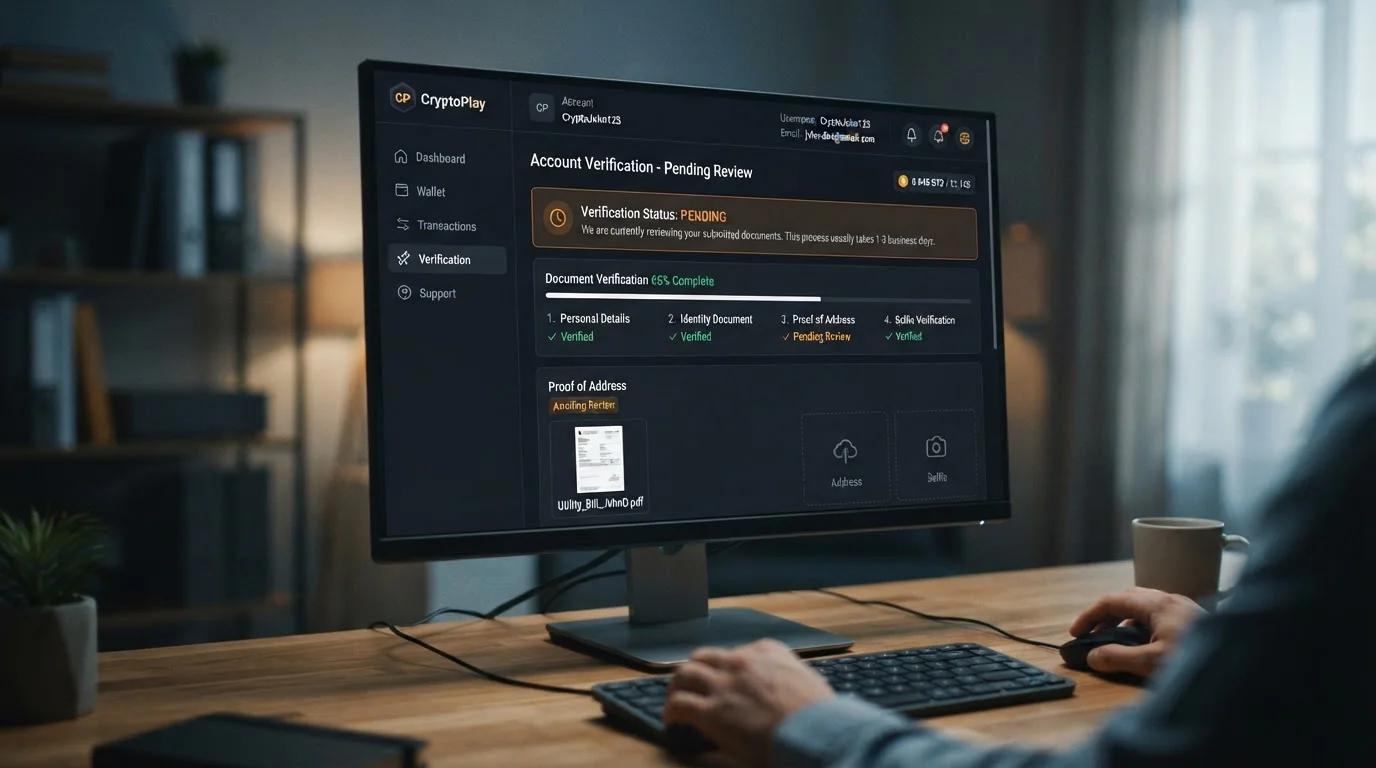
No-KYC is marketing language, not a binding promise. Every offshore casino reserves the right to request documents. Terms contain phrases like "at our sole discretion," "when required by our compliance procedures," or "triggered by risk-based assessments." Those clauses mean the threshold is not disclosed and can be applied retroactively. You learn the limit when you hit it.
Testing conducted by independent reviewers in July 2026 deposited real money at twenty-five casinos marketed as no-KYC, then ran withdrawals at increasing amounts. Only five platforms processed every cashout without requesting ID. The other twenty triggered verification somewhere between two thousand and ten thousand euros cumulative. Cloudbet documented a threshold near two thousand two hundred dollars. Duelbits sets it at three thousand euros. Most do not publish a figure. The range exists. Where your account lands in it depends on withdrawal frequency, amounts, timing, and compliance team discretion.
Withdrawal Thresholds Where KYC Is Triggered
Thresholds are not uniform. Cloudbet states roughly two thousand two hundred dollars cumulative withdrawals before KYC may be requested. That figure appears in reviews and forum reports consistently enough to be reliable. Duelbits triggers at three thousand euros cumulative per published policy. BC.Game and Shuffle.com say "at sole discretion" with no published threshold. Independent testing shows both request documents unpredictably, sometimes at amounts well below industry norms.
The two-to-ten-thousand-euro range covers most platforms. Smaller casinos trigger sooner. Larger operators with mature compliance teams allow higher cumulative cashouts before flagging accounts. A single five-thousand-euro withdrawal may clear without checks, while ten withdrawals of five hundred euros each over a month may trigger review. Frequency matters as much as amount. Rapid successive cashouts, especially to different wallet addresses, raise flags faster than a single large transaction.
Do no-KYC casinos ever ask for ID, and when?
Yes. No-KYC casinos request documents when withdrawal thresholds are crossed, typically €2,000–€10,000 cumulative, or when risk flags appear: unusual betting patterns, suspected fraud, regulatory spot-checks. Terms allow discretionary verification. Testing in July 2026 showed only 5 of 25 no-KYC casinos processed all withdrawals without requesting ID.
Risk-Based Verification and Red Flags
Risk-based KYC means the casino applies verification selectively based on perceived risk. Flags include large or frequent withdrawals, betting patterns that resemble arbitrage or advantage play, deposits and withdrawals with no intervening wagering, using multiple wallet addresses, VPN or proxy detection, account behavior matching known fraud patterns, or regulatory audits that randomly sample user accounts.
A player depositing a thousand dollars, playing slots for a week, then withdrawing fifteen hundred may never see a KYC request. Another depositing five thousand, betting it all on a single roulette spin, then withdrawing ten thousand the same day will almost certainly be flagged. The casino’s compliance algorithm weighs transaction size, speed, betting behavior, and account age. Automation handles low-risk profiles. Human review handles high-risk ones.
VPN use is banned at most offshore casinos despite serving VPN-heavy markets. Detection methods have improved. Some platforms geo-locate via WebRTC leaks or payment processor data even when an IP is masked. Getting caught using a VPN after depositing can result in account closure and balance confiscation, KYC or not. Read the terms. If VPN is prohibited and you bypass geo-blocks, you hand the operator a reason to keep your funds.
What is a KYC threshold and how much can I withdraw without verification?
KYC thresholds vary by casino, typically €2,000–€10,000 cumulative withdrawals before verification is requested. Cloudbet ~$2,200, Duelbits €3,000. Most do not publish figures and apply risk-based checks. Independent testing in 2026 showed only 5 of 25 no-KYC casinos never requested documents regardless of amount.
What Happens If You Don’t Provide Documents
When a casino requests KYC, your account is usually frozen until you comply. Withdrawals are blocked. Deposits may still be accepted, but funds cannot leave. Terms typically state the operator can hold your balance indefinitely pending verification. If you refuse or cannot provide satisfactory documents, the casino can close your account and confiscate funds under clauses citing non-compliance, fraud suspicion, or breach of terms.
Recourse is limited. UKGC-licensed casinos have a statutory complaints process and Financial Ombudsman escalation. Offshore casinos answer to their license issuer, if at all. Curaçao Gaming Authority handles complaints but resolution is slow and outcomes favor operators. Anjouan and Costa Rica offer effectively no dispute mechanism. Third-party mediation services like IBAS or eCOGRA generally do not adjudicate offshore casino disputes. Forum complaints may generate bad press but rarely force payouts.
Some players provide fake or borrowed documents to bypass KYC. If detected, that is grounds for permanent ban and balance seizure. Casinos cross-reference document details against databases and prior submissions. Mismatched names, photoshopped utility bills, or IDs that fail digital forensics checks result in immediate account termination. The risk of losing your balance is high. The chance of successfully deceiving a mature compliance team is low.
What happens if a no-KYC casino asks for verification and I don’t provide it?
Your account is frozen, withdrawals blocked. The casino can hold your balance indefinitely pending verification. If you refuse or provide unsatisfactory documents, the operator can close your account and confiscate funds under terms citing non-compliance or fraud suspicion. Recourse is limited; offshore casinos answer to their license issuer with slow resolution favoring operators.
Bonuses and Promotions at No-KYC Casinos
Offshore crypto casinos offer bonuses UKGC rules would never approve. Deposit matches reaching two hundred percent. Welcome packages worth several thousand dollars. Rakeback with zero wagering. The "free" money comes with conditions, but those conditions are often lighter than UKGC-licensed equivalents.
Rakeback and Cashback Models
Rakeback returns a percentage of the house edge on every bet, win or lose. VIP tiers determine the rate, typically five to sixty percent depending on volume. Roobet and Gamdom structure their offers around rakeback rather than deposit bonuses. The advantage: no wagering requirement. Rakeback pays out continuously and can be withdrawn immediately. You are not chasing a forty-times turnover to unlock a bonus. You get cash back for playing, period.
Cashback works similarly but applies to net losses over a period. Roobet offers twenty percent cashback on net losses for the first seven days, no wagering. Lose a thousand, get two hundred back. That two hundred has no strings. Contrast with a UKGC-licensed deposit match: claim a hundred-percent bonus on a thousand-pound deposit, wager forty thousand pounds to unlock it, max bet five pounds per spin. The offshore model front-loads the reward and drops the turnover trap.
Deposit Bonuses and Wagering Requirements
Traditional deposit bonuses still exist at no-KYC casinos. Cloudbet offers up to twenty-five hundred dollars over the first thirty days. Shuffle.com runs match bonuses up to one thousand USDT. Wagering requirements range from thirty to sixty times the bonus amount. That means a thousand-dollar bonus with forty-times wagering requires forty thousand dollars in bets before withdrawal. Slots contribute one hundred percent. Table games contribute ten to twenty percent. Some games are excluded entirely.
UKGC-licensed casinos capped wagering at ten times in the 2025 reforms. Offshore platforms ignore that cap. Sixty-times wagering is predatory but legal under Curaçao or Anjouan licenses. Read the terms before claiming. A big headline number with heavy wagering can trap your deposit and bonus both. Some casinos lock your deposited funds under the bonus terms until wagering clears. Others let you forfeit the bonus and withdraw your deposit. Know which model applies before you click accept.
How No-KYC Bonuses Differ from UKGC Offers
UKGC-licensed casinos cap bonus wagering at ten times. Offshore casinos run thirty to sixty times. UKGC sites enforce maximum bet limits during wagering, typically five pounds per spin. Offshore sites set higher caps or none. UKGC operators require affordability checks before activating large bonuses. Offshore casinos let you claim anything regardless of deposit history. UKGC sites integrate GamStop and mandatory deposit limits. Offshore platforms have neither.
The trade-off is freedom versus protection. Higher bonuses with heavier wagering and no spending checks sound attractive until you realize the same lack of oversight that enables big offers also removes every safety net. Bonus abuse is easier offshore. So is losing more than you intended without intervention. UKGC reforms were designed to prevent harm. Offshore markets monetize the absence of those limits.
Cryptocurrencies and Withdrawal Speeds

Bitcoin is universal. Every casino in this guide accepts BTC. Ethereum, Litecoin, and USDT follow closely. Newer coins like Solana and Dogecoin appear at larger platforms. Monero is rare, limited to privacy-focused operators. Multi-cryptocurrency casinos support twenty to forty coins. Single-crypto platforms stick with Bitcoin and maybe one or two alternatives.
Which Cryptocurrencies Are Accepted
Bitcoin remains the baseline. Ethereum is second. Tether in USDT form, usually on TRC20 or ERC20 networks, functions as the stablecoin of choice. Litecoin offers faster block times than Bitcoin. Dogecoin entered the casino space through meme-driven adoption. Solana appeals to low-fee transactions. TRON and BNB appear at platforms with Binance Smart Chain integration. Cardano is less common. Monero exists at casinos prioritizing anonymity, but regulatory pressure has reduced its acceptance.
| Cryptocurrency | Acceptance | Typical Use Case |
|---|---|---|
| Bitcoin (BTC) | Widespread | Default for most players |
| Ethereum (ETH) | Widespread | Smart contract integration, NFT casinos |
| Tether (USDT) | Widespread | Stablecoin, avoids volatility |
| Litecoin (LTC) | Common | Faster confirmations than BTC |
| Dogecoin (DOGE) | Common | Meme appeal, low fees |
| Solana (SOL) | Growing | Low fees, fast transactions |
| TRON (TRX) | Growing | USDT TRC20 preferred network |
| BNB (Binance Coin) | Moderate | Binance ecosystem users |
| Cardano (ADA) | Moderate | Smaller casinos, niche appeal |
| Monero (XMR) | Rare | Privacy-focused, regulatory pressure |
Stablecoins like USDT solve volatility. Depositing Bitcoin when it is worth fifty thousand dollars, then withdrawing when it hits forty-five thousand, costs you five thousand regardless of game outcomes. USDT pegs to the dollar. Your balance does not fluctuate with crypto markets. That makes budgeting easier and removes a variable most gamblers do not want to manage while playing.
Which cryptocurrencies can I use at no-KYC casinos?
Bitcoin, Ethereum, Litecoin, and USDT are accepted at all major no-KYC casinos. Dogecoin, Solana, TRON, and BNB are common. Cardano appears at some. Monero is rare. Stablecoins like USDT avoid volatility. Multi-cryptocurrency platforms support 20–40 coins; single-crypto sites stick with Bitcoin and 1–2 alternatives.
How Fast Are Withdrawals Really?
Claimed speeds: instant, under ten minutes, zero to two hours. Actual speeds depend on the casino’s internal processing, network congestion, and whether your account hits a KYC flag. Cloudbet processes crypto withdrawals in roughly ten minutes. Roobet clears them in under an hour. BC.Game advertises ten to thirty minutes. Shuffle.com claims instant but users report twenty-four hours to weeks depending on verification status.
Blockchain confirmation times add to casino processing. Bitcoin takes ten to sixty minutes depending on network load and fee paid. Ethereum and Litecoin are faster. USDT on TRC20 clears in minutes. Once the casino releases funds, the blockchain handles the rest. A casino that batches withdrawals once daily will delay your payout regardless of network speed. A casino that processes them manually during business hours will leave you waiting overnight if you request cashout at 3 AM.
KYC requests stop everything. The timer resets when verification is triggered. Submit documents, wait for review, then restart the withdrawal. That review can take hours or days. Thirty working days is the outer limit cited by Metaspins. Most process faster, but "instant withdrawal" marketing assumes no verification. Hit the threshold and the timeline changes completely.
How fast are withdrawals at no-KYC crypto casinos?
Claimed: instant to 2 hours. Reality: 10 minutes to 24 hours for sub-threshold amounts without KYC flags. Cloudbet ~10 minutes, Roobet under 1 hour, BC.Game 10–30 minutes. KYC requests freeze withdrawals until document review completes, adding hours to days. Network confirmation adds 10–60 minutes after casino release.
Deposit Limits and Fees
Offshore casinos do not enforce deposit limits. UKGC sites mandate spending caps at sign-up. Offshore platforms let you deposit unlimited amounts. Minimum deposits sit around ten to twenty dollars equivalent. Maximum deposits depend on the casino’s liquidity and your transaction method. Bitcoin and Ethereum handle large sums easily. Smaller altcoins may have practical caps based on casino wallet capacity.
Fees vary by network. Bitcoin transaction fees fluctuate with network congestion, sometimes reaching twenty dollars during peak periods. Ethereum gas fees spike unpredictably. USDT on TRC20 costs pennies. Solana fees are negligible. Casinos usually do not charge deposit or withdrawal fees themselves, but network costs are borne by the player. Check blockchain fees before transacting. A fifty-cent bet is pointless if the deposit cost five dollars.
Game Types and Provably Fair Technology
Offshore crypto casinos stock thousands of slots, hundreds of live dealer tables, and provably fair originals unique to the platform. Game libraries rival or exceed UKGC-licensed sites in volume. Quality varies. Top-tier platforms source from Pragmatic Play, Evolution Gaming, NetEnt, and similar studios whose games run at licensed casinos globally. Lower-tier operators pull from unknown studios with questionable RNG audits.
Slots, Live Dealer, and Table Games
Slots dominate every casino. Thousands of titles from multiple providers. Megaways, cluster pays, jackpot networks, branded games. RTP ranges from ninety-four to ninety-eight percent depending on the slot. Providers set RTP, not casinos, but casinos choose which providers to stock. A library heavy on low-RTP slots tilts the house edge.
Live dealer games run on Evolution Gaming, Pragmatic Play Live, or Ezugi streams. Blackjack, roulette, baccarat, game shows. Real dealers, real cards, real wheels. The feed is identical whether you play at a UKGC-licensed site or an offshore crypto casino. Evolution licenses its product to both. Table limits at offshore sites often run higher than UKGC equivalents. Hundred-pound-per-hand blackjack is standard. Thousand-pound roulette bets are common. The five-pound stake cap imposed on UKGC slots does not apply offshore.
| Game Type | Availability | Notable Providers | Typical at No-KYC Casinos |
|---|---|---|---|
| Slots | Universal | Pragmatic Play, NetEnt, Play’n GO, Push Gaming | Thousands of titles, RTP 94–98% |
| Live Dealer | Universal | Evolution Gaming, Pragmatic Play Live, Ezugi | Higher table limits than UKGC sites |
| Table Games | Universal | Multiple providers | Blackjack, roulette, baccarat |
| Crash Games | Common | In-house / Spribe | Provably fair, popular at crypto casinos |
| Plinko | Common | In-house | Provably fair, simple mechanics |
| Dice | Common | In-house | Provably fair, classic crypto game |
| Provably Fair Originals | Platform-specific | Casino’s own studio | Crash, Towers, Mines, Limbo, Hilo |
Crash Games, Plinko, and Crypto Originals
Crash games emerged in crypto gambling and spread to mainstream casinos. A multiplier climbs from one times upward. Cash out before it crashes or lose your stake. Timing the exit is the game. Spribe’s Aviator is the licensed version. Most crypto casinos run in-house crash games. Provably fair verification lets players check the crash point was predetermined, not manipulated mid-round.
Plinko drops a ball through pegs. Where it lands determines the payout. Dice games bet on whether a roll will be above or below a target number. Towers, Mines, Limbo, Hilo. These are crypto casino staples, coded in-house, usually provably fair. They have no physical or third-party equivalent. The house edge is transparent and the outcome is verifiable via cryptographic proof. Traditional slots do not offer that.
What "Provably Fair" Actually Means
Provably fair uses cryptographic hashing to prove game outcomes were determined before the round started. The casino generates a server seed and publishes its hash before you bet. You supply a client seed. The seeds combine to produce the result. After the round, the casino reveals the server seed. You hash it yourself and confirm it matches the published hash. If it does, the outcome was locked in before your bet. The casino could not have changed it mid-game.
This applies to in-house casino originals like crash, dice, plinko. It does not apply to third-party slots from Pragmatic Play or Evolution live dealer games. Those use standard RNG audited by testing labs, not player-verifiable cryptography. A casino can market itself as provably fair if it offers a few provably fair games, then stock ninety-five percent of its library with standard RNG slots. Check which games actually carry verification tools. Most do not.
What You Give Up: Consumer Protections and Risks
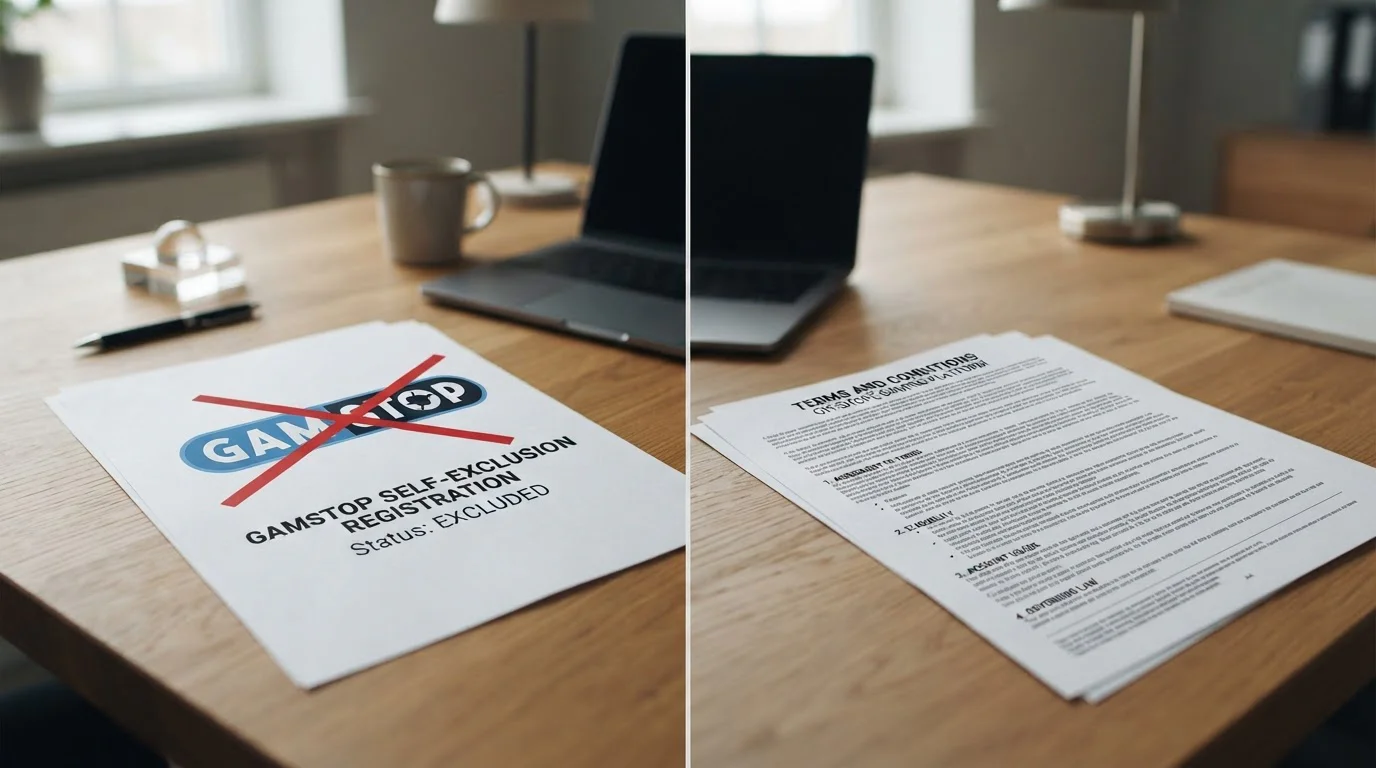
Offshore casinos operate outside UK law. That freedom benefits them more than you. No GamStop means no self-exclusion network. No UKGC oversight means no statutory dispute process. No affordability checks mean no brake on losses. You gain speed and privacy. You lose every regulatory protection British gambling law provides.
No GamStop Self-Exclusion
GamStop links every UKGC licensee into a national self-exclusion database. Register once, get blocked at every licensed site for six months, one year, or five years. Offshore casinos are not part of the network. A GamStop exclusion does not reach them. That is why some players seek offshore options. It is also why offshore casinos are risky for problem gamblers. The safety net does not exist.
If you self-exclude at one offshore casino, that exclusion applies only to that single operator. There is no shared database. You can re-register elsewhere immediately. Some offshore platforms offer cooling-off periods or account closures, but enforcement is voluntary. No regulator audits their responsible gambling tools. They exist to satisfy license requirements, not to genuinely prevent harm.
No UKGC Dispute Resolution
A dispute with a UKGC-licensed casino escalates through the operator’s internal complaints process, then to the UK Gambling Commission, then to an approved alternative dispute resolution service or the Financial Ombudsman. The process is statutory. Operators must comply. Settlements can be enforced.
Offshore disputes go nowhere. Complain to a Curaçao-licensed casino and they may ignore you. Escalate to the Curaçao Gaming Authority and wait months for a response that may favor the operator or result in no action. Anjouan and Costa Rica offer effectively zero recourse. Third-party mediators like eCOGRA or IBAS generally do not handle offshore casino cases. Online forums generate bad press but rarely force payouts. You can shout into the void. The casino has your money and no UK authority can make them return it.
Are my winnings safe at offshore crypto casinos?
Offshore casinos operate outside UK jurisdiction with no UKGC consumer protections. Account closures and fund confiscations occur with limited recourse. Disputes rarely resolve in favor of players. Curaçao-licensed casinos offer slow, operator-biased mediation. Anjouan and Costa Rica provide no meaningful dispute process. Choose operators with long track records and transparent terms.
Account Closure and Fund Confiscation Risks
Terms at offshore casinos contain broad clauses allowing account closure and balance confiscation. Multi-accounting, bonus abuse, VPN use, suspicious betting patterns, failure to complete KYC, breach of terms. Those triggers are defined loosely and applied at the operator’s discretion. Casinos have closed accounts for winning too much, for betting patterns deemed advantage play, for using strategies the casino retroactively declared unfair.
No UK court will enforce your claim against a Curaçao or Anjouan-licensed operator. The legal costs of pursuing international arbitration exceed most balances. The operator knows this. Confiscation risk is real, especially at newer or less-reputable platforms. Long-running casinos with public reputations to protect behave better. Fly-by-night operations steal balances and vanish. Due diligence matters offshore in ways it does not at UKGC-licensed sites.
Can I use a VPN to access no-KYC casinos from the UK?
Most offshore casinos ban VPN use in their terms. Detection methods include WebRTC leaks and payment data. Getting caught can result in account closure and fund confiscation. If a casino blocks your region and you bypass it with a VPN, you give the operator grounds to keep your deposits and winnings under breach-of-terms clauses.
How to Choose the Right No-KYC Casino
Picking an offshore casino without UK regulatory oversight requires more diligence than choosing a UKGC-licensed site. Licenses, game providers, withdrawal testing, and KYC policies all matter. A flashy landing page means nothing if payouts stall or terms bury confiscation clauses.
Check the License
A Curaçao license post-December 2024 should follow the OGL/2024/XXXX/XXXX format. Older sub-licenses may still be valid during transition periods, but new direct CGA licenses are preferable. Anjouan licenses exist but offer minimal oversight. Costa Rica registration is not a license. No regulatory body supervises Costa Rica gaming operators. If a casino claims Costa Rica licensing, understand it has zero compliance infrastructure.
Verify the license number. Curaçao Gaming Authority publishes a public register. Cross-check the operator name and license format. Some casinos display fake licenses or clone legitimate operators’ credentials. A five-minute verification check saves potential headaches later.
Test the Withdrawal Speed
Deposit a small amount, play, then withdraw. Time the process. Does it clear in the advertised window? Did KYC get requested? Real-money testing reveals more than reviews. If a fifty-dollar withdrawal takes three days or triggers document requests, expect worse at higher amounts. A casino that processes small cashouts instantly but delays large ones is gaming the threshold to build trust before stalling payouts.
Read the KYC Policy
Terms should state clearly when KYC may be requested. "At our sole discretion" is vague but standard. Published thresholds are better. Cloudbet’s two-thousand-dollar figure provides a benchmark. Casinos that say nothing bury KYC triggers in risk-based compliance language. Assume verification will be requested and plan accordingly. If you cannot or will not provide documents, stay below suspected thresholds or avoid the platform entirely.
Verify Game Providers
Legitimate game studios license their content to casinos. Evolution Gaming, Pragmatic Play, NetEnt, Play’n GO. If a casino stocks games from recognized providers, those games are genuine and RNG-certified. If it runs games from unknown studios or claims proprietary slots without provably fair verification, RNG integrity is questionable.
Check provider logos at the casino footer. Cross-reference with the studio’s official operator list if publicly available. Cloned or pirated games exist. A casino running fake Pragmatic Play slots is not trustworthy regardless of its license.
Why UK Players Moved Offshore in 2026
The UKGC White Paper reforms of 2025 created friction at every licensed operator. Affordability checks interrupted play. Deposit limits felt restrictive. Bonus terms became ungenerous. Passport uploads and address proof added barriers. For recreational players who wanted to gamble without bureaucracy, offshore crypto casinos offered an escape.
The offshore market absorbed UK demand through late 2025 and into 2026. Traffic data from multiple platforms shows UK registrations spiking after the White Paper implementation. The causality is direct. Tighter regulation pushed a segment of the market to unregulated alternatives. That segment now faces account closure risks, confiscation clauses, and no dispute recourse. They traded safety nets for speed.
Why did UK players start using no-KYC casinos in 2026?
The 2025 UKGC White Paper tightened controls: lower affordability check thresholds, bonus wagering capped at 10x, mandatory deposit limits at sign-up. Players seeking faster registration, higher bonuses, and no spending checks migrated to offshore crypto casinos. UK traffic to no-KYC platforms surged through late 2025 and into 2026 as UKGC rules tightened.
Whether that trade-off makes sense depends on who you are and what you value. A problem gambler bypassing GamStop via offshore casinos worsens their situation. A recreational player who wants to deposit a hundred quid without a financial interrogation gains convenience but loses every protection. The offshore market exists because demand exists. The demand exists because UK regulation made licensed play inconvenient. Both realities coexist. Neither cancels the other.
Offshore casinos are not inherently scams. Many operate legitimately within their license jurisdictions and pay out reliably. The risk is regulatory arbitrage. Operators know players have no recourse. Some exploit that. Due diligence, small test withdrawals, sticking to established brands, and never depositing more than you can afford to lose outright become mandatory practices. At a UKGC-licensed site, you can rely on statutory protections. Offshore, you rely on the operator’s goodwill and reputation. Choose accordingly.
Written by the editors at Payments-casino-uk (9).