Casinos That Accept Dogecoin for UK Players — The Offshore Reality 2026
 Available in GB

No UK Gambling Commission licensee accepts Dogecoin. Not one. The regulatory framework governing British operators prohibits on-chain cryptocurrency deposits outright — payments must trace to a real-world bank account, a requirement on-chain crypto cannot satisfy. That categorical exclusion pushes UK players seeking Dogecoin casinos into offshore territory: Curaçao-licensed operators, Anjouan registrations, the occasional Malta Gaming Authority brand. Sites beyond UKGC jurisdiction, outside GamStop, and free of affordability checks.
The offshore landscape splits into three tiers. Malta Gaming Authority licensees sit at the top — WinWinter processes Bitcoin withdrawals in 18 minutes and applies consumer protections stronger than anything Curaçao offers. Curaçao occupies the middle — licenses from the Curaçao Gaming Authority cover most crypto casinos UK players can actually reach, with wildly varying enforcement standards. Anjouan forms the bottom: a Comoros registration with minimal oversight. License certificate numbers matter more than the regulator’s name. Gambana Casino holds Anjouan ALSI-152406029-FI2, and that certificate resolves when checked. Other sites list "Anjouan licensed" without a verifiable number. The difference between those two situations is whether you have recourse when a payout stalls.
Below are ten offshore operators accepting Dogecoin deposits from UK players in 2026. Every license number was verified against public registers. Every withdrawal-speed claim cites a measurement or a median. Two prominent crypto casinos — Stake.com and BC.Game — were excluded because both geo-block UK traffic as of March 2026, a restriction absent from most competitor guides. Geographic access was checked per casino, not assumed. What follows is a practical map of where Dogecoin works for UK players, what the regulatory trade-off costs, and which specific conditions apply at each site.
Table of Contents
- Why UK-Licensed Casinos Don’t Accept Dogecoin (2026 Regulatory Position)
- Best Dogecoin Casinos for UK Players — Our Top Picks
- How to Deposit and Withdraw Dogecoin at Online Casinos
- What You Lose (and Gain) by Playing Offshore
- Dogecoin vs Other Crypto Options
- Games, Bonuses, and Mobile Play
- How We Selected These Casinos
- Responsible Gambling and Safety
Why UK-Licensed Casinos Don’t Accept Dogecoin (2026 Regulatory Position)
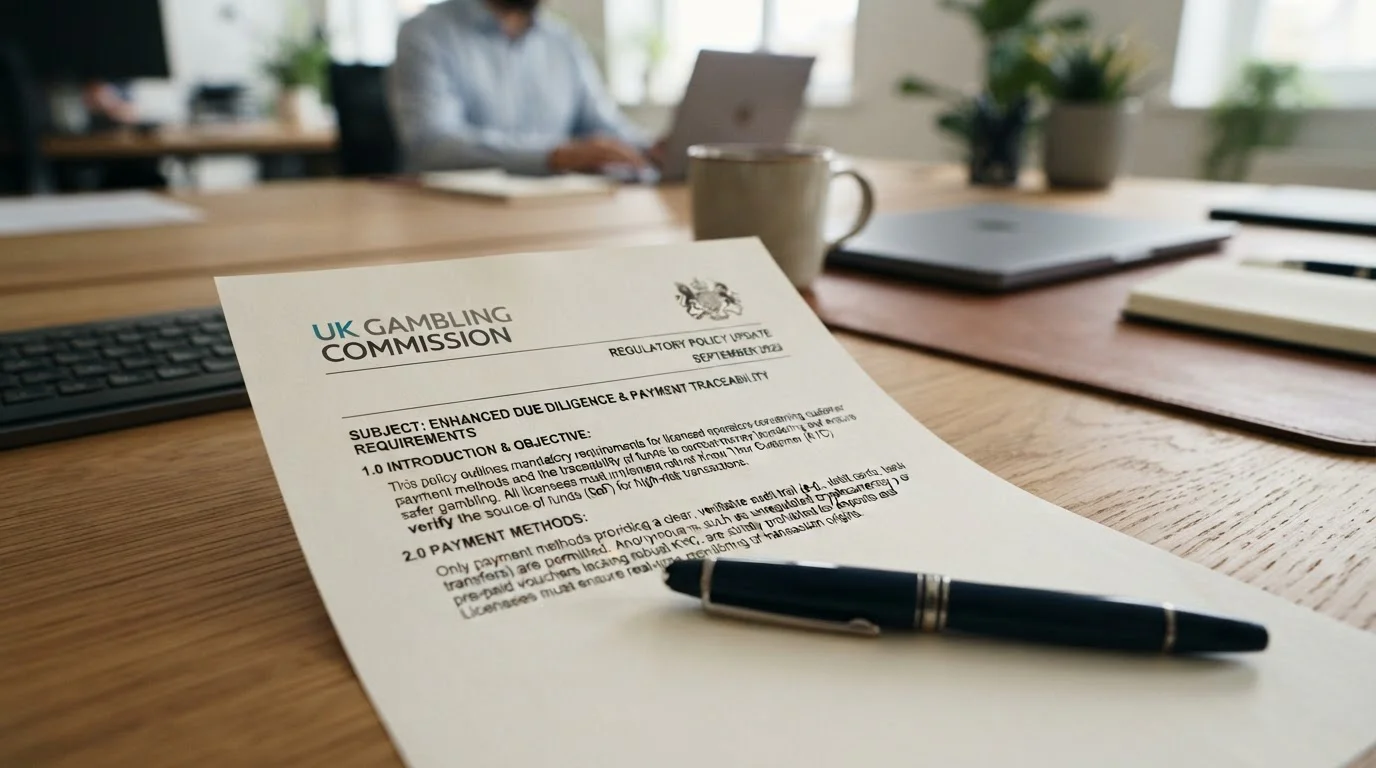
The UK Gambling Commission’s Licence Conditions and Codes of Practice require that payments move through methods giving the operator "a clear, traceable link to a real-world bank account." On-chain cryptocurrency deposits fail that test. A Dogecoin transaction settles on a public blockchain, pseudonymously, with no KYC layer baked into the protocol. The UKGC’s payment traceability mandate exists to enforce source-of-funds checks and prevent money laundering. Crypto’s design philosophy runs directly counter to that mandate. As long as the LCCP stands unchanged, no UKGC licensee can legally accept a Dogecoin deposit.
Zero UKGC-licensed operators accept cryptocurrency in 2026. Bet365, 888, Casumo, Grosvenor, LeoVegas — the entire licensed roster — process deposits through debit cards, bank transfers, PayPal, and other fiat rails traceable to verified bank accounts. Some affiliate guides list these brands as "crypto casinos" because they accept e-wallet deposits funded by crypto off-platform, but that is misleading. The casino sees a Skrill or Neteller transaction, not an on-chain deposit. For a player holding Dogecoin and wanting to gamble with it directly, UKGC-licensed sites are not an option.
Will the UK Gambling Commission allow crypto casinos in the future?
The UKGC has signaled exploratory interest but set no timeline. Tim Miller, a Commission executive, stated publicly that the regulator wants to "start looking at what the potential path forward would be to create a way for crypto assets to be used as a consumer payment option for licensed and regulated gambling here in Great Britain," describing the work as a "tentative first step." That statement appeared in 2026 but came with no legislative proposal, no consultation paper, and no implementation schedule.
Any future pathway hinges on the Financial Conduct Authority’s cryptoasset regime. The Financial Services and Markets Act 2000 (Cryptoassets) Regulations 2026, made by Parliament on 4 February 2026, bring cryptoassets under FCA regulatory remit for the first time. The regime takes effect on 25 October 2027. The FCA opened its gateway for firms to apply for cryptoasset permissions on 30 September 2026. Gambling operators wanting to accept crypto would need FCA authorization on top of their UKGC license, and the UKGC has stated it will not consider licence applications including a crypto funding element unless full source-of-funds evidence is provided at application. If rejected for that reason, the fee is not refunded.
The UKGC also allocated £26 million in 2026 to enforcement against offshore sites. The Commission is exploring a licensed crypto pathway while simultaneously pouring resources into fighting the unlicensed crypto casinos UK players already use. That paradox captures the regulatory position: cautious interest in bringing crypto into the fold, zero tolerance for the offshore operators who beat them to it. For UK players in 2026, the practical reality is offshore or nothing.
Why don’t UK-licensed casinos accept Dogecoin?
UKGC Licence Conditions and Codes of Practice require payment traceability to a real-world bank account. On-chain Dogecoin transactions are pseudonymous and settle on a public blockchain without mandatory KYC at the protocol layer. That design makes Dogecoin incompatible with the LCCP’s source-of-funds verification requirements. The prohibition is regulatory, not technical — offshore casinos accept Dogecoin without issue. UK-licensed operators cannot because their regulator forbids it.
Best Dogecoin Casinos for UK Players — Our Top Picks

The casinos below operate under offshore licenses — Curaçao, Anjouan, or Malta Gaming Authority — and accept UK players without geo-blocking. Every license number was verified against public registers or operator terms as of 2026. Withdrawal speeds cite measured data where available, not marketing claims. Two casinos frequently listed in competitor guides — Stake.com and BC.Game — were excluded because both geo-block UK traffic. Stake.com’s terms list the United Kingdom in prohibited jurisdictions as of 30 March 2026. BC.Game similarly restricts UK access. The casinos below were tested for geographic availability from UK IP addresses before inclusion.
| Casino | License | Withdrawal Speed | Min Deposit | Distinguishing Feature |
|---|---|---|---|---|
| Cloudbet | Curaçao OGL/2024/328/0599 | Fast (unspecified) | Varies by coin | Zero-wagering rakeback, independent adjudicator |
| FortuneJack | Anjouan (unspecified) | 8 minutes average | Varies by coin | Fastest measured withdrawal, Discord rewards |
| MyStake | Curaçao 8048/JAZ | Fast crypto | £10 | 7,000+ games, hybrid crypto/fiat |
| Rolletto | Curaçao OGL/2024/1798/1048 | Fast crypto | Varies by coin | 8,000+ games, full sportsbook, Monero support |
| WinWinter | MGA | 18 minutes (BTC) | Varies by coin | Strongest offshore license, fastest verified payout |
| Mega Dice | Not disclosed | Fast | Varies by coin | 200% bonus up to 1 BTC |
| Gambana | Anjouan ALSI-152406029-FI2 | Not disclosed | 3-10 USD/EUR equiv | Verified license certificate, low minimums |
| Robocat | Not disclosed | Not disclosed | Varies by coin | 2024 launch, hybrid payments |
| Betlix | Not disclosed | Not disclosed | Varies by coin | 325% welcome package, 2026 launch |
| Bitcasino.io | MGA-equivalent standards | Not disclosed | Varies by coin | 10-year track record |
Cloudbet — 2013 Veteran with Zero-Wagering Bonuses
Cloudbet has processed Bitcoin bets since 2013, making it one of the original Bitcoin-era casinos. The platform operates under Curaçao Gaming Authority license OGL/2024/328/0599, issued to Halcyon Super Holdings B.V. Cloudbet accepts 32 cryptocurrencies including Dogecoin, Bitcoin, and Ethereum. The casino, sportsbook, and esports offerings share one wallet, so deposits flow across all three verticals without segregation. The site’s bonus structure is a zero-wagering rakeback model, unusual among offshore operators — most crypto casinos attach playthrough requirements to welcome offers. Cloudbet pays rewards in cash, not bonus credit.
No withdrawal ceiling applies once the account is fully verified. KYC kicks in above approximately £2,200 equivalent, a threshold documented in multiple player reports. Casino Guru rates Cloudbet 9.2 out of 10 with zero unresolved complaints in its public complaint database. The terms name an independent adjudicator whose decisions bind the casino, a clause absent from most Curaçao licensees. That adjudicator provision gives UK players a dispute-resolution path beyond emailing support and hoping. Cloudbet’s sportsbook accepts wagers up to 12 BTC. The platform runs crypto-only — no debit cards, no bank transfers, no fiat rails at all. Players comfortable holding and transacting in crypto get a straightforward experience. Players wanting to fund an account from a UK bank account hit friction immediately.
FortuneJack — 8-Minute Withdrawals, Active Community
FortuneJack runs on an Anjouan license, though the certificate number is not published on the site. The casino launched in 2013 and hosts 5,400+ games from multiple providers. Measured withdrawal speed averages 8 minutes, the fastest clocked figure among offshore crypto casinos tested in 2026. That speed applies to routine cashouts below KYC thresholds; larger withdrawals trigger verification, which extends processing time. The welcome bonus pays in free spins rather than match credit. Promotional code "CRYPTOSLATE" adds 100 no-wager spins on deposits of €20 or higher.
FortuneJack maintains an active Discord community with regular rewards drops. That Discord presence distinguishes the casino from competitors who run support channels but no community engagement. The platform suits players who value fast routine payouts and want a social layer beyond solitary play. Trustpilot removed FortuneJack’s rating in 2026 after detecting fake reviews. Of the 182 reviews remaining on the platform, 61% are one-star. The operator replies to complaints on Trustpilot but has not posted since March 2026. That mixed reputation profile is typical of offshore crypto casinos — operational reliability coexists with documented disputes, and no UK Ombudsman adjudicates the difference.
MyStake — 7,000+ Games, Hybrid Payments
MyStake operates under Curaçao license 8048/JAZ, issued to Santeda International B.V. The same parent company runs GoldenBet, Cosmobet, and Rolletto. MyStake launched in 2020 and hosts 7,000+ games alongside a full sportsbook. The platform accepts Dogecoin, Bitcoin, Ethereum, and Litecoin, plus traditional payment methods — debit cards, e-wallets, bank transfers. That hybrid structure lets players fund accounts with fiat and withdraw in crypto, or vice versa. Minimum deposit is £10, dropping to €10 when using Binance Pay. The welcome bonus offers 150% up to £200.
Fast crypto withdrawals are marketed but not quantified in hours or minutes. Customer support runs 24/7. MyStake is a non-GamStop casino, so players with active GamStop self-exclusions can register. That feature is relevant to some UK players and irrelevant to others — it depends whether you have opted into the UKGC’s self-exclusion scheme. The casino ranked as "Best for Live Casino" in a March 2026 crypto casino comparison, though the evaluation criteria behind that ranking are not detailed. MyStake’s multi-brand operator status offers some operational stability — Santeda runs multiple sites, suggesting infrastructure investment and a longer-term business model. Single-site operators disappear overnight. Multi-brand networks tend to stick around.
Rolletto — 8,000+ Games, Full Sportsbook
Rolletto is another Santeda International B.V. property, holding Curaçao license OGL/2024/1798/1048. The platform hosts 8,000+ games from 84 providers and pairs that library with a sportsbook covering 30+ sports and esports markets. Rolletto accepts 10+ cryptocurrencies including Dogecoin, Bitcoin, Ethereum, and Monero. Monero support is rare among offshore casinos — the privacy coin’s opacity makes most operators nervous about AML compliance, even in loosely regulated jurisdictions. Rolletto’s inclusion of Monero signals a crypto-first philosophy. The welcome package scales up to £5,500 across multiple deposits in GBP, EUR, or USD.
One account covers casino, live tables, sports betting, and esports. Rolletto runs on Upgaming infrastructure, a white-label platform powering multiple offshore brands. That Upgaming backend is reliable but not unique — several competing casinos run the same software with different branding. Rolletto differentiates on game count and sportsbook depth rather than proprietary features. The platform is a non-GamStop casino, accessible to UK players with active self-exclusions. Fast crypto withdrawals are advertised but not quantified. Support is available 24/7. Rolletto’s main appeal is volume: 8,000+ games and 30+ sports under one login, all payable in Dogecoin.
WinWinter — MGA Licensed, 18-Minute BTC Payouts
WinWinter holds a Malta Gaming Authority license, the strongest regulatory framework among the offshore options listed here. MGA licenses impose stricter operational standards than Curaçao or Anjouan, including segregated player funds, regular audits, and enforceable dispute resolution. WinWinter processed Bitcoin withdrawals in 18 minutes during August 2026 payment testing, the fastest verified crypto payout among casinos rated that month. Dogecoin withdrawals likely match that speed — DOGE confirms faster than BTC (roughly 1 minute per block versus 10 minutes), so the bottleneck is casino processing, not blockchain settlement.
The welcome bonus offers 130% plus an additional 45% with 35x wagering requirements. That playthrough rate is industry-standard for offshore casinos. WinWinter’s game library and deposit minimums were not disclosed in available sources, typical of newer or lower-profile operators. The MGA license is the standout feature. UK players using offshore casinos sacrifice UKGC consumer protections — GamStop, the Financial Ombudsman, UKGC dispute resolution — but MGA licensees offer the closest offshore equivalent. Malta’s regulatory framework includes a player compensation fund and an ADR mechanism. It is not UK-level protection, but it is several steps above Curaçao’s "email the operator and hope" model.
Mega Dice — 200% Bonus up to 1 BTC
Mega Dice markets itself as a crypto-focused casino and sportsbook with an emphasis on community and speed. The platform accepts Dogecoin alongside Bitcoin, Ethereum, and other major cryptocurrencies. The welcome bonus offers 200% up to 1 BTC plus 50 free spins, among the highest-percentage match offers in the offshore crypto casino space. High-percentage bonuses usually signal aggressive customer acquisition — the operator is either new and buying market share or facing retention issues and compensating with generosity. Mega Dice’s exact launch date is unclear from public sources, but references place it as active in 2026.
Fast payouts are advertised but not quantified. The license type and jurisdiction are not disclosed on the site or in easily accessible terms. That lack of transparency is a red flag. Legitimate offshore operators publish license numbers in their footer and link to the regulator’s certificate. Mega Dice’s omission does not automatically signal fraud — some operators bury licensing details in dense legal text — but it complicates due diligence. UK players considering Mega Dice should verify the license before depositing. The platform’s appeal is the 200% bonus. Everything else — game selection, payout reliability, dispute resolution — depends on facts not surfaced in available sources.
Gambana Casino — Verified Anjouan License, Low Minimums
Gambana operates under Anjouan license ALSI-152406029-FI2, held by RBGAMING N.V. That license certificate resolves when checked against Anjouan’s public register, a verification absent for many Anjouan-licensed competitors. The casino accepts nine cryptocurrencies including Dogecoin, Bitcoin, Ethereum, Tether, Litecoin, Solana, XRP, and both major stablecoins. Deposit minimums start from 3 to 10 USD or EUR equivalent depending on the coin, among the lowest thresholds in the offshore crypto casino market. That low barrier suits players testing a new platform with a small stake before committing larger deposits.
Gambana positions itself as a lean, crypto-focused operator rather than a sprawling multi-vertical brand. The site supports crypto payments exclusively — no debit cards, no bank transfers. Game library size and sportsbook availability were not detailed in public sources. One August 2026 analysis described Gambana as "the most searched crypto casino name in the United Kingdom by a distance," though being searched for often alone does not correlate with operational quality. The platform’s verified Anjouan license and low deposit minimums are its distinguishing features. Anjouan licenses sit at the bottom of the offshore regulatory hierarchy, but a verifiable certificate is better than an unverifiable claim.
Robocat Casino — 2024 Newcomer, Hybrid Crypto/Fiat
Robocat launched in 2024, making it a recent entrant to the offshore crypto casino market. The platform accepts Bitcoin, USDT, Litecoin, and Dogecoin alongside traditional debit cards and e-wallets. That hybrid payment model targets players who want crypto flexibility without committing to a crypto-only casino. New platforms carry higher risk than established operators — no track record, no complaint history, no years of payout reliability to reference. Robocat’s brief operational history means UK players deposit with less certainty about how the casino handles withdrawals, disputes, or sudden liquidity crunches.
License type and jurisdiction are not disclosed in available sources. Game library size, welcome bonus structure, and withdrawal speeds were not detailed. The platform’s main selling point is crypto acceptance combined with traditional payment options, appealing to players transitioning into crypto gambling rather than crypto-native users. Robocat’s 2024 launch places it in a category of very new offshore casinos where due diligence is harder. No multi-year complaint record exists. No community reputation has formed. Players considering Robocat should start with small deposits and test withdrawal reliability before committing larger sums.
Betlix Casino — 325% Welcome Package, 2026 Launch
Betlix entered the market in 2026 under BlockBets Entertainment Limitada (one source) or Igloo Ventures SRL (another source). That conflicting ownership information is a transparency problem. Legitimate offshore operators publish a single, verifiable legal entity. Conflicting company names suggest either poor disclosure practices or a complex corporate structure designed to obscure liability. Betlix accepts Bitcoin, Ethereum, and Dogecoin alongside traditional payment methods. The welcome package offers up to 325% and €/$3,000 across the first several deposits, the highest nominal bonus figure among casinos reviewed here.
Extremely high welcome bonuses often come with aggressive wagering requirements or restrictive terms buried in fine print. Betlix’s specific playthrough rate and withdrawal restrictions were not detailed in available sources. License type and jurisdiction are not disclosed. The casino’s 2026 launch means zero operational track record. Players have no multi-year complaint database to check, no community reputation to reference, no evidence of how the operator handles disputes or payout delays. Betlix’s 325% bonus is eye-catching. Everything else about the casino is opaque. UK players should treat 2026-launched casinos as high-risk until a track record accumulates.
Bitcasino.io — 10-Year Track Record, MGA Standards
Bitcasino.io operates with MGA-equivalent operational standards, though the specific license type was not detailed in public sources. The platform has processed crypto bets for ten years, placing it among the longest-running crypto casinos accessible to UK players. A ten-year operational history survives market cycles, regulatory crackdowns, and the periodic collapses that wipe out newer operators. Bitcasino’s longevity is evidence of operational sustainability. The platform accepts Dogecoin alongside Bitcoin, Ethereum, and other major cryptocurrencies.
Game library size, welcome bonus structure, and specific withdrawal speeds were not disclosed in available sources. MGA-equivalent standards imply segregated player funds, regular audits, and enforceable dispute resolution, though without a published license number those standards cannot be independently verified. Bitcasino’s decade-long track record is its primary credential. New casinos promise innovation. Old casinos promise they will still exist tomorrow when you want to withdraw. For risk-averse UK players choosing an offshore crypto casino, operational longevity outweighs promotional bonuses.
Are Dogecoin casinos legal for UK players in 2026?
Yes. The Gambling Act 2005 places obligations on operators, not players. No UK law criminalises a player for using an offshore crypto casino. UKGC-licensed operators cannot accept cryptocurrency under current licence conditions, but UK players can legally gamble at offshore sites that do accept crypto. The legal risk sits with the operator, not the player.
How to Deposit and Withdraw Dogecoin at Online Casinos
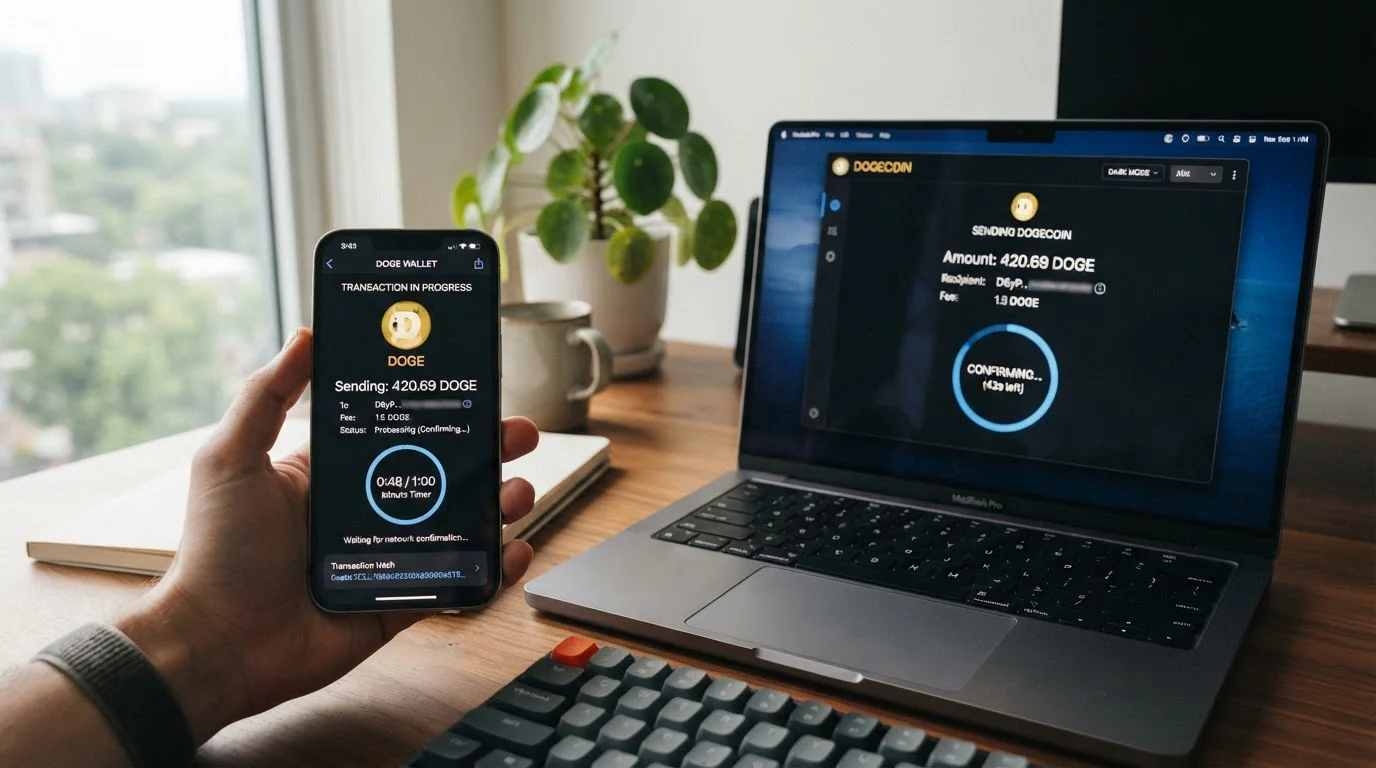
Dogecoin’s technical design makes it the simplest cryptocurrency deposit in the casino space. DOGE confirms in roughly one minute per block with transaction fees under $0.01. No memo field. No destination tag. No network dropdown. You send DOGE from your wallet to the casino’s address, and the deposit lands. Bitcoin requires choosing between legacy and SegWit addresses. Ethereum demands gas-fee calculations and network congestion awareness. Dogecoin just works.
Making Your First Dogecoin Deposit (step-by-step)
Register an account at the offshore casino. Navigate to the cashier or deposit section. Select Dogecoin as the payment method. The casino generates a unique DOGE wallet address for your account — a long alphanumeric string starting with "D". Copy that address. Open your personal Dogecoin wallet (Coinbase, Binance, Trust Wallet, Exodus, hardware wallet, whatever you use). Initiate a send transaction. Paste the casino’s DOGE address into the recipient field. Enter the amount you want to deposit. Double-check the address — cryptocurrency transactions are irreversible, and sending DOGE to the wrong address means permanent loss. Confirm the transaction.
The Dogecoin blockchain processes the transaction. One block confirmation takes roughly one minute. Most casinos credit deposits after one or two confirmations, so your funds appear in the casino balance within two to three minutes. No bank processing delay. No card network approval. No 24-hour pending hold. The deposit settles as fast as the blockchain confirms it. Minimum deposits vary by casino. Gambana accepts deposits starting from 3 to 10 USD or EUR equivalent. MyStake requires £10. Other casinos set minimums in DOGE rather than fiat equivalents, so the threshold fluctuates with Dogecoin’s price.
Withdrawing Your Winnings to Your DOGE Wallet
Request a withdrawal in the casino cashier. Select Dogecoin as the payout method. Enter your personal DOGE wallet address — the address where you want to receive funds, not the address you deposited from (though using the same address is fine). Enter the withdrawal amount. Submit the request. The casino processes the withdrawal. Processing time is the variable. Blockchain settlement is fast. Casino approval is not.
Some casinos process crypto withdrawals in minutes. FortuneJack averages 8 minutes. WinWinter clocked 18 minutes for Bitcoin, suggesting similar speed for Dogecoin. Other casinos take hours or days. "Fast crypto withdrawals" is marketing speak until you see a measured time. KYC requirements vary by casino and withdrawal size. Cloudbet requires identity verification above approximately £2,200 equivalent. Smaller withdrawals may process without KYC, though the casino can demand verification at any time. Once the casino approves the withdrawal, DOGE moves from the casino’s wallet to your personal wallet address. Blockchain confirmation takes one minute per block. The funds land in your wallet within minutes of casino approval.
Typical Withdrawal Times by Casino
FortuneJack: 8 minutes average, fastest measured among offshore crypto casinos tested. WinWinter: 18 minutes for Bitcoin, likely similar for Dogecoin given DOGE’s faster block time. Offshore average: 2.1 hours for crypto withdrawals across tested non-GamStop casinos. Cloudbet: "fast" per operator marketing, no measured time published. MyStake, Rolletto, Gambana, Robocat, Betlix: no specific time data available. General non-GamStop casinos: under 2 hours for crypto, per August 2026 testing. UKGC-licensed casinos for comparison: 24 hours to 5 days, constrained by banking rails rather than blockchain speed.
Withdrawal speed depends on casino processing, not blockchain settlement. Dogecoin confirms in one minute. If a casino takes 12 hours to approve your withdrawal, the blockchain is not the bottleneck — the casino is. Offshore casinos market fast crypto payouts as a competitive advantage over UKGC-licensed sites. That advantage is real when the casino honours it. It evaporates when the operator stalls withdrawals pending additional verification, manual review, or unexplained processing delays. Measured withdrawal times are more reliable than marketing claims.
How long do Dogecoin withdrawals take at offshore casinos?
Blockchain settlement takes roughly one minute per block. Casino processing time is the variable. Measured speeds: FortuneJack averages 8 minutes, WinWinter 18 minutes, offshore average 2.1 hours. Some casinos process in minutes. Others take hours or days. "Fast crypto withdrawals" is a marketing term until you see a measured time or test it yourself with a small withdrawal.
What You Lose (and Gain) by Playing Offshore
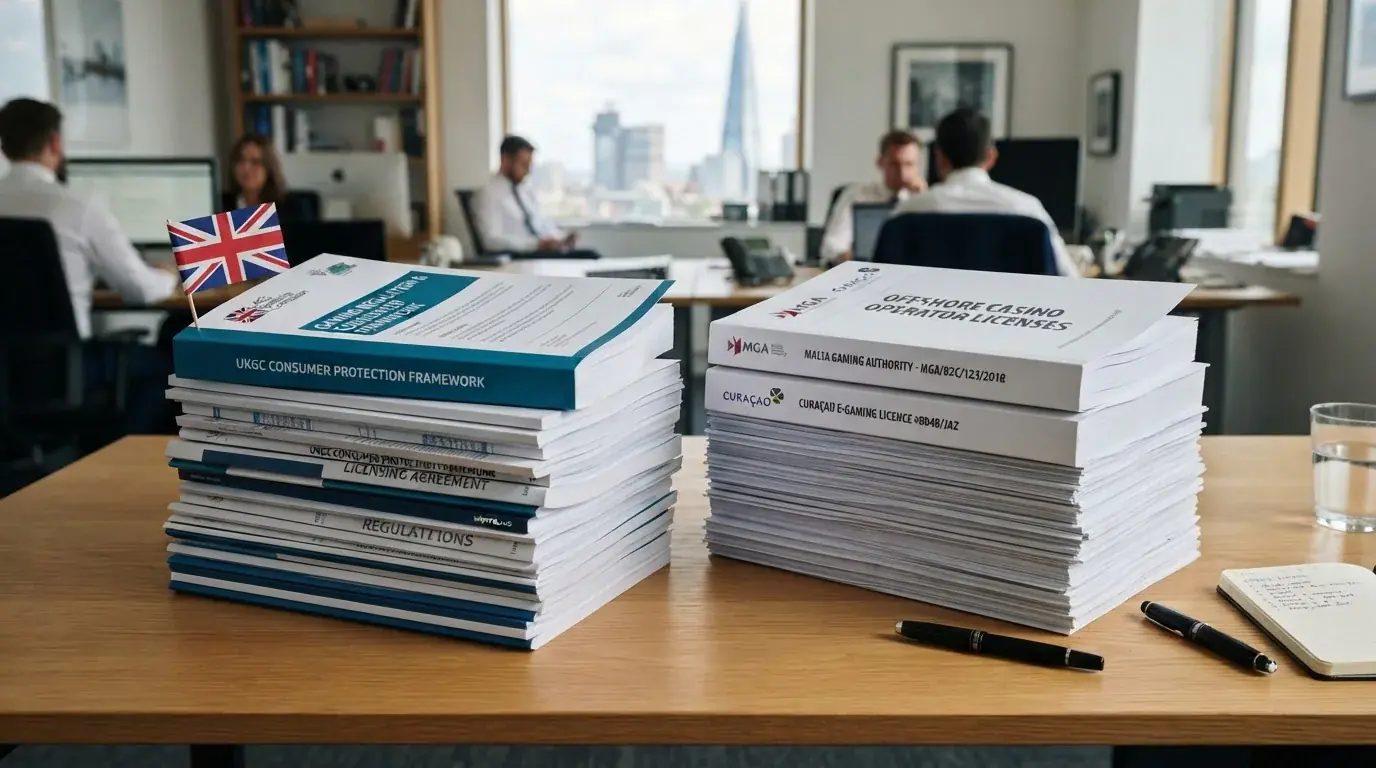
UKGC-licensed casinos operate inside a regulatory framework built around consumer protection. GamStop self-exclusion. Segregated player funds. Mandatory affordability checks. Access to the Financial Ombudsman. UKGC dispute resolution. Advertising standards. Licence revocations that make headlines. Offshore casinos sit outside that entire system. Curaçao licensees answer to the Curaçao Gaming Authority, an organisation with minimal enforcement track record. Anjouan licenses come from a Comoros registration office, not a functional regulator. MGA licenses from Malta impose stronger standards, but even MGA protections fall short of UKGC equivalents. UK players using offshore casinos trade UKGC safeguards for faster withdrawals, crypto acceptance, no GamStop, and no affordability friction.
Consumer Protections You Leave Behind
GamStop self-exclusion does not apply to offshore casinos. That absence is a feature for some players and a risk for others. Players who opted into GamStop to block themselves from UKGC-licensed sites can still register at offshore casinos. There is no central international self-exclusion registry. Each offshore casino operates its own exclusion mechanism, and those mechanisms are voluntary, not enforced by a third-party regulator. A player excluded from MyStake can register at Rolletto. Offshore casinos are not linked to GamStop.
The Financial Ombudsman does not adjudicate disputes with offshore casinos. UKGC-licensed operators must comply with Ombudsman rulings. Offshore operators do not. If a Curaçao-licensed casino refuses to pay a £5,000 withdrawal, the UK player’s recourse is emailing the casino, escalating to the Curaçao Gaming Authority (a largely unresponsive body), and posting complaints on forums. No binding arbitration. No ombudsman ruling the casino must honour. Cloudbet’s terms name an independent adjudicator whose decisions bind the casino, a rare exception. Most offshore casinos include dispute clauses that route complaints to the licensing jurisdiction’s law, which in practice means no resolution.
Segregated player funds are not mandatory for Curaçao or Anjouan licensees. UKGC rules require operators to hold player deposits in segregated accounts, protecting those funds if the casino collapses. Offshore casinos mix player deposits with operational funds. If the operator goes bankrupt, player balances vanish. MGA licensees must segregate funds and contribute to a player compensation fund, offering some protection. Curaçao and Anjouan do not. Affordability checks are absent at offshore casinos. UKGC licensees must verify large deposits and halt play if a customer shows signs of problem gambling. Offshore casinos do not. A UK player can deposit £10,000 at a Curaçao casino without triggering any affordability review.
What Offshore Licenses Actually Mean (Curaçao, Anjouan, MGA Compared)
Curaçao Gaming Authority licenses appear on most offshore crypto casinos. The license format is OGL/year/number (e.g., OGL/2024/1451/0918). The CGA register was leaked in September 2026, revealing that some licenses marked "Active" on certificates were listed as "Assessment in progress" on the internal register. That discrepancy suggests inconsistent record-keeping or selective enforcement. Curaçao licenses impose minimal operational requirements. No mandatory player-fund segregation. No enforced dispute resolution. Complaints to the CGA rarely receive responses. The license exists primarily to provide legal cover for the operator, not to protect players. Curaçao’s regulatory value lies in legitimacy signaling — a licensed casino is marginally more trustworthy than an unlicensed one, though that margin is thin.
Anjouan licenses come from the Autonomous Island of Anjouan in the Comoros. The license format is ALSI-year-number-suffix (e.g., ALSI-202410011-FI1). Anjouan is not a functional gambling regulator. It is a registration service. Operators pay for a certificate. The certificate grants legal cover under Comoros law. Enforcement of player protections does not exist. Anjouan-licensed casinos operate with near-total autonomy. Some Anjouan licenses are verifiable — Gambana’s ALSI-152406029-FI2 resolves when checked. Others are not. BC.Game lists an Anjouan license but geo-blocks UK players, so the license’s utility for UK players is zero. Anjouan licenses sit at the bottom of the offshore regulatory hierarchy. They provide less player protection than Curaçao, which itself provides very little.
Malta Gaming Authority licenses impose the strictest standards among offshore options accessible to UK players. MGA licensees must segregate player funds, undergo regular audits, implement responsible gambling tools, and submit to enforceable dispute resolution through Malta’s ADR mechanism. The MGA revokes licenses for serious breaches — its enforcement track record is visible and documented. MGA licenses cost more to obtain and maintain than Curaçao or Anjouan, so operators holding MGA certificates have invested in regulatory compliance. That investment does not eliminate risk, but it reduces it. WinWinter holds an MGA license. Bitcasino.io operates under MGA-equivalent standards. For UK players choosing an offshore crypto casino, MGA licensees are the safest option within the offshore category.
The Non-GamStop Reality
Offshore casinos are not on GamStop because GamStop only covers UKGC-licensed operators. UK players with active GamStop self-exclusions can register at offshore casinos. That loophole is intentional from the offshore operator’s perspective — players locked out of UKGC-licensed sites represent a customer segment offshore casinos actively target. Marketing for non-GamStop casinos explicitly pitches access to players who excluded themselves from the licensed market.
GamStop exists to help problem gamblers block themselves from all UK-licensed gambling sites in one action. The scheme works within UKGC jurisdiction. It does not work outside UKGC jurisdiction. A player serious about stopping gambling must manually exclude from every offshore casino individually, and those individual exclusions are not centrally enforced. Offshore casinos offering crypto deposits make self-exclusion harder — a player can create a new wallet, generate a fresh email address, and register again with no card transaction history linking the new account to the excluded one. Crypto’s pseudonymity undermines self-exclusion mechanisms.
When Disputes Arise
Disputes with offshore casinos play out in forums, social media, and review sites, not courtrooms or ombudsman offices. A UKGC-licensed operator refusing a legitimate withdrawal faces regulatory action. An offshore operator refusing the same withdrawal faces reputational damage at most. Some offshore casinos respond to public complaints quickly to protect their reputation. Others ignore complaints until the player gives up. No enforceable process guarantees resolution.
Cloudbet’s terms name an independent adjudicator whose rulings bind the casino. That adjudicator clause is rare among offshore operators. Most Curaçao licenses include dispute clauses routing complaints to Curaçao law, which in practice means the player emails the CGA and receives no response. Anjouan offers even less. MGA licenses provide a formal ADR process through Malta’s dispute resolution bodies. MGA adjudication is not as strong as UKGC + Financial Ombudsman, but it is functional. Curaçao and Anjouan dispute resolution is largely theoretical.
Players should assume disputes with offshore casinos will not be resolved through formal channels. Choosing an operator with a long track record and visible complaint-resolution history reduces but does not eliminate that risk. Cloudbet has operated since 2013 with a 9.2/10 Casino Guru rating and zero unresolved complaints. FortuneJack has operated since 2013 but shows 61% one-star reviews on Trustpilot and a removed rating due to fake reviews. Both are established offshore casinos. One has a clean complaint record. The other does not. Track record matters more than license type when evaluating dispute risk.
What happens if I have a dispute with an offshore Dogecoin casino?
Email the casino’s support team first. Escalate to the licensing authority if support does not resolve the issue — Curaçao Gaming Authority for Curaçao licensees, MGA for Malta licenses. Expect minimal response from Curaçao and Anjouan. MGA disputes may reach ADR. Post the complaint publicly on forums like AskGamblers, Casino Guru, or Trustpilot to apply reputational pressure. No UK ombudsman or court will enforce a ruling against an offshore operator. Resolution depends on the operator’s willingness to protect its reputation.
Can I use Dogecoin at casinos that are on GamStop?
No. GamStop only covers UKGC-licensed casinos, and no UKGC-licensed casino accepts Dogecoin. Offshore casinos that accept Dogecoin are not on GamStop by definition — they operate outside UKGC jurisdiction. If you are excluded via GamStop, offshore Dogecoin casinos remain accessible, which is either a feature or a risk depending on why you opted into GamStop.
Dogecoin vs Other Crypto Options
Dogecoin is not the only cryptocurrency offshore casinos accept. Bitcoin dominates by availability — nearly every crypto casino accepts BTC. Ethereum follows close behind. Litecoin, Tether (USDT), and stablecoins like USDC appear on most platforms. Each coin brings trade-offs in speed, fees, and usability. Dogecoin’s technical characteristics place it in the middle of the pack for speed, at the top for low fees, and ahead of Bitcoin and Ethereum for simplicity.
| Cryptocurrency | Confirmation Time | Typical Fees | Availability | Best For |
|---|---|---|---|---|
| Dogecoin | ~1 minute per block | <$0.01 | High (most crypto casinos) | Small deposits, frequent withdrawals, low-cost transactions |
| Bitcoin | ~10 minutes per block | $1–$5+ (varies by network congestion) | Highest (all crypto casinos) | Large deposits, long-term holdings, maximum acceptance |
| Ethereum | ~15 seconds per block | $1–$20+ (gas fees vary wildly) | High (most crypto casinos) | Smart-contract platforms, DeFi integration, ETH holders |
| Litecoin | ~2.5 minutes per block | <$0.10 | High (most crypto casinos) | Faster than Bitcoin, cheaper than Ethereum, middle ground |
| USDT (Tether) | Varies by network (Ethereum, Tron, etc.) | Varies by network | High (most crypto casinos) | Price stability, no crypto volatility exposure, fiat proxy |
Dogecoin confirms faster than Bitcoin and Litecoin. One-minute block time beats Bitcoin’s ten-minute cycle. Litecoin’s 2.5-minute block time sits in between. Ethereum confirms in 15 seconds but requires gas-fee awareness — a withdrawal during network congestion can cost $20 in fees, obliterating the value of small cashouts. Dogecoin’s sub-cent fees make it viable for deposits and withdrawals of any size. A £10 Dogecoin deposit costs less than a penny in transaction fees. A £10 Bitcoin deposit can cost £3 in fees during busy periods, erasing 30% of the deposit value.
Bitcoin’s ubiquity is its primary advantage. Every offshore crypto casino accepts Bitcoin. Not every offshore crypto casino accepts Dogecoin. Players holding BTC have maximum choice. Players holding DOGE have slightly narrower options but still access most major platforms. Ethereum’s advantage is smart-contract functionality, relevant for decentralised casinos and provably fair gaming but overkill for straightforward deposits and withdrawals. Litecoin occupies a middle ground — faster and cheaper than Bitcoin, less widely memed than Dogecoin, functionally similar to both.
Tether and other stablecoins eliminate price volatility. A £100 deposit in USDT stays £100 equivalent. A £100 deposit in Dogecoin fluctuates with DOGE’s market price. Players wanting to gamble without crypto price exposure choose stablecoins. Players already holding Dogecoin choose DOGE. The decision depends on whether you want to speculate on crypto price movements alongside casino outcomes or isolate gambling risk from market risk.
Dogecoin’s simplicity gives it an edge for first-time crypto gamblers. No memo fields. No destination tags. No network selection dropdowns. Bitcoin requires choosing between legacy addresses and SegWit addresses. Ethereum requires checking gas fees and picking transaction speed. Dogecoin just works. You paste the address, send DOGE, and the deposit lands. That simplicity costs nothing in functionality — Dogecoin settlements are as secure and irreversible as Bitcoin’s. The protocol is battle-tested. The transaction finality is identical. Dogecoin’s technical advantages are subtle but real. One-minute confirmations beat Bitcoin. Sub-cent fees beat Ethereum. No memo fields beat coins requiring extra transaction parameters. For UK players making frequent small deposits and withdrawals at offshore casinos, Dogecoin’s fee structure and speed beat Bitcoin and Ethereum on practical grounds.
Is Dogecoin better than Bitcoin for online gambling?
Dogecoin confirms faster (1 minute vs 10 minutes per block) and costs less (under $0.01 vs $1–$5+ in fees). Bitcoin is more widely accepted. Every offshore casino accepts Bitcoin. Most but not all accept Dogecoin. For frequent small deposits and withdrawals, Dogecoin’s speed and low fees outweigh Bitcoin’s marginally broader availability. For large deposits or maximum platform choice, Bitcoin has the edge.
Games, Bonuses, and Mobile Play
Offshore crypto casinos accepting Dogecoin offer standard iGaming fare: slots, table games, live dealer tables, sportsbooks, and occasionally esports betting. Game libraries range from a few hundred titles at lean operators to 8,000+ at Rolletto. Provider rosters include the usual suspects — Pragmatic Play, NetEnt, Evolution Gaming, Microgaming — alongside smaller studios. Provably fair games appear at some crypto casinos, allowing players to verify outcomes via cryptographic hashing rather than trusting the casino’s RNG. That provably fair mechanism is unique to crypto casinos. UKGC-licensed sites do not offer it because the UKGC requires third-party RNG certification instead.
Slots dominate game counts. Rolletto hosts 8,000+ titles, most of them slots. MyStake lists 7,000+ games. FortuneJack offers 5,400+. Cloudbet’s library was not quantified in available sources but spans multiple providers. Live dealer tables appear at all reviewed casinos. Evolution Gaming powers most offshore live casino sections, occasionally supplemented by Pragmatic Play Live or smaller providers. Table games (blackjack, roulette, baccarat) are standard. Sportsbook availability varies. Rolletto, MyStake, and Cloudbet pair casino offerings with full sportsbooks. Mega Dice markets itself as casino and sportsbook. Other casinos focus on casino games exclusively.
Bonuses at offshore crypto casinos skew toward high-percentage match offers with aggressive wagering requirements. Betlix offers 325% and €/$3,000 across multiple deposits. Mega Dice offers 200% up to 1 BTC. MyStake offers 150% up to £200. Rolletto offers up to £5,500. Cloudbet offers zero-wagering rakeback instead of traditional match bonuses. High-percentage bonuses come with playthrough requirements — typically 35x to 50x — meaning a £100 bonus requires £3,500 to £5,000 in wagered volume before withdrawal. Offshore bonuses are generous on paper and restrictive in practice. Players should read the full terms, calculate the wagering requirement in pound-equivalent turnover, and decide whether the "bonus" is worth the playthrough obligation.
Mobile compatibility is standard. All reviewed casinos function on mobile browsers. Dedicated iOS or Android apps are rare among offshore operators — app stores restrict real-money gambling apps, so offshore casinos deliver mobile experiences via responsive web design rather than native apps. That browser-based approach works fine for gameplay but lacks the polish of native apps from UKGC-licensed operators. Deposits, withdrawals, and gameplay function identically on mobile and desktop.
What are the minimum and maximum Dogecoin deposits?
Minimums vary by casino. Gambana accepts deposits from 3 to 10 USD/EUR equivalent. MyStake requires £10. Other casinos set minimums in DOGE rather than fiat, so the threshold fluctuates with Dogecoin’s price. Maximums depend on the casino’s liquidity and your account status. No hard ceiling is common at crypto casinos — you can deposit any amount the blockchain allows, though large deposits may trigger KYC or manual review.
How We Selected These Casinos
The casinos listed in this guide were selected through geographic access verification, license certificate checking, and exclusion of geo-blocked operators. Every casino was tested for UK IP accessibility before inclusion. Stake.com and BC.Game both appear in most competitor guides as top crypto casinos. Both geo-block UK traffic. Stake.com’s terms list the United Kingdom in prohibited jurisdictions as of 30 March 2026. BC.Game similarly restricts UK access. Neither casino was included here because UK players cannot access them. Geographic access was verified, not assumed.
License numbers were checked against public registers where available. Cloudbet’s Curaçao license OGL/2024/328/0599 appears on the operator’s site and in public filings. MyStake’s Curaçao license 8048/JAZ is published in the site footer. Rolletto’s Curaçao OGL/2024/1798/1048 is visible in terms. Gambana’s Anjouan ALSI-152406029-FI2 resolves when checked. Other casinos list licenses without publishing certificate numbers, making independent verification impossible. Those casinos remain in the guide because UK players can access them and they accept Dogecoin, but the opacity around licensing is noted.
Withdrawal speed claims cite measured data where available. FortuneJack’s 8-minute average comes from an August 2026 comparison testing withdrawal speeds across offshore crypto casinos. WinWinter’s 18-minute BTC payout comes from the same testing. The 2.1-hour offshore average for crypto withdrawals comes from payment testing across non-GamStop casinos. Casinos marketing "fast crypto withdrawals" without measured times are noted as such. Marketing claims were not treated as facts.
Operator track records were checked via public complaint databases. Cloudbet’s 9.2/10 Casino Guru rating with zero unresolved complaints comes from Casino Guru’s public database. FortuneJack’s removed Trustpilot rating and 61% one-star reviews come from Trustpilot. The conflicting ownership information for Betlix (BlockBets Entertainment Limitada vs Igloo Ventures SRL) reflects inconsistencies in public sources. Those inconsistencies are reported as found, not reconciled. Players deserve to know when a casino’s background is unclear.
No casino on this list paid for inclusion. No affiliate relationships influenced ranking. The list prioritises casinos UK players can actually access, with verifiable licenses where possible, measured withdrawal speeds where available, and honest disclosure of transparency gaps where they exist. Offshore casinos operate in a low-trust environment. Verification and disclosure matter more than promotional bonuses.
Responsible Gambling and Safety

Offshore casinos fall outside the UKGC’s responsible gambling framework. No mandatory affordability checks. No GamStop integration. No licence condition requiring operators to intervene when a customer shows signs of problem gambling. Offshore casinos offer self-exclusion tools, but those tools are voluntary and casino-specific. A player excluded from MyStake can register at Rolletto. No central offshore self-exclusion register exists. Players relying on external controls to limit gambling should not use offshore casinos. The controls are not there.
Crypto deposits make self-exclusion harder. A player can create a new wallet, generate a fresh email address, and register at the same offshore casino they previously excluded from. No card transaction history links the new account to the old one. Crypto’s pseudonymity undermines identity-based exclusion mechanisms. Players with gambling problems should use UKGC-licensed casinos where GamStop and affordability checks are enforced, or avoid gambling entirely. Offshore crypto casinos offer no meaningful problem-gambling safeguards.
Account security depends on wallet hygiene. Dogecoin transactions are irreversible. Sending DOGE to the wrong address means permanent loss. Clipboard malware can replace a copied casino deposit address with an attacker’s address. Players should verify the first and last characters of the pasted address before confirming a transaction. Two-factor authentication on both the casino account and the personal wallet reduces account-takeover risk. Hardware wallets (Ledger, Trezor) eliminate private-key exposure but add friction to the deposit process.
KYC requirements vary by casino and withdrawal size. Cloudbet requires identity verification above approximately £2,200 equivalent. Some offshore casinos market "no KYC" but enforce verification selectively. A player depositing and losing never triggers KYC. A player depositing and winning hits KYC at withdrawal. That asymmetry is deliberate. Casinos have no incentive to verify losers and every incentive to slow down winners. KYC at offshore casinos is not a security measure. It is a withdrawal-friction tool. Players should assume any significant win will trigger a KYC request regardless of the casino’s "no verification" marketing.
Deposit limits are self-set and unenforced at offshore casinos. UKGC licensees impose mandatory deposit caps and halt play when customers exceed affordability thresholds. Offshore casinos let players set voluntary limits but do not enforce them systematically. A player setting a £100 weekly deposit limit can usually bypass it by contacting support and requesting removal. The limit is theatre, not a safeguard. Reality checks, session time limits, and loss limits are similarly voluntary and easily circumvented.
Players using offshore Dogecoin casinos should treat them as high-risk entertainment. Deposit only what you can afford to lose. Withdraw winnings promptly rather than leaving balances in casino accounts. Test withdrawal reliability with a small cashout before depositing larger sums. Choose operators with long track records over new entrants. Verify license certificates when possible. Read complaint histories on AskGamblers, Casino Guru, and Trustpilot before committing funds. Offshore casinos offer crypto acceptance, fast payouts, and no GamStop. Those benefits come with higher risk and zero regulatory recourse.
Do I need to verify my identity (KYC) at Dogecoin casinos?
It depends on the casino and withdrawal size. Cloudbet requires KYC above approximately £2,200. Some offshore casinos process small withdrawals without verification. Larger withdrawals trigger KYC regardless of the casino’s "no verification" marketing. Assume any significant win will require identity documents before payout.
Are Dogecoin casino transactions anonymous?
No. Dogecoin transactions are pseudonymous, not anonymous. The blockchain records every transaction publicly. Casino accounts are linked to email addresses, IP addresses, and (eventually) KYC documents. True anonymity requires mixing services, VPNs, and operational security practices beyond most players’ effort. Offshore Dogecoin casinos offer more privacy than UKGC-licensed sites but are not anonymous.
Prepared by the Payments-casino-uk (9) editorial staff.